


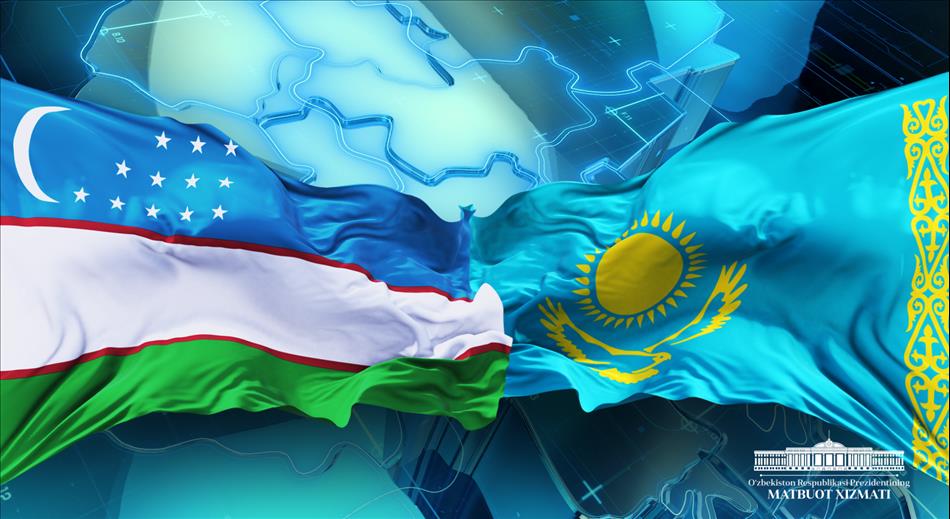
Plans To Action: Uzbek-Kazakh Council Steps Up


Within the framework of the Council, the regions are expected to focus on practical issues, including the development of industrial cooperation, the attraction of investments, the expansion of logistics links, and cooperation in the agro-industrial sector. The main objective of the new format is to move from general agreements to the implementation of concrete joint projects that can be launched and carried out with the active involvement of regions from both countries.
The formation of the Council of Heads of Regions is seen as a natural progression in the deepening of Uzbekistan-Kazakhstan cooperation. Bilateral ties have been steadily advancing in recent years, with trade turnover between the two nations reaching $4.97 billion by the close of 2025, reflecting an 11.4% year-on-year growth. Exports amounted to $1.55 billion, while imports increased by 16.6% to $3.4 billion. As of December 1, 2025, 1,199 enterprises with Kazakh capital were operating in Uzbekistan, underscoring the growing economic collaboration. Looking ahead, both countries aim to elevate mutual trade to $10 billion by 2030.
In parallel, there is a shared emphasis on enhancing the regional dimension of their partnership. This focus is intended to enable more agile responses to business needs, provide stronger support for investment initiatives, and foster greater local-level cooperation between enterprises.
The idea of establishing the Council gained additional momentum following the visit of Kazakh President Kassym-Jomart Tokayev to Uzbekistan on November 14-16. As a result of the talks, the sides signed several agreements whose implementation largely depends on active engagement at the regional level. Accordingly, special emphasis was placed on cooperation between the regions of the two countries.
The first meeting of the Council is expected to result in the formation of a list of priority projects and the coordination of further steps for their implementation. The focus will be on initiatives in industry, the agro-industrial sector, logistics, and infrastructure, where regional cooperation can deliver rapid and tangible results. Discussions are also expected to cover project support mechanisms and the removal of administrative barriers.
Industrial collaboration remains a cornerstone of the partnership between Uzbekistan and Kazakhstan. To this end, the International Center for Industrial Cooperation“Central Asia” has been established to foster production linkages between enterprises in both countries. Additionally, new joint ventures, valued at a total of $1.3 billion, have been launched across priority sectors, with the overall project portfolio surpassing $8 billion. To further drive these initiatives, the creation of a joint Investment Platform has been proposed.
Uzbekistan's regional entities are already actively engaged in these developments. In the Syrdarya region, work has commenced on a 70-hectare industrial cluster, which will accommodate production facilities for polyethylene pipes, construction materials, and agro-industrial goods. Similar initiatives are underway in Karakalpakstan, as well as in the Tashkent and Samarkand regions, further expanding the scope of bilateral industrial cooperation.
On the Kazakh side, the Turkistan, Kyzylorda, and Zhetysu regions are participating in joint regional projects. These regions are focusing on the processing of agricultural raw materials and the production of food products with high added value.
Beyond industrial cooperation, the Council of Heads of Regions is also seen as a platform for coordinating projects in the transport and energy sectors, where implementation largely depends on coordinated regional actions. The sides are paying particular attention to the development of international transport corridors, including the Trans-Caspian route, the North–South corridor, as well as new routes via China, Iran, and Türkiye. The Trans-Afghan railway project is also under consideration, as it could significantly expand Central Asia's transit capacity and strengthen the region's role in international logistics.
Close coordination at the regional level is also required in the energy sector. At present, gas transportation systems are operating in a stable and coordinated manner. Over the first seven months of 2025, transit of Kazakh gas through Uzbekistan amounted to 921.7 million cubic meters. Kazakhstan remains a key transit partner for Russian gas supplies to Uzbekistan, with volumes planned to increase to 11 billion cubic meters per year from 2026 through 2038. In addition, in 2026, Uzbekistan plans to supply Kazakhstan with around 900 million kilowatt-hours of electricity, helping to cover potential shortages in certain regions of the country.
The holding of the first meeting of the Council of Heads of Regions is regarded by both sides as a step toward more practical and closer cooperation. The new format is expected to accelerate the implementation of joint projects, strengthen coordination between regions, and provide additional momentum to the development of the Uzbekistan–Kazakhstan partnership in trade, industry, transport, and energy.

Legal Disclaimer:
MENAFN provides the
information “as is” without warranty of any kind. We do not accept
any responsibility or liability for the accuracy, content, images,
videos, licenses, completeness, legality, or reliability of the information
contained in this article. If you have any complaints or copyright
issues related to this article, kindly contact the provider above.


Comments
No comment