




403
Sorry!!
Error! We're sorry, but the page you were looking for doesn't exist.

Apple's Carplay 2025 Faces Resistance From Automakers
(MENAFN- The Arabian Post)
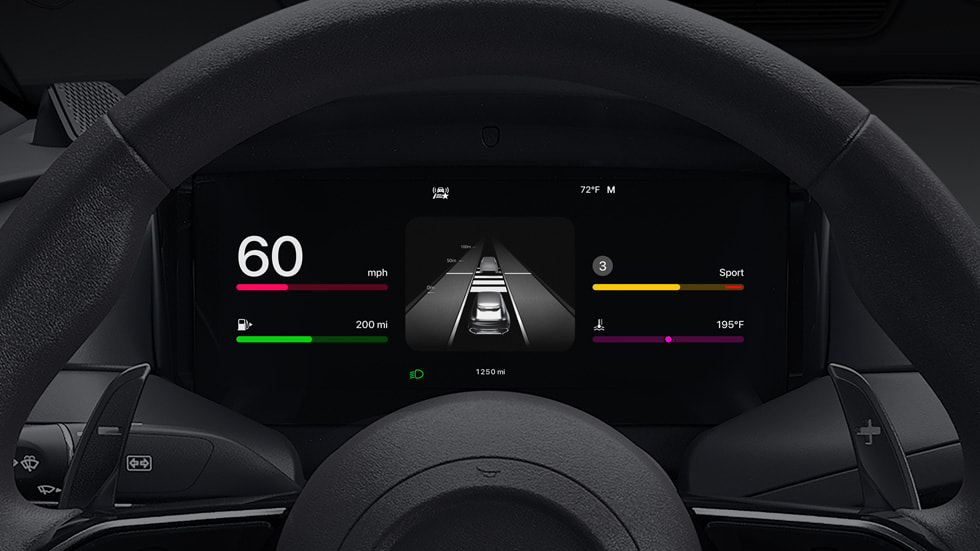
Apple's next-generation CarPlay, unveiled for market release in 2025 through a high-profile partnership with Aston Martin, has entered showrooms with ambitions that go far beyond dashboard mirroring, yet its wider rollout is encountering resistance from parts of the global car industry that see strategic and commercial risks in the software's reach.
The updated CarPlay system is designed to extend across multiple vehicle screens, integrating deeply with core functions such as climate controls, instrument clusters, navigation, media, and driver-assistance readouts. Apple has pitched the platform as a way to deliver a consistent, intuitive user experience anchored in the iPhone ecosystem, at a time when vehicles are becoming increasingly software-defined. For consumers accustomed to Apple's design language, the promise is a car that feels like a seamless extension of their digital lives.
Aston Martin became the first manufacturer to commit publicly to the new system, signalling confidence that close collaboration with Apple could enhance the appeal of its luxury models without undermining brand identity. The British marque has highlighted the ability to customise visual themes and layouts, allowing CarPlay to reflect Aston Martin's design cues rather than imposing a generic interface. Industry analysts see this early adoption as a calculated move to attract tech-savvy buyers in the premium segment, where expectations around digital sophistication are rising quickly.
Yet beyond this initial showcase, momentum has been uneven. Several major automakers remain cautious, with some choosing to delay or limit adoption while they assess the implications for data ownership, revenue streams, and long-term control over the in-car experience. The most prominent rejection has come from General Motors, which has opted to phase out support for both Apple CarPlay and Android Auto in favour of its own software platform developed with Google. Executives at GM have argued that full control over vehicle software is essential to monetise connected services and manage customer data securely.
See also Connected cars trigger privacy consent backlashThat stance reflects a broader tension shaping the automotive industry. As cars evolve into connected devices on wheels, the data they generate - from driving behaviour to location and infotainment preferences - is becoming increasingly valuable. Automakers fear that allowing Apple deep access to vehicle systems could weaken their direct relationship with customers and constrain future revenue from subscriptions, over-the-air updates, and digital services.
Apple has sought to reassure partners by emphasising privacy protections and insisting that the next-generation CarPlay does not siphon vehicle data back to its servers without consent. The company says automakers retain control over what information is shared, while drivers benefit from Apple's established approach to data security. Even so, scepticism persists, particularly among manufacturers that have invested heavily in proprietary software platforms.
Consumer demand complicates the picture. Surveys across North America and Europe consistently show strong buyer preference for Apple CarPlay and Google's Android Auto, with many drivers citing smartphone integration as a key factor in vehicle choice. Dealers report that the absence of familiar infotainment systems can influence purchasing decisions, especially in the mid-range market where brand loyalty is weaker. For Apple, this creates leverage, as automakers risk alienating customers if they move too far from widely used ecosystems.
Competition is also intensifying. Google continues to expand Android Automotive, a built-in operating system distinct from Android Auto, offering manufacturers greater flexibility while still tapping into Google's app ecosystem. Several carmakers see this as a middle path that balances advanced software capabilities with greater control than Apple's approach. Meanwhile, Chinese automakers and technology firms are developing their own in-car platforms tailored to domestic markets, adding further pressure on global players.
See also BYD's flash charging jolts the global EV raceThe slow uptake of Apple's next-generation CarPlay underscores the complexity of aligning Silicon Valley's platform-driven model with the automotive industry's priorities. While luxury brands may view close collaboration as a differentiator, mass-market manufacturers face different economics and regulatory considerations, particularly around safety certification and long product cycles. Integrating deeply embedded software from an external partner can complicate updates and liability management over a vehicle's lifespan.
Notice an issue? Arabian Post strives to deliver the most accurate and reliable information to its readers. If you believe you have identified an error or inconsistency in this article, please don't hesitate to contact our editorial team at editor[at]thearabianpost[dot]com. We are committed to promptly addressing any concerns and ensuring the highest level of journalistic integrity.

Legal Disclaimer:
MENAFN provides the
information “as is” without warranty of any kind. We do not accept
any responsibility or liability for the accuracy, content, images,
videos, licenses, completeness, legality, or reliability of the information
contained in this article. If you have any complaints or copyright
issues related to this article, kindly contact the provider above.
Most popular stories
Market Research

More Story








Comments
No comment