




403
Sorry!!
Error! We're sorry, but the page you were looking for doesn't exist.
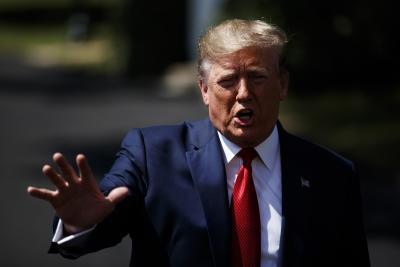
Trump Administration Frames Maduro Arrest As Bid To Reassert Influence, Counter Rival Powers
(MENAFN- IANS) Washington, Jan 5 (IANS) The Trump administration framed the arrest of Venezuelan leader Nicolas Maduro as part of a broader effort to reassert US dominance in the Western Hemisphere and push back against the growing influence of China, Russia, and Iran in Latin America.
US Ambassador to the United Nations Mike Waltz said on Fox News that the operation sends a clear signal to global rivals that Washington will no longer tolerate hostile powers embedding themselves in the region.
“The Chinese are moving incredibly aggressively into the Western Hemisphere,” Waltz said in an interview on Fox News' Sunday Morning Futures, citing investments in ports, railways, energy assets, and food supply chains.
Waltz argued that Venezuela had become a strategic hub for US adversaries, allowing criminal networks and militant groups to operate with state backing.“These aren't our grandfather's mafias,” he said on Fox News, comparing Venezuelan-linked organizations to terrorist groups with state support.
Secretary of State Marco Rubio echoed that framing across multiple Sunday programs. On ABC News' This Week, Rubio said the United States would no longer allow Latin America to be used as a base of operations for hostile actors.
“We are not going to allow the Western Hemisphere to be a base of operation for adversaries, competitors, and rivals of the United States,” Rubio told ABC News.
Rubio said Venezuela's oil industry had been central to the country's collapse and to the expansion of foreign influence. On NBC's Meet the Press, he said oil revenues were diverted to elites and foreign partners rather than the population.
“That wealth is stolen,” Rubio said on NBC, adding that the collapse of the oil sector had helped drive mass migration.
Rubio told NBC News that eight to nine million Venezuelans have left the country since 2014, calling it one of the largest migration flows in modern history.“That has a direct impact on us,” he said.
The administration said that migration, drug trafficking, and foreign military influence are interconnected threats. On CBS News' Face the Nation, Rubio said Venezuela had become a crossroads for Iran, Hezbollah and criminal organizations.
“That's just not going to exist in our hemisphere,” Rubio told CBS News.
On CNN's GPS, analysts said the operation represents a significant shift toward unilateral US action in the region. Former officials warned that rivals may now reassess how Washington might act in other parts of the world.
Richard Haass, president emeritus of the Council on Foreign Relations, said on CNN that the action could alter global norms. Zanny Minton Beddoes, editor-in-chief of The Economist, said it raised questions about precedent and the use of force.
The administration dismissed those concerns. Waltz said on Fox News that decisive action restores deterrence and credibility.
“This is about protecting our backyard,” he said.
US officials acknowledged that debate is likely at the United Nations, where questions of sovereignty and international law will be raised. Waltz said Washington is prepared to defend its actions.
“This is our hemisphere,” he said.“And we are not going to ignore threats in it anymore.”

Legal Disclaimer:
MENAFN provides the
information “as is” without warranty of any kind. We do not accept
any responsibility or liability for the accuracy, content, images,
videos, licenses, completeness, legality, or reliability of the information
contained in this article. If you have any complaints or copyright
issues related to this article, kindly contact the provider above.
Most popular stories
Market Research

More Story





Comments
No comment