




403
Sorry!!
Error! We're sorry, but the page you were looking for doesn't exist.
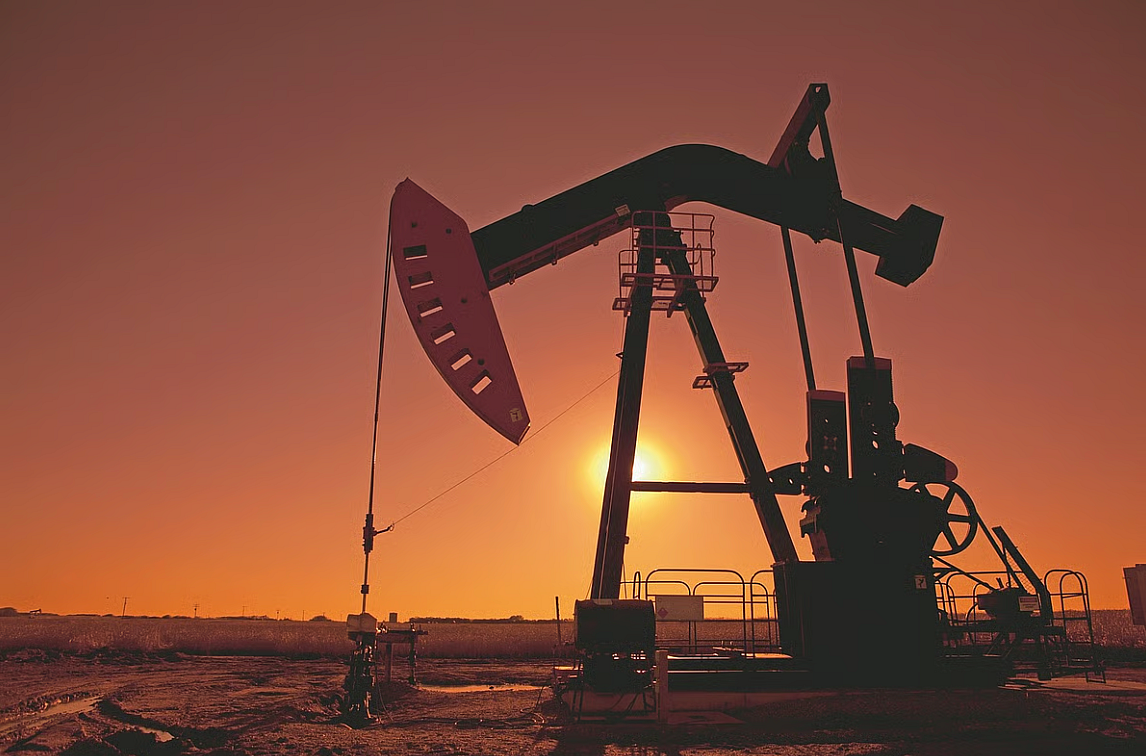
Will US Attack On Venezuela Have Major Impact On Oil Prices?
(MENAFN- Khaleej Times)
[Editor's note: Follow the Khaleej Times' live blog for real-time updates on US strikes in Venezuela ]
The US strikes on Venezuela, which led to the capture of its president on Saturday (January 3) is unlikely to have a major impact on oil prices due to heavy sanctions already imposed on the South American nation, and the market remains well-oiled, say analysts.
Recommended For You Musk's Grok floods X with sexualised photos of children, women as users give bot lewd promptsSamer Hasn, senior market analyst at xs, said at first glance, it appears that a war has erupted in the country holding the world's largest oil reserves, which could, in theory, reinforce the bullish narrative for oil prices. However, several realities significantly weaken this narrative.
“Venezuela is not among the world's major oil exporters due to the sanctions imposed on its exports, ranking only in the low twenties globally. As such, a US attack is unlikely to trigger a material supply crisis. Moreover, the oil market remains deeply oversupplied,” said Hasn.
Stay up to date with the latest news. Follow KT on WhatsApp Channels.
According to the International Energy Agency, the oil market will see a supply surplus of 3.85 million barrels per day in 2026; hence, a small shortfall is unlikely to have an impact on crude prices.
Amena Bakr, head of Middle East Energy and Opec+ Insights at Kpler, also sees a muted response from the energy markets due to the US-Venezuela conflict.
“I'm still expecting a muted response from oil markets, which continue to underestimate geopolitical risk,” she said on Saturday.
In December, US President Donald Trump announced a blockade of all sanctioned vessels going in or out of Venezuelan waters to put further pressure on the South American nation's president.
On December 31, 2025, the US imposed sanctions on four companies it said were operating in Venezuela's oil sector, as well as associated oil tankers.
Since the UAE has aligned its retail petrol prices with global rates, any fluctuation in Brent and WTI prices impacts local rates in the Emirates. For the month of January 2026, the UAE reduced the petrol rates to bring them in line with the global rates as prices remained subdued in December 2025.
Up to 1m bpd gapVijay Valecha, chief investment officer of Century Financial, said that energy markets are likely to turn more volatile as oil prices, historically, have tended to show a gap during times of geopolitical uncertainty.
“As an instance, during the US strike on Iranian underground nuclear facilities last year, oil prices spiked by seven per cent during the initial market open session. Similar kinds of moves have happened during the past cycles as well.
"In terms of actual demand and supply, Venezuela's current contribution to the global energy supply is minuscule. The worst-case disruption of 0.7 million to one mbpd out of the total energy supply of 100 mbpd is small. However, for energy market participants, the biggest fear is further escalation in the crisis, which could see involvement of more players in the region,” said Valecha.
He added:“For Venezuela, it counts Iran as one of its main trading partners and natural allies. To quote in terms of specific numbers, during the past Middle Eastern geopolitical crisis, the average risk premium discounted by markets is in the range of $10-plus a barrel.
"Energy markets are likely to see a gap open in tomorrow night's early opening bid. The subsequent price action will depend on how the news flow comes out of the region as well as President Trump's own rhetorical tweets and statements."
3 supply shocksHasn believes that the market reaction would either be an initial rally followed by a renewed and sharp sell-off under pressure from the aforementioned fundamentals, or a purely bearish initial response that pushes prices toward lower lows.
“That said, the Venezuelan file cannot be viewed in isolation from other conflicts. Concerns persist over an escalation of the Russia–Ukraine war, particularly following attacks on Russian oil facilities and tankers, which could threaten further supply losses from the market.
“In addition, the Middle East has returned to the forefront amid increasingly escalatory rhetoric between Israel and Iran. The realisation of the worst-case scenario, namely the closure of the Strait of Hormuz or attacks on oil shipping routes and pipelines in the region, could trigger a severe market shock.”
He noted that the most severe scenario of all would be the simultaneous convergence of these three supply shocks, which could propel oil prices back to levels not seen in years.“I do not believe that the US administration would allow such a scenario to unfold concurrently, as it would intensify inflationary pressures even more severely than in 2022. Overall, speculative sentiment in the oil market is strongly skewed to the downside,” he added.

Legal Disclaimer:
MENAFN provides the
information “as is” without warranty of any kind. We do not accept
any responsibility or liability for the accuracy, content, images,
videos, licenses, completeness, legality, or reliability of the information
contained in this article. If you have any complaints or copyright
issues related to this article, kindly contact the provider above.
Most popular stories
Market Research

More Story








Comments
No comment