




403
Sorry!!
Error! We're sorry, but the page you were looking for doesn't exist.

Delhi AQI Edges Close To 'Severe' Category, Crosses 400-Mark In These Areas
(MENAFN- Live Mint) Delhi's overall air quality remained in the "very poor" category but edged close to the 'severe' mark with the Air Quality Index (AQI) recorded at 391 early Sunday, December 28.
The AQI was 385, in the "very poor" category, on Saturday, according to the Central Pollution Control Board (CPCB) bulletin released around 4 pm.
Several areas across the Delhi-NCR region recorded even worse air quality, with AQI levels exceeding the 400 mark.
Also Read | Delhi AQI crosses 400 in several areas days after anti-pollution curbs liftedAround 8 am on Sunday, Anand Vihar recorded an AQI of 445. It was 427 in Ashok Vihar, 344 in Aya Nagar, 402 in Dwarka-Sector 8, 423 in Okhla Phase-2 and 435 Wazirpur, according to CPCB live tracker.
The CPCB classifies AQI levels between 0 and 50 as 'good', 51-100 'satisfactory', 101-200 'moderate', 201-300 'poor', 301-400 'very poor' and 401-500 'severe'.
The air quality is likely to remain in the very poor category in the coming days, according to the forecast.
Delhi air worsensDelhi witnessed relatively better air quality on Wednesday and Thursday, before pollution levels began to spike once again from Friday, with AQI readings nearing the severe category.
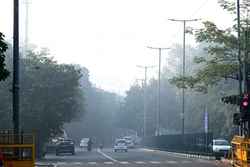
Earlier on Saturday morning, Delhi's air quality had worsened, slipping back into the 'Very Poor' category, with the Air Quality Index (AQI) exceeding 300 in many areas. Thick smog and fog trap pollutants, reducing visibility and disrupting daily life.
Also Read | Smog returns to Delhi: AQI slips to 'very poor' rangeA combination of cold weather, calm winds, and dense fog is trapping pollutants, leading to haze and smog. This cycle of poor air quality is expected to persist under current weather patterns, prompting ongoing monitoring and calls for stricter pollution-control measures.
'Very Poor' air quality requires people, especially vulnerable groups (children, elderly, those with respiratory issues), to limit prolonged outdoor exposure and wear masks.
Govt takes actionAuthorities are monitoring pollution levels and enforcing measures such as the 'No PUC, No Fuel' rule to address the situation.
The Commission for Air Quality Management invoked Stage III measures under the Graded Response Action Plan, including restrictions on construction and industrial activities.
Also Read | Delhi's weather forecast: Here's what to expect for next few daysEarlier, the Delhi Cabinet, under the leadership of Chief Minister Rekha Gupta, approved a series of significant decisions to strengthen the capital's fight against pollution and improve environmental governance.
The Cabinet approved an allocation of Rs. 100 crore for the rejuvenation of water bodies under the Delhi government. There are around 1,000 such water bodies in the national capital, of which 160 fall under the Delhi government's jurisdiction.
Also Read | Taj Mahal loses its sheen in a blanket of smog as Agra AQI nears 'severe' markDelhi Environment Minister Manjinder Singh Sirsa said, "The rejuvenation of Delhi's water bodies will play a crucial role in pollution control. The Chief Minister has directed that every possible financial support be extended to complete this work within the year."
The Cabinet also approved the establishment of Delhi's first E-Waste Park at Holambi Kalan, spread across 11.5 acres. The facility will adhere to the highest pollution-control standards and operate on a 100 per cent circular, zero-waste model.
"This will be India's first state-of-the-art e-waste facility built on zero pollution and zero wastage principles. The plant will fully recycle and reuse water through an advanced recirculation mechanism," Sirsa said.
(With inputs from ANI)

Legal Disclaimer:
MENAFN provides the
information “as is” without warranty of any kind. We do not accept
any responsibility or liability for the accuracy, content, images,
videos, licenses, completeness, legality, or reliability of the information
contained in this article. If you have any complaints or copyright
issues related to this article, kindly contact the provider above.
Most popular stories
Market Research

More Story






Comments
No comment