




403
Sorry!!
Error! We're sorry, but the page you were looking for doesn't exist.
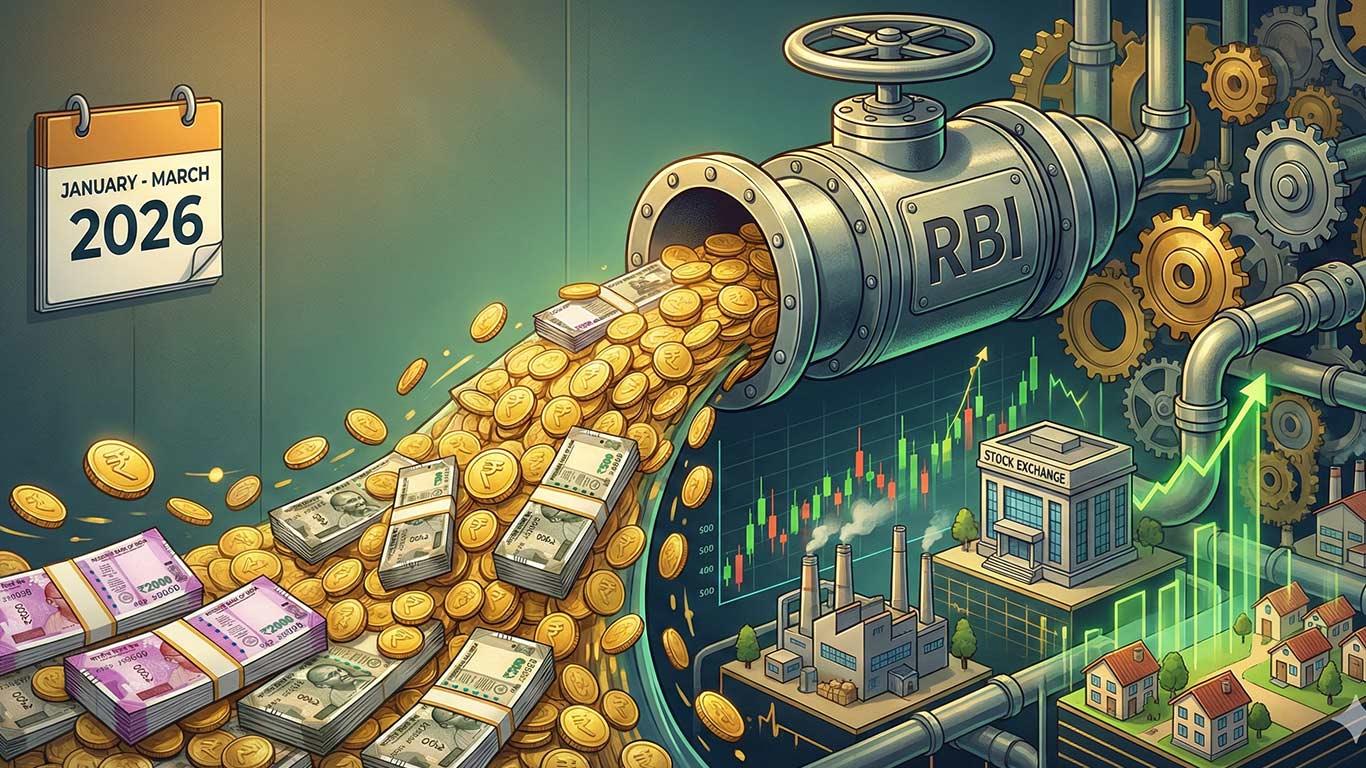
RBI Likely To Inject Up To Rs 2.5 Lakh Cr Via Omos In Janmar 2026: HSBC Report
(MENAFN- KNN India)
New Delhi, Dec 26 (KNN) The Reserve Bank of India (RBI) is expected to inject liquidity of about Rs 1.5 lakh crore to Rs 2.5 lakh crore during the January–March quarter of calendar year 2026 through open market operations (OMOs), according to a report by HSBC Asset Management.
The report added that the central bank could undertake additional OMOs worth Rs 2 lakh crore to Rs 3 lakh crore over the remainder of 2026, depending largely on the movement of foreign exchange assets on the RBI's balance sheet.
Positive Implications for Bond Markets
HSBC noted that such liquidity infusion would likely improve demand-supply dynamics in the central government securities market, providing support to bond prices, reported ANI.
It identified a potential confirmation of India's inclusion in the Bloomberg Global Aggregate Index in the first quarter of 2026 as a key trigger for bond markets. Inclusion in the index could attract foreign portfolio investor inflows of USD 15–20 billion, creating a favourable technical environment for government securities.
Rates Outlook and Market Volatility
On the macroeconomic front, the report said conditions remain broadly supportive of keeping interest rates steady and lower for longer, although risks from global and external developments persist.
As the current easing cycle nears its end, HSBC expects fixed-income markets to enter a phase of consolidation, marked by wide trading ranges and higher volatility, as investors begin to focus on the timing of a potential shift away from accommodative monetary policy.
Rupee Remains a Key Risk Factor
The report flagged the rupee's trajectory as a major area of concern. It said currency management in 2025 has been challenging for the RBI amid rising dollar demand, a widening trade deficit and capital outflows, all of which have exerted pressure on the rupee.
An early trade agreement with the United States was identified as a potential positive factor that could improve India's relative position among exporters.
HSBC observed that the rupee has historically experienced sharp depreciation episodes every two to three years, often triggered by major global events, followed by periods of stabilisation aligned with domestic macroeconomic fundamentals.
While the precise peak of the current depreciation phase is difficult to determine, the report suggested that India may be closer to the end of the sharp weakening cycle, with the currency likely to stabilise within a narrower range through the rest of 2026.
(KNN Bureau)

Legal Disclaimer:
MENAFN provides the
information “as is” without warranty of any kind. We do not accept
any responsibility or liability for the accuracy, content, images,
videos, licenses, completeness, legality, or reliability of the information
contained in this article. If you have any complaints or copyright
issues related to this article, kindly contact the provider above.
Most popular stories
Market Research

More Story





Comments
No comment