


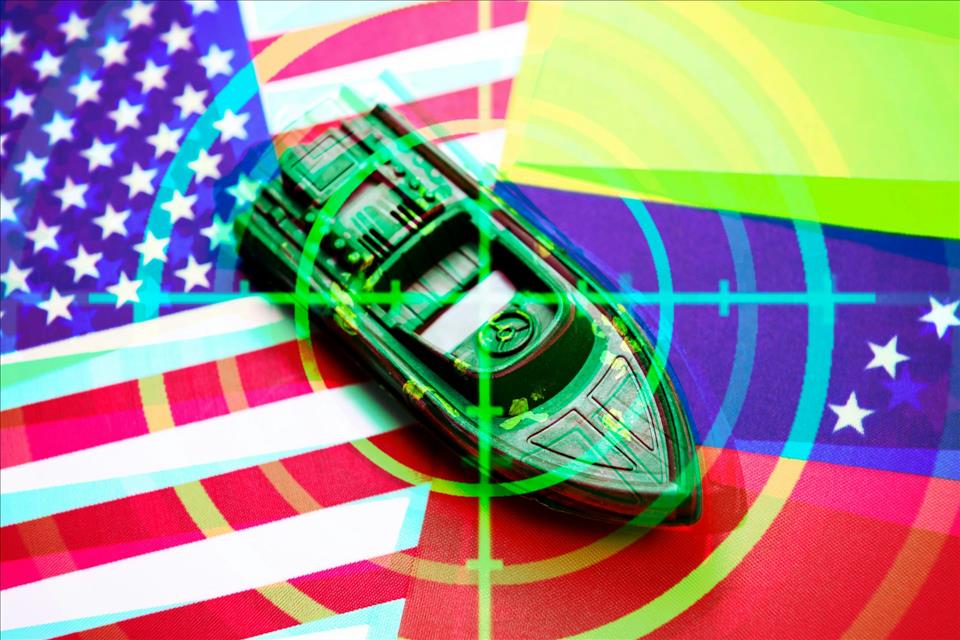
Donald Trump's Strikes Against Narcoterrorists Are New But The Logic Behind Them Isn't


Experts, non-governmental organisations and the UN have condemned the strikes as unlawful assassinations and Washington's claim that it is acting in self-defence does not appear to hold up to legal analysis.
Yet these attacks are not a dramatic break. They extend a decades-long pattern of US“targeted killings”, from Yemen to Somalia to Syria. These attacks are almost always justified through controversial legal interpretations and have often been met with muted international opposition.
There's a chance that the current narrative doesn't address the deeper, more meaningful criticisms of the thinking behind it.
Recent escalations by the Trump administration in targeting what the White House describe as narcoterrorists in the Caribbean have sparked significant debate. The attacks against accused drug traffickers have been extensively reported and the UN High Commissioner for Human Rights has called on the US government to halt the“extrajudicial killing of people aboard these boats, whatever the criminal conduct alleged against them”.
The Trump administration has vaguely justified the attacks through the right to self-defence in an armed conflict against narcoterrorists. But that claim has been refuted by UN experts, who have pointed out that“international law does not permit the unilateral use of force abroad to fight terrorism or drug trafficking”.
Under international law, the use of force in self-defence can only be justified if an armed attack against a state has occurred first or is imminent. For a situation to be classed as an armed conflict, certain threshold requirements need to be reached. Simply declaring that you are in an armed conflict with a group does not make it so.
Furthermore, criminals are not combatants, no matter how politically and socially problematic they may be. As such, lethal actions against them infringe upon fundamental human rights obligations – such as the right to life and the right to a fair trial.
'War on terror'The assaults and their justifications undoubtedly represent a troubling new development in US military practices. Yet the focus on attacks against drug criminals in the Caribbean obscures the similarities to current military operations conducted by the US against people they have designated as terrorists in the Middle East and Africa.
These have received barely any attention in public debates even though hundreds of people have recently been killed in Yemen, as well as in attacks in Syria, Iraq and Somalia.
The current campaign in the Caribbean is part of a broader pattern. For more than two decades, successive US administrations have carried out targeted killings overseas under contested definitions of what combatants are and what constitutes an armed conflict during the so-called“war on terror”.
The US-led campaign against Islamic State killed thousands of people, with civilian deaths estimated between 8,000 and 13,000 between 2014 and 2019. US airstrikes in Somalia and Yemen continue. Strikes at the port of Ras Isa and Sadaa's remand migration detention centre a few months ago appear to have killed at least 150 civilians and injuring 200 more.
A witness, interviewed by Amnesty International described the attack on the migration centre:“They said they woke up to find dismembered bodies around them. You could see the shock and horror on their faces.”
The first attack on a so-called 'drug boat' in the Caribbean, close to Venezuela, September 2 2025.
It is worth remembering that the UK and other European powers have often participated in and facilitated such attacks and rarely challenged their legality.
Many countries have been fearful of directly confronting the US and objecting to these infringements of international law. As I have showed elsewhere, the legality of targeted killing strikes of terrorists outside of armed conflict has been consistently rejected by the overwhelming majority of countries.
States have characterised such practices by Israel as extrajudicial executions and have indicated concern over US practices – but they have often stopped short of openly opposing a global superpower.
So the strikes in Venezuela follow a pattern used regularly by the US and others. The Trump administration may have justified its strikes by coming up with the new and deeply problematic category of narcoterrorists. But the underlying logic remains unchanged. The US claims the authority to execute any individual it deems a threat – wherever and whenever it chooses.
Normalising murderThe consequences of this pattern are hardly unforeseeable. Experts have long warned that normalising such practices risks undermining the prohibition on the use of force and of extrajudicial killings. This potentially sets a precedent for powerful states to use lethal force against anyone they deem inconvenient.
The risk is that the monstrosity of this logic becomes obscured and the idea of targeting non-combatant narcoterrorists is eventually normalised once the initial surge of outrage fades. Already, the discussion in some quarters is beginning to shift from whether such strikes should occur to how they should be conducted, focusing on issues like target identification.
And while the attacks on drug traffickers rightly attract scrutiny, comparatively little attention is paid to the continuing, systemic use of lethal operations in parts of Africa or the Middle East, which often takes place under similar legal rationales.
This relative silence is significant. As I argue in my forthcoming book Silent War, this lack of protest and media attention – and the silence in public debates – not only reflects orientalist assumptions and power asymmetries. It also effectively enables and legitimises such political aggression.


Legal Disclaimer:
MENAFN provides the
information “as is” without warranty of any kind. We do not accept
any responsibility or liability for the accuracy, content, images,
videos, licenses, completeness, legality, or reliability of the information
contained in this article. If you have any complaints or copyright
issues related to this article, kindly contact the provider above.


Comments
No comment