




403
Sorry!!
Error! We're sorry, but the page you were looking for doesn't exist.
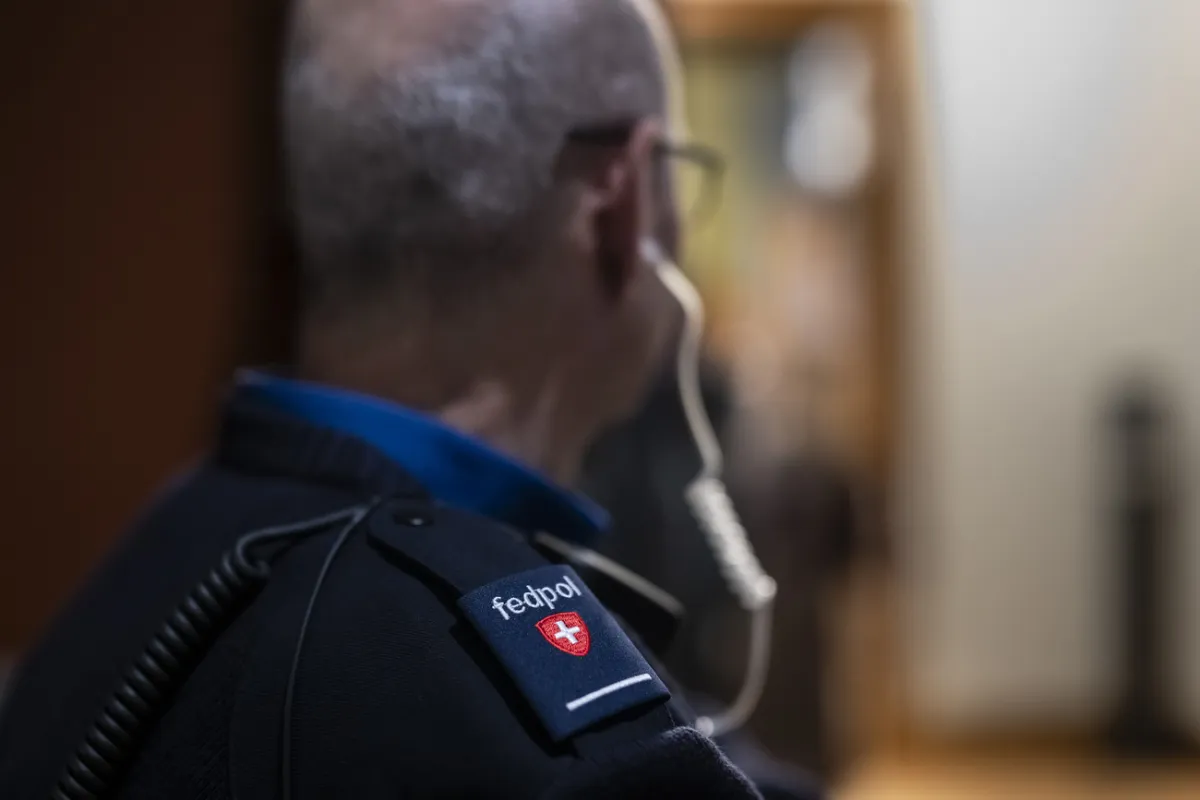
Switzerland To Adopt A National Strategy To Combat Organised Crime
(MENAFN- Swissinfo)
Switzerland is increasingly affected by organised crime. To counter this growing threat, the country is to adopt a national strategy by the end of 2026. For the new director of the Federal Police Office (fedpol), Eva Wildi-Cortés, this shift is“crucial” if Switzerland is to continue fighting criminal networks effectively.
This content was published on
December 10, 2025 - 11:00
5 minutes
RTS
-
Deutsch
de
Fedpol-Chefin:“Die Mafia ist auf unseren Strassen präsent”
Read more: Fedpol-Chefin:“Die Mafia ist auf unseren Strassen prä
Français
fr
La Suisse va se doter d'une stratégie nationale de lutte contre le crime organisé
Original
Read more: La Suisse va se doter d'une stratégie nationale de lutte contre le crime orga
The International Criminal Police Organization (Interpol) has identified more than 800 criminal organisations active in Europe.“Most of them are also in Switzerland. We are talking about the Balkan mafia, the Albanian mafia, the Nigerian brotherhoods, the Moroccan mafia, the Italian mafia. There are also Turkish, Chinese and Dutch criminal organisations,” Wildi-Cortés told Swiss public television, RTS.
This rise in criminal activity has led Switzerland's Federal Intelligence Service to raise the threat level for organised crime from level 3 to level 5 (on a scale of 6) over the past two years.
In an interview with La Liberté newspaper in June 2024, the Lucerne native described the fight against organised crime as her“priority”, even warning that“the mafia is on our streets”.“It is quite visible: we are talking about barbers, nail studios, kebab shops and pizzerias. They are used for money laundering,” she said.
Why Switzerland is attractive to criminal networksSwitzerland's geographical location, political stability and strong financial sector make it a favourable hub for criminal groups involved in money laundering, drug and arms trafficking and human trafficking.
“We are at the centre of Europe, with a stable financial centre and political system. As a people, that is what we appreciate – but it is also what criminal organisations appreciate,” says Wildi-Cortés, who succeeded Nicoletta della Valle earlier this year.
Towards a national strategyGiven this situation, cantonal justice and police directors met last week to discuss the introduction of a nationwide strategy to combat organised crime. The plan is expected to be presented by the end of the year, once approved by the Swiss government.
Cantons have welcomed the move, noting their growing concerns about internal security. For many cantonal leaders, it is essential that the government commit sufficient resources, especially financial, to address the multiple levels of organised crime.
Wildi-Cortés warns that the strong mafia presence in Switzerland significantly raises the risk of violence.“I am convinced that this poses a risk for society, for the rule of law and for democracy,” she says.
Weak cantonal cooperationThe forthcoming strategy will be built around several pillars, including prevention, repression and international cooperation.“The aim is to strengthen the legal basis for combating organised crime more effectively, but also to allocate more means and resources,” said Wildi-Cortés.
A key element, which has been strongly requested by the cantons, is greater legislative flexibility to accelerate data exchanges between cantonal police forces. Wildi-Cortés describes this as“crucial”, calling the current situation“a real weak point” in Switzerland's ability to fight organised crime.
The threat posed by organised crime has almost overshadowed the terrorist threat, which has been less in the news recently. This does not mean, however, that fedpol is any less concerned about it.
“We have the means to fight terrorism – unlike organised crime – which remains a threat, but one that tends to come from individuals. It's a priority, absolutely, because the danger is there,” says Eva Wildi-Cortés.
The Senate, the first chamber to deliberate on the 2026 budget, set the tone on Tuesday after five hours of debate. The priority is security: several tens of millions more have been allocated to the army, cyber security and fedpol.
The Senate increased the defence budget by CHF70 million ($87 million) to CHF2.78 billion. It allocated CHF26 million instead of CHF16 million to cyber security, and added CHF1 million to the budget for fedpol.
The budget for the federal police, which is no longer able to carry out all investigations due to a lack of resources, has thus risen to just over CHF296 million.“I'm very pleased with this decision. It corresponds to around ten extra investigator posts. We will be able to strengthen our teams to fight organised crime, terrorism and cybercrime,” Eva Wildi-Cortés said.
The director of the Federal Police pointed out that the Federal Audit Office had identified a shortfall in fedpol's resources, which she put at around 100 posts for investigators and specialists.“This is what we need to do our job properly”, she said.
Translated from French using AI/amva/ts
Popular Stories Most DiscussedIn compliance with the JTI standards
More: SWI swissinfo certified by the Journalism Trust Initiati
You can find an overview of ongoing debates with our journalists here. Please join us!
If you want to start a conversation about a topic raised in this article or want to report factual errors, email us at ....

Legal Disclaimer:
MENAFN provides the
information “as is” without warranty of any kind. We do not accept
any responsibility or liability for the accuracy, content, images,
videos, licenses, completeness, legality, or reliability of the information
contained in this article. If you have any complaints or copyright
issues related to this article, kindly contact the provider above.
Most popular stories
Market Research









Comments
No comment