




403
Sorry!!
Error! We're sorry, but the page you were looking for doesn't exist.
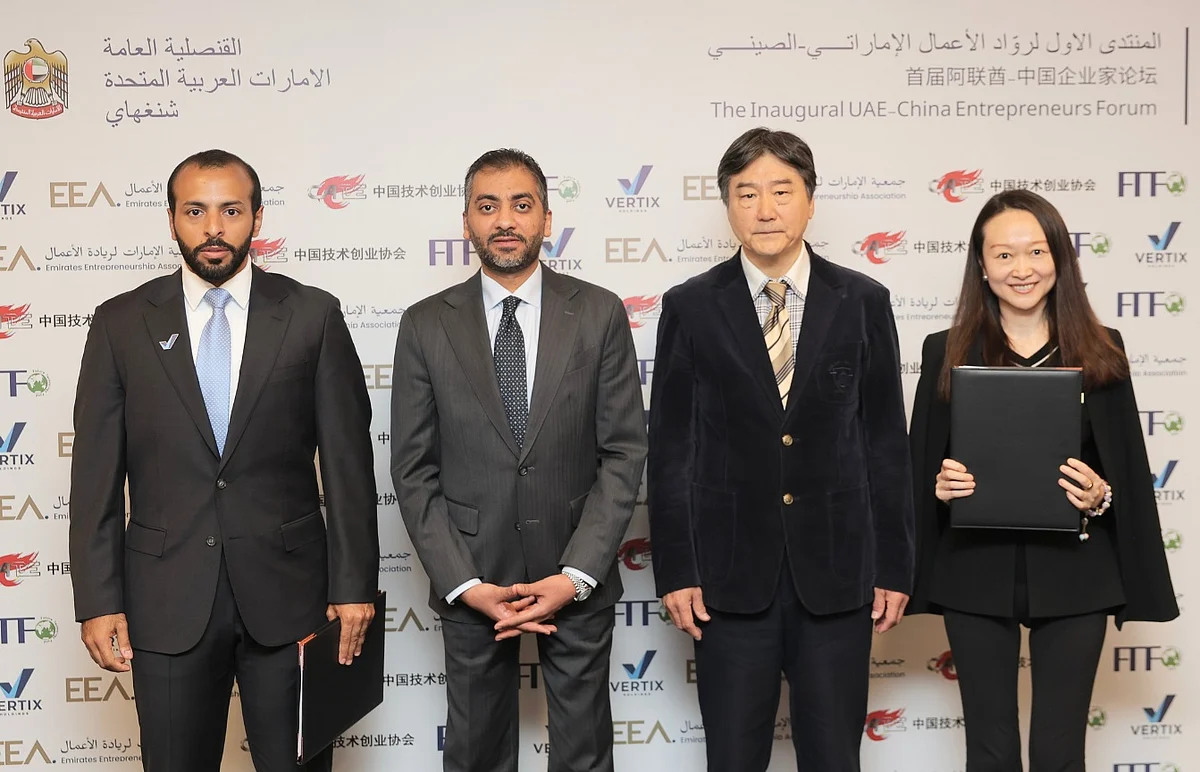
Uaechina Start-Up Push Eyes $200B Trade Goal By 2030
(MENAFN- Khaleej Times)
The UAE and China have moved to turbocharge one of the world's fastest-growing economic relationships, unveiling a series of entrepreneurship and technology agreements designed to propel bilateral trade from $101.8 billion in 2024 to an ambitious $200 billion by 2030.
The announcement came at the UAE–China Entrepreneurs Forum in Shanghai, where more than 60 Chinese advanced-technology start-ups joined leading Emirati business and government figures to map out the next phase of cross-border innovation.
Recommended For You IndiGo passengers left in tears as massive flight cancellations cost some their jobsThe scale of collaboration is significant: the Forum focused on high-growth sectors including artificial intelligence, machine learning, robotics, fintech, sustainable manufacturing and advanced industrial technologies - all areas that both countries identify as core to their economic futures. The pacts signed between Emirates Entrepreneurs Association, Abu Dhabi–based Vertix Holdings, China Future Technology Fund and the Innovation and Integration arm of the China Association of Technology Entrepreneurs aim to widen investment flows, accelerate start-up cooperation and deepen technological integration.
China's start-up ecosystem, one of the largest and most sophisticated in the world, offers a major opportunity for the UAE as it makes a global push to expand its innovation economy. China hosts more than 116,383 start-ups, supported by a powerful venture-capital landscape in which 32,700 companies have collectively raised $1.02 trillion in VC and private equity.
China is home to 146 unicorns - a number that positions it among the world's top innovation hubs - with more than 11,200 investors having participated in over 30,500 funding rounds. Some 5,813 Chinese start-ups have secured early-stage capital, while 1,670 have raised late-stage funding, reflecting a pipeline that is deep, well-capitalised and globally competitive.
The pace of entrepreneurship in China has remained intense. In the past five years alone, more than 10,000 new companies have been launched, raising over $17.5 billion in funding. Across the ecosystem, China has recorded 1,744 acquisitions, 4,717 IPOs and nearly 2,000 women-founded companies - figures that underscore the maturity and diversity of its innovation economy. In 2024, Chinese start-ups attracted 2,537 VC deals with disclosed funding reaching $35.2 billion.
For the UAE, partnering with such a large and well-developed innovation system is a strategic accelerator. The Emirates now house 52,719 start-ups as of late 2025, with approximately 2,815 raising around $97 billion in venture capital and private equity. The UAE's own unicorn count - estimated between 11 and 14 - continues to rise, supported by a nationwide start-up growth rate of more than 32 per cent and an even higher 33.4 per cent expansion in Dubai. Government targets are equally ambitious: the UAE aims to grow the number of companies operating within its borders to more than two million by 2031.
Funding trends reflect this upward trajectory. UAE tech start-ups secured $2 billion in funding by the third quarter of 2025, led by enterprise-tech, fintech and proptech. Investor confidence, regulatory support, free-zone incentives and a pipeline of mega-rounds have positioned the UAE among the most dynamic innovation ecosystems in the wider Middle East and South Asia.
Against this backdrop, the new UAE–China agreements represent a major step toward aligning two entrepreneurial powerhouses. At the signing ceremony, attended by UAE Consul General in Shanghai Muhannad Sulaiman Al Naqbi, Vertix Holdings Chairman Amer Al Ahbabi said the Forum“ushers in a new era in UAE–China entrepreneurship and start-up cooperation” and will accelerate cross-border investment in critical future-economy sectors including AI, microchips and smart computing.
Vertix Vice-Chair Khalifa Al Dhaheri said the partnership is designed not only to drive investment but to build a“sustainable innovation ecosystem” that will support shared economic growth. He noted that Abu Dhabi will soon host follow-up engagements and strategic project launches.
The momentum behind the Forum reflects the broader expansion in UAE–China ties. Bilateral trade has risen sharply in recent years - from $80 billion in 2023 to $101.8 billion in 2024 - buoyed by strong investment, new visa-free travel arrangements and deepening Belt and Road cooperation. With non-oil sectors such as technology, renewable energy and advanced manufacturing now becoming central to the partnership, both countries see innovation as the engine that will push trade past the $200 billion mark by the end of the decade.
If executed effectively, the agreements signed in Shanghai could reshape the economic corridor linking the Gulf and East Asia - positioning the UAE as a global hub for cross-border innovation and China as a driving force in the Emirates' rapidly advancing future-economy landscape.

Legal Disclaimer:
MENAFN provides the
information “as is” without warranty of any kind. We do not accept
any responsibility or liability for the accuracy, content, images,
videos, licenses, completeness, legality, or reliability of the information
contained in this article. If you have any complaints or copyright
issues related to this article, kindly contact the provider above.
Most popular stories
Market Research

More Story







Comments
No comment