







403
Sorry!!
Error! We're sorry, but the page you were looking for doesn't exist.
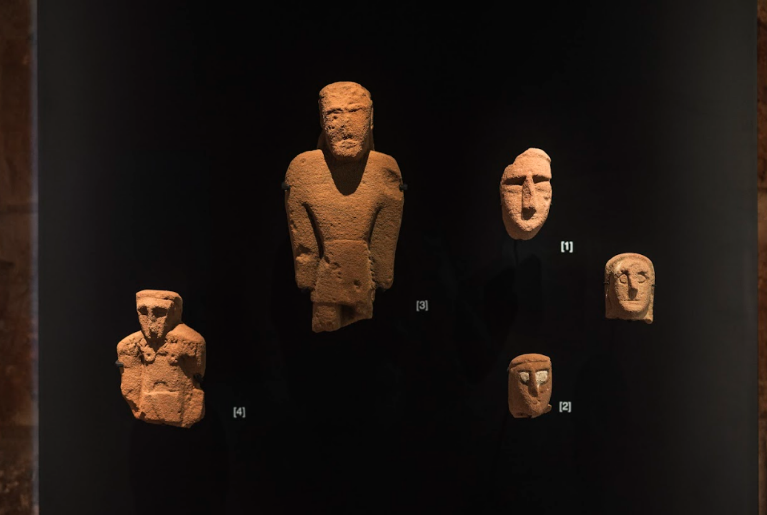
New Exhibition In Alula Reveals Shoots Of Globalisation First Sown In The Ancient City Of Dadan
(MENAFN- Mid-East Info) . Illuminating Discoveries – Uncovering the layers of Dadan's History' a new permanent exhibition opens in AlUla
. Never before seen artefacts uncover a story of deep global connectivity and sophistication far before 1st millennia BCE December, 2025, AlUla, Saudi Arabia – The fascinating, ancient and vibrant story of Dadan, the former capital of the Kingdoms of Dadan and Lihyan, is revealed for global audiences to discover and explore in-depth in a new permanent exhibition titled 'Illuminating Discoveries – Uncovering the layers of Dadan's History'. Displayed at the spectacular Dadan archaeological site in the ancient oasis city of AlUla, northwest Arabia, the permanent interpretive exhibition presents the diverse crafts, practices and evidence of ancient intercultural exchange, highlighting Dadan's role as major political and trading centre on the Incense Road during the 1st millennium BCE and earlier. Presenting an exciting new chapter in the modern world's knowledge of ancient Arabia and its storied history, 'Illuminating Discoveries – Uncovering the layers of Dadan's History' features more than 100 artefacts painstakingly recovered from the ruins by international teams working in AlUla's Dadan archaeological site and the mountaintop sanctuary of Umm Daraj in the last five years. With the camel's domestication opening vast new overland routes, the incense trade flourished, elevating Dadan into a thriving powerhouse of commerce and cross-cultural connection. Over time, the Incense Road grew into one of the most lucrative and influential trading networks of the ancient world, shaping economies and societies across thousands of kilometres. Artefacts now on display depict the breadth of trader's journeys placing AlUla at the centre of a surprisingly connected and sophisticated global network. Highlighted objects include figurines with connections to Greece, a Roman or Byzantine bone hairpin and inscriptions in stone in a south Arabian language. A dynasty of cultured and sophisticated civilisations interconnected with the ancient world, where farming began in Dadan around the 3rd millennia BCE. Archaeologists have found evidence of handcraft from the 2nd millennia BCE, a thousand years before the establishment of the Roman Empire. Evidence of a deep tradition of craft as part of daily life shows the sophistication and human ingenuity of the people. New finds include examples of complex metal work, as well as evidence for the production of textiles made by weaving and spinning techniques. Once central to life in the city, these traditions and crafts are being revitalised today as part of the Royal Commission for AlUla's (RCU) cultural and heritage regeneration of AlUla. Including unique objects, the majority of which have never been displayed to the public before, the exhibition is spread across five comprehensive sections: Crafts and Daily Life in Ancient Dadan; Exchange and Trade; Ancient Beliefs and Rituals; Scripts in Stone; and Umm Daraj. Included among the collection of ancient items is a copper-alloy spearhead dating from around 400–50 BCE. Surveys across the cliffs of Dadan revealed hundreds of inscriptions and striking rock art, including a battle scene showing four riders armed with long spears, while rock art from the adjoining desert valley of Wadi AlNaam depicts a horseman with a spear hunting an ostrich. Dating to the late 4th to 1st century BCE, a terracotta head was discovered in an urban neighbourhood in Dadan. Imported from the ancient Greek world, it may once have formed part of a Tanagra figurine – a style of small, finely modelled figures produced in central Greece and traded widely across the Mediterranean and even as far as Babylon. The head highlights how Mediterranean styles were absorbed into the cultural landscape and traded across northwest Arabia during the Lihyanite period. Dating from 400–50 BCE, a striking statue, with the inlay still visible in one eye, uncovered in an ancient shrine at the foot of Dadan's cliffs showcases the fine craftsmanship of highly symbolic items produced during the Lihyanite period, while another statuette marked by its long hair was also found in the same location. The standing figure, dressed in a belted garment, has only one surviving arm hanging straight at the side. Its eyes would have once been inlaid with bone. A fragment of sandstone inscription from the 1st millennium BCE wonderfully preserves part of a monumental Ancient South Arabian (Minaic) inscription. Carved in bold relief and likely originating from an ancient public or religious building, only two signs – w and d – survive, but together they likely refer to Wadd, the chief deity worshipped by the Minaean community at Dadan. The Minaeans, merchants from the south Arabian kingdom of Ma'in, established a presence in Dadan as part of their long-distance trading networks, leaving behind inscriptions that record their cultural practices. As an example of ancient language in its written form, the stone fragment shares a connection with the nearby 'open air library' at Jabal Ikmah. Inscribed on UNESCO's Memory of the World Register, Jabal Ikmah is home to almost 300 inscriptions predominantly dated to when the Dadanites and Lihyanites ruled from Dadan. Dr. Abdurahman Alsuhaibani, Vice President of Culture at RCU and Co-Director of the Dadan Project, said:“Dadan is a truly remarkable place that one could say was the world's first truly connected centre. An ancient capital, it was one of the most sophisticated and important cities of its time – a fascinating fact that continues to reveal itself through the incredible range and diversity of artefacts uncovered by teams of Saudi and international experts on the ground. This wonderful new, permanent exhibition offers visitors unique insights into the lives, beliefs and practices of the people of Dadan, how they ruled the region and how they interacted with other cultures.” The exhibition was made possible by a collaboration between the Royal Commission for AlUla (RCU), The French National Centre for Scientific Research (CNRS) and the French Agency for AlUla Development (AFALULA), who have led Saudi-French archaeological missions leading on the excavations in Dadan in recent years. The 2025–26 season in AlUla launches one of the region's most diverse heritage research efforts to date, with more than 100 archaeologists and specialists from leading Saudi and international institutions working across over six major projects. From new excavations at Hegra and Dadan to large-scale inscription and environmental studies, this is AlUla's most ambitious programme yet-advancing knowledge, building Saudi capacity, and reinforcing the Kingdom's position as a global leader in cultural heritage research. Visitors to AlUla who book a ticket to the Dadan and Jabal Ikmah tour will enjoy exclusive access to the 'Illuminating Discoveries – Uncovering the layers of Dadan's History' as part of their experience. About AlUla: Located 1,100 km from Riyadh, in North-West Saudi Arabia, AlUla is a place of extraordinary natural and human heritage. The vast area, covering 22,561km2, includes a lush oasis valley, towering sandstone mountains and ancient cultural heritage sites dating back thousands of years to when the Lihyan and Nabataean kingdoms reigned. The most well-known and recognised site in AlUla is Hegra, Saudi Arabia's first UNESCO World Heritage Site. A 52-hectare ancient city, Hegra was the principal southern city of the Nabataean Kingdom and is comprised of 111 well-preserved tombs, many with elaborate facades cut out of the sandstone outcrops surrounding the walled urban settlement. Current research also suggests Hegra was the most southern outpost of the Roman Empire after the Romans conquered the Nabataeans in 106 CE. In addition to Hegra, AlUla is also home to ancient Dadan, the capital of the Kingdoms of Dadan and Lihyan, and considered to be one of the most developed 1st millennium BCE cities of the Arabian Peninsula, and Jabal Ikmah, an open-air library of hundreds of inscriptions in many different languages, which has been recently listed on the UNESCO's Memory of the World Register. Also AlUla Old Town Village, a labyrinth of around 900 mudbrick dwellings and buildings, developed from at least the 12th century, which has been selected as one of the World's Best Tourism Villages in 2022 by the UNWTO.
. Never before seen artefacts uncover a story of deep global connectivity and sophistication far before 1st millennia BCE December, 2025, AlUla, Saudi Arabia – The fascinating, ancient and vibrant story of Dadan, the former capital of the Kingdoms of Dadan and Lihyan, is revealed for global audiences to discover and explore in-depth in a new permanent exhibition titled 'Illuminating Discoveries – Uncovering the layers of Dadan's History'. Displayed at the spectacular Dadan archaeological site in the ancient oasis city of AlUla, northwest Arabia, the permanent interpretive exhibition presents the diverse crafts, practices and evidence of ancient intercultural exchange, highlighting Dadan's role as major political and trading centre on the Incense Road during the 1st millennium BCE and earlier. Presenting an exciting new chapter in the modern world's knowledge of ancient Arabia and its storied history, 'Illuminating Discoveries – Uncovering the layers of Dadan's History' features more than 100 artefacts painstakingly recovered from the ruins by international teams working in AlUla's Dadan archaeological site and the mountaintop sanctuary of Umm Daraj in the last five years. With the camel's domestication opening vast new overland routes, the incense trade flourished, elevating Dadan into a thriving powerhouse of commerce and cross-cultural connection. Over time, the Incense Road grew into one of the most lucrative and influential trading networks of the ancient world, shaping economies and societies across thousands of kilometres. Artefacts now on display depict the breadth of trader's journeys placing AlUla at the centre of a surprisingly connected and sophisticated global network. Highlighted objects include figurines with connections to Greece, a Roman or Byzantine bone hairpin and inscriptions in stone in a south Arabian language. A dynasty of cultured and sophisticated civilisations interconnected with the ancient world, where farming began in Dadan around the 3rd millennia BCE. Archaeologists have found evidence of handcraft from the 2nd millennia BCE, a thousand years before the establishment of the Roman Empire. Evidence of a deep tradition of craft as part of daily life shows the sophistication and human ingenuity of the people. New finds include examples of complex metal work, as well as evidence for the production of textiles made by weaving and spinning techniques. Once central to life in the city, these traditions and crafts are being revitalised today as part of the Royal Commission for AlUla's (RCU) cultural and heritage regeneration of AlUla. Including unique objects, the majority of which have never been displayed to the public before, the exhibition is spread across five comprehensive sections: Crafts and Daily Life in Ancient Dadan; Exchange and Trade; Ancient Beliefs and Rituals; Scripts in Stone; and Umm Daraj. Included among the collection of ancient items is a copper-alloy spearhead dating from around 400–50 BCE. Surveys across the cliffs of Dadan revealed hundreds of inscriptions and striking rock art, including a battle scene showing four riders armed with long spears, while rock art from the adjoining desert valley of Wadi AlNaam depicts a horseman with a spear hunting an ostrich. Dating to the late 4th to 1st century BCE, a terracotta head was discovered in an urban neighbourhood in Dadan. Imported from the ancient Greek world, it may once have formed part of a Tanagra figurine – a style of small, finely modelled figures produced in central Greece and traded widely across the Mediterranean and even as far as Babylon. The head highlights how Mediterranean styles were absorbed into the cultural landscape and traded across northwest Arabia during the Lihyanite period. Dating from 400–50 BCE, a striking statue, with the inlay still visible in one eye, uncovered in an ancient shrine at the foot of Dadan's cliffs showcases the fine craftsmanship of highly symbolic items produced during the Lihyanite period, while another statuette marked by its long hair was also found in the same location. The standing figure, dressed in a belted garment, has only one surviving arm hanging straight at the side. Its eyes would have once been inlaid with bone. A fragment of sandstone inscription from the 1st millennium BCE wonderfully preserves part of a monumental Ancient South Arabian (Minaic) inscription. Carved in bold relief and likely originating from an ancient public or religious building, only two signs – w and d – survive, but together they likely refer to Wadd, the chief deity worshipped by the Minaean community at Dadan. The Minaeans, merchants from the south Arabian kingdom of Ma'in, established a presence in Dadan as part of their long-distance trading networks, leaving behind inscriptions that record their cultural practices. As an example of ancient language in its written form, the stone fragment shares a connection with the nearby 'open air library' at Jabal Ikmah. Inscribed on UNESCO's Memory of the World Register, Jabal Ikmah is home to almost 300 inscriptions predominantly dated to when the Dadanites and Lihyanites ruled from Dadan. Dr. Abdurahman Alsuhaibani, Vice President of Culture at RCU and Co-Director of the Dadan Project, said:“Dadan is a truly remarkable place that one could say was the world's first truly connected centre. An ancient capital, it was one of the most sophisticated and important cities of its time – a fascinating fact that continues to reveal itself through the incredible range and diversity of artefacts uncovered by teams of Saudi and international experts on the ground. This wonderful new, permanent exhibition offers visitors unique insights into the lives, beliefs and practices of the people of Dadan, how they ruled the region and how they interacted with other cultures.” The exhibition was made possible by a collaboration between the Royal Commission for AlUla (RCU), The French National Centre for Scientific Research (CNRS) and the French Agency for AlUla Development (AFALULA), who have led Saudi-French archaeological missions leading on the excavations in Dadan in recent years. The 2025–26 season in AlUla launches one of the region's most diverse heritage research efforts to date, with more than 100 archaeologists and specialists from leading Saudi and international institutions working across over six major projects. From new excavations at Hegra and Dadan to large-scale inscription and environmental studies, this is AlUla's most ambitious programme yet-advancing knowledge, building Saudi capacity, and reinforcing the Kingdom's position as a global leader in cultural heritage research. Visitors to AlUla who book a ticket to the Dadan and Jabal Ikmah tour will enjoy exclusive access to the 'Illuminating Discoveries – Uncovering the layers of Dadan's History' as part of their experience. About AlUla: Located 1,100 km from Riyadh, in North-West Saudi Arabia, AlUla is a place of extraordinary natural and human heritage. The vast area, covering 22,561km2, includes a lush oasis valley, towering sandstone mountains and ancient cultural heritage sites dating back thousands of years to when the Lihyan and Nabataean kingdoms reigned. The most well-known and recognised site in AlUla is Hegra, Saudi Arabia's first UNESCO World Heritage Site. A 52-hectare ancient city, Hegra was the principal southern city of the Nabataean Kingdom and is comprised of 111 well-preserved tombs, many with elaborate facades cut out of the sandstone outcrops surrounding the walled urban settlement. Current research also suggests Hegra was the most southern outpost of the Roman Empire after the Romans conquered the Nabataeans in 106 CE. In addition to Hegra, AlUla is also home to ancient Dadan, the capital of the Kingdoms of Dadan and Lihyan, and considered to be one of the most developed 1st millennium BCE cities of the Arabian Peninsula, and Jabal Ikmah, an open-air library of hundreds of inscriptions in many different languages, which has been recently listed on the UNESCO's Memory of the World Register. Also AlUla Old Town Village, a labyrinth of around 900 mudbrick dwellings and buildings, developed from at least the 12th century, which has been selected as one of the World's Best Tourism Villages in 2022 by the UNWTO.

Legal Disclaimer:
MENAFN provides the
information “as is” without warranty of any kind. We do not accept
any responsibility or liability for the accuracy, content, images,
videos, licenses, completeness, legality, or reliability of the information
contained in this article. If you have any complaints or copyright
issues related to this article, kindly contact the provider above.
Most popular stories
Market Research

More Story





Comments
No comment