




403
Sorry!!
Error! We're sorry, but the page you were looking for doesn't exist.
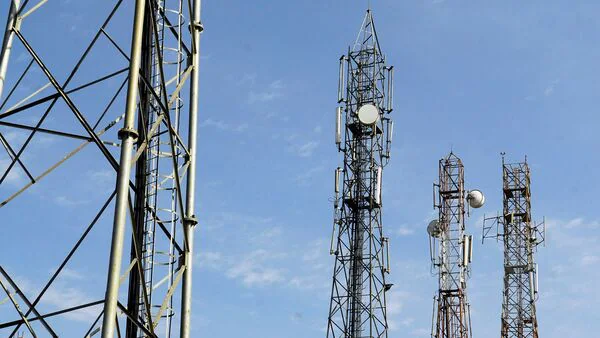
India Revamps Standards Regime Big Changes For Fibre Optics, Lifts, Gas Stoves
(MENAFN- Live Mint) New Delhi: India has begun one of its most sweeping standards overhauls in recent years, withdrawing 22 quality control orders (QCOs) over the past month while simultaneously issuing a fresh set of upgraded standards across telecom networks, fibre optics, lifts, domestic gas stoves and cybersecurity.
The moves-announced through multiple notifications over the past month-ease compliance pressures and mark a shift towards modernising India's technical rulebook, as the country expands its digital and urban infrastructure at an unprecedented pace.
Fifteen QCOs were withdrawn in mid-November and another seven on Monday, many of which covered petrochemical intermediates critical for downstream industries, including plastics and polymers and textiles and apparel. The government's quality control orders mandate compliance with specific Indian Standards for certain products. Manufacturers and importers are required to obtain a Bureau of Indian Standards (BIS) licence and use the BIS mark before selling the products in India. This is meant to ensure that the product is safe, consistent, and reliable for industrial use, as well as public health.
Also Read | In the works, QCO for food processing machines as China imports surgeAs per the 1 December order, the withdrawn chemical QCOs include those for p-xylene, toluene, methyl acrylate, ethyl acrylate, vinyl acetate monomer, ethylene dichloride and vinyl chloride monomer, which had made BIS certification mandatory since 2021. These chemicals are used to make polyester, polyethylene terephthalate packaging used in the food and beverages industry, paints and coatings, adhesives, acrylics, and pipes.
An industry executive said certification for these globally-traded chemicals had proved difficult to secure after the QCO rollout and risked disrupting supply chains in polyester, plastics, adhesives and polyvinyl chloride (PVC) manufacturing.
Compliance easedThe withdrawal eases compliance for several user sectors. p-xylene is produced domestically mainly by Reliance Industries Ltd (RIL), though India also imports it from Kuwait, Oman, Saudi Arabia, Singapore and Thailand. Toluene is manufactured by Indian Oil Corp. Ltd., and Bharat Petroleum Corp. Ltd. It is used as a raw material by Gujarat Narmada Valley Fertilizers & Chemicals Ltd (GNFC) to make toluene diisocyanate for polyurethane foams, and by Deepak Nitrite to produce nitrotoluenes and other intermediates used across dyes, pharmaceutical, rubber and agrochemical industries, while imports continue from Singapore.
Production of vinyl acetate monomer has ceased in India, making the country heavily import-dependent, with shipments sourced from Singapore, Saudi Arabia, China and South Korea. Ethylene Dichloride is produced at complexes such as Reliance Dahej, but India still imports significant volumes from the US, Qatar and Saudi Arabia. Methyl Acrylate and Ethyl Acrylate remain import-dependent intermediates for the coatings and adhesives industry.
As per the order, the rollback was carried out“in the public interest” after consultation with BIS and assessment of the risk of bottlenecks for downstream manufacturers.
Also Read | India, US reciprocal tariff pact by end of December, says commerce secretaryThe order from the department of chemicals and petrochemicals comes after a Niti Aayog committee led by former cabinet secretary Rajiv Gauba recommended relaxing QCOs. These orders raise costs for micro, small and medium enterprises (MSMEs), which import them in large quantities.
The latest rollback of 7 more QCOs has reduced the number of products under these mandatory quality norms to 736. The Centre had earlier targeted to bring more than 700 additional products under compulsory standards in FY26.
Earlier, Mint reported on 1 April that the US Trade Representative's (USTR) 2025 National Trade Estimate report had flagged India's QCO regime as a trade concern, including the polyethylene order issued in January 2024, arguing that some standards do not align with global norms and disrupt plastics and chemical trade.
Fresh standardsThe BIS has issued a fresh set of revised and newly established standards across several infrastructure and digital sectors. The three notifications issued on 29 November update standards that, in some cases, were more than two decades old.
The updated norms cover fibre-optic cables and transmission equipment, cybersecurity protocols including secure time-stamping, safety requirements for lifts-including evacuation lifts in high-rises-and domestic gas stoves designed for expanding piped-gas networks.
Trade experts said that the two moves-removing difficult-to-implement QCOs and tightening standards where safety is critical-create a more balanced regulatory approach. They said the updated, globally-aligned standards will ease certification for imported telecom and cybersecurity equipment and support Indian exporters. Testing labs expect higher demand as companies shift to the new fibre, lift and gas-appliance norms.
Also Read | Mozzarella momentum: India's dairy industry steps onto the world stage“Removing QCOs that were difficult to implement, while tightening standards where safety really matters, is a more balanced approach,” said Abhash Kumar, trade expert and assistant professor of economics at Delhi University.
“The shift to ISO- and IEC-aligned norms will reduce friction for imported telecom and cybersecurity equipment and also help Indian manufacturers meet global requirements,” he said.
The Geneva-based International Organization for Standardization (ISO) is a non-government, independent institution that develops voluntary, international standards.
According to a government official involved in the process, the decision to tighten standards stems from two concerns that the ministry of communications has flagged repeatedly - India's rapid technological transition and the widening gap between domestic and global benchmarks.
India has laid more than 3.4 million km of fibre, and telecom operators are preparing for denser 5G rollouts and early 6G trials.
Outdated standardsMany existing standards on fibre calibration, chromatic dispersion and distribution networks date back to the early 2000s and have struggled to align with International Electrotechnical Commission (IEC) specifications used in mature telecom markets.
“Cybersecurity requirements have also been strengthened at a time when India processes upwards of 12 billion digital transactions a month. The update to secure time-stamping standards is aimed at improving authentication systems for banks, fintech companies and digital-identity platforms that integrate global encryption tools,” said R.K. Bhatnagar, director general, Voice of Indian Commtech Enterprises (VOICE), an industry body representing India's communication technology and telecom equipment companies.
Also Read | What the new rules mean for technology, renewable energy, and healthThe 29 November order also introduces revised standards and clearer requirements for lifts in under-construction buildings, evacuation lifts for high-rise towers, and lifts accessible to persons with disabilities. Domestic gas-stove norms have been upgraded as well, in line with the rapid expansion of piped natural gas networks.
“We welcome the new lift standards, which elevate elevator safety to global levels. With the updated SOLAS Regulation II-1/3-13 coming into force soon, all new lifting systems will now need to be designed, constructed, installed, and certified in line with recognised classification-society regulations, supported by comprehensive load testing, detailed examinations, and regular maintenance,” said Amit Gossain, managing director of KONE India, a local subsidiary of KONE Corporation, a global elevator and escalator manufacturer.

Legal Disclaimer:
MENAFN provides the
information “as is” without warranty of any kind. We do not accept
any responsibility or liability for the accuracy, content, images,
videos, licenses, completeness, legality, or reliability of the information
contained in this article. If you have any complaints or copyright
issues related to this article, kindly contact the provider above.
Most popular stories
Market Research

More Story







Comments
No comment