




403
Sorry!!
Error! We're sorry, but the page you were looking for doesn't exist.
Tourism In Tirah: The Missed Opportunity
(MENAFN- Tribal News Network)
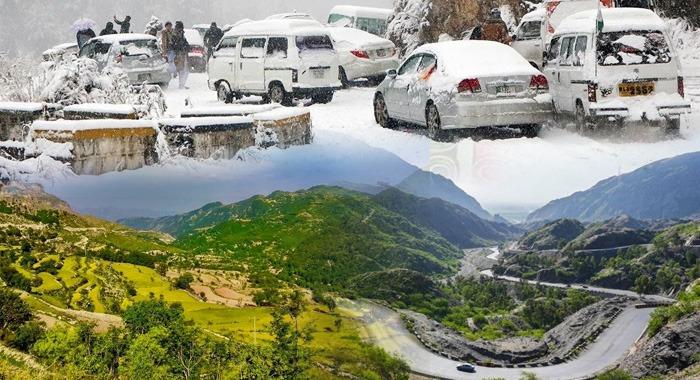
The Tirah Valley, home to the Afridi tribes, including Barqambarkhel, Kukikhel, Malikdinkhel, Shalubar, Adamkhel, Zakhakhel, Akakhel and Kamarkhel, is situated amidst scenic and majestic mountains of former FATA now Khyber Pakhtunkhwa. Despite its spectacular nature, it remains one of the most neglected and overlooked regions of Pakistan. The region has consistently been, and continues to be, a center of conflict, having long-endured issues related to terrorism, militancy, and underdevelopment. In spite of possessing significant potential as a tourism destination, the region has been unable to attract tourists because of ongoing terrorism and conflict. With appropriate strategic direction, security measures, investment, development, infrastructure, and governmental involvement, Tirah has the potential to contribute significantly, if not billions, then millions, to the tourism economy. Additionally, it can enhance the local economy and alleviate the excessive tourist burden currently experienced in Swat, Kalam, Kumrat, Chitral and more. This article examines the valley's hidden opportunities, the challenges it encounters, and the roadmap necessary to transform it into a prosperous and flourishing tourist destination.
The Tirah Valley, a picturesque and mountainous region situated in the west-central part of Khyber Pakhtunkhwa province, Pakistan, along the Afghanistan-Pakistan border, nestled between the Khyber Pass and Khanki Valley, to the northwest of Kohat. The region encompasses an area of approximately 600–700 square miles characterised by rugged terrain. It is irrigated by the Mastura River, a tributary of the Bara River, as well as the Khurmana and Khanki rivers. These rivers originate within a few miles of Mount Mitta, which stands at an elevation of 3,801 meters in the Spin Range. There at Mount Mitta the Spin Range separates into many branches, amid which situated the valleys of Tirah at heights of 1500 to 2100 meters.
Also Read: Over 75% Students Pass as Mardan Board Announces Matric Results 2025
During the colonial period, the region actively resisted colonial rule, notably participating in the Campaign of 1897-98, commonly referred to as the Tribal Uprising of 1897. The Afridis of the Tirah Valley engaged in the Jihad (Holy War) of 1897 against the British Raj. In the initial phase of the campaign, they seized control of the Khyber posts and advanced towards the forts near Peshawar. This uprising was the first of its kind since the Second Anglo-Afghan War, prompting the Raj to deploy 40,000 British and Indian troops into Tirah. These forces successfully stormed and overran the entire Tirah region, recapturing the Khyber posts with minimal resistance. Following the establishment of Pakistan, the Father of the Nation made remarks concerning the tribal people, as stated by Dr. Ejaz Khan, former Chairman of the International Relations Department at the University of Peshawar,“Quaid e Azam had an immense love for tribal people of erstwhile FATA and considered them a frontline force during the Pakistan Movement.”
Regrettably, the historical narrative of Tirah is marked by adversity, as the region has long served as a focal point for terrorism. Its geographical isolation and proximity to the Afghan border contributed to its role as a training ground during the Afghan Jihad in the 1980s and the 2000s. Currently, this area continues to experience considerable instability.
Numerous tourist destinations are remarkable in various aspects, including their natural beauty and weather, making them suitable for tourism during both winter and summer. These locations encompass the scenic Arhanga Top on the border with Orakzai, Kalawooch Daman, Bhutaan Sar, Haidar Kandaw, Dwa Thoey, Than Darra, Takhtakai Heights, parts of the Kukikhel area of Rajgal, Pakdara, Thor Dhara, and Meraban area, Kamabarkhel areas of Maidan, Saran Sar, Haider Kandau, Bhutan Sharif, Khawajakhel Darra, Bagh and Malkdeenkhel areas and there are many areas yet to be explored. These areas are ideal for hiking and camping. Furthermore, they are situated at a distance of roughly two to three hours from Peshawar.
Following a prolonged period of conflict and militancy, the Pakistan Security Forces conducted a military operation that successfully cleared the region of terrorist elements, including the notorious Lashkar-e-Islam led by Mangal Bagh and the Tehreek-e-Taliban Pakistan (TTP). Subsequently, the area was reopened to allow the residents to return. The success of the operation led to a significant influx of tourists in 2014-15, who were captivated by the region's natural beauty, particularly those from Peshawar, Mardan, and other parts of the province. Despite a lack of facilities, scenic views have attracted many visitors. However, peace was short-lived as a new wave of terrorism emerged, resulting in renewed instability in the area. Local residents initially believed that the merger of the Federally Administered Tribal Areas (FATA) with Khyber Pakhtunkhwa (KP) would lead to regional development and prosperity. However, their expectations were not met and they reported that the situation deteriorated following the merger.
Local individuals expressed the view that numerous challenges exist in Tirah, primarily concerning infrastructure, such as roads. In certain areas, even basic network signals are scarcely available, and access to the Internet is considered luxury, hotels, unavailability of basic health facilities, and a lack of governmental involvement. However, they identified the most significant challenge as the issues of security and peace, which profoundly impacted their lives. This situation has hindered their ability to conduct business (On January 30, 2025, two prominent businessmen from the area, Haji Sher and Ibrar Afridi, were abducted by a group of armed individuals in Tirah, accused of espionage on behalf of the security forces. Six days later, their bodies were discovered with their throat slits in the rugged, mountainous area of Bhutan Shareef, instilling fear within the business community), and move freely, as they fear their safety if they speak out against newly emerged terrorist groups, including Lashker-e-Islam, the banned TTP or 'Fitna Al Khawarij' as declared by the state, and some other terror groups.
In addition to the aforementioned issues, there are significant challenges posed by security forces, particularly numerous checkpoints, which have become substantial obstacles to tourism. During the Eid-Ul-Adha celebrations in 2025, a group of young men from Jamrud belonging to the Kukikhel tribe were prohibited from entering areas inhabited by other Afridi tribes. This restriction is perplexing as it pertains to their own region, yet they are denied access. Consequently, the prospect of tourists entering the area from other parts of the province or country is highly unlikely. There are certain cultural challenges, such as the traditional and conservative nature of society, which are not particularly receptive to contemporary global influences, such as music contrasts with other tourist regions such as Swat, Kalam, Kumrat, and Chitral, where such constraints are less prevalent. Addressing these challenges would significantly benefit the local economy and substantially increase the government revenue.
Several examples demonstrate how tourism can enhance the local economy and increase the employment rate in a region. A report concerning tourism in Swat indicates that“Swat Expressway has made a positive impact on tourism related businesses in Swat district where a record 1,500,000 tourists had arrived during Eid- Azha's holidays. As result, hotels and transport sectors have witnessed a great boom in Khyber Pakhtunkhwa where a record Rs. 66 billion revenues generated and Rs. 27 billion businesses have been achieved by the rural economy following the arrival of record 2.77 million tourists during the three days Eid vacations.” Swat tourism accounts for approximately 38 percent of Swat's economy. The provincial government, in collaboration with the World Bank, is developing Integrated Tourism Zones (ITZs) in locations such as Mankiyal in Swat, and Madaklasht in Chitral. These programmes aim to attract an investment of $2.8 billion and generate approximately 200,000 employment opportunities. A similar initiative can be implemented in Tirah Valley, which would likely attract a substantial number of tourists and generate employment opportunities for the local population. In an interview, Zafar Afridi, a resident of Tirah, expressed that if the government were to allocate appropriate attention to the region and improve the security situation, it could significantly transform the area. Such developments would provide 80 percent of the unemployed tribal youth with substantial opportunities to earn a livelihood through tourism. He further stated that the potential investment could reach a billion rupees if a more conducive business environment is established. There are affluent individuals within our communities who would readily invest billions without hesitation. Incorporating Tirah into the ITZ project would not only establish it as a tourist destination within a few hours of travel from Peshawar, but it would also alleviate pressure on other tourist areas. Furthermore, this initiative is expected to bring about prosperity and enhance the well-being of the local population.
To establish Tirah Valley as a tourist destination, several recommendations must be considered to enhance accessibility for tourists. Enhancing law and order is of paramount importance because improvements in this area are likely to attract a substantial influx of individuals to the region. Peace serves as the foundational element and, in its presence, other activities are likely to flourish over time. Instantaneously, the expansion of eco-friendly sustainable infrastructure, including roads, hotels, healthcare facilities, and communication services, has the potential to attract eco-conscious tourists, while simultaneously preserving the local environment. Promoting local culture through festivals, such as those in the Kalash Valley, with the aid of media coverage can contribute to portraying a positive image of the area. This approach can highlight the region's potential for exploration, as exemplified by the increased attention paid to Kumrat Valley following Prime Minister Imran Khan's visit. Engaging local communities in tourism planning is crucial, as it not only generates employment opportunities, but also fosters a sense of ownership among residents. Furthermore, the development of public-private partnerships can attract investment, stimulate innovation, and ensure long-term stability in the valley's burgeoning tourism sector.
Tirah remains an underexplored region, possessing significant natural beauty and the potential for development as a prominent tourist destination. However, realising this potential requires dedicated and genuine efforts from both private and governmental stakeholders. With the appropriate direction and leadership, Tirah can contribute to the prosperity of the local population. Investments in law and order, infrastructure, and media coverage are essential for Tirah to overcome its history of neglect and conflict. To conclude said the lawmaker,“Peace is the first prerequisite for human development. Peace cannot be imposed. Real peace comes through human development, and resolution of pressing needs of the people. The construction of Bara-Mastak Road would be started soon. Tirah Maidan valley, if properly exploited, would prove the most frequented tourist spot so much so that the visitors would include it in their must-see places list after Swat.”

Legal Disclaimer:
MENAFN provides the
information “as is” without warranty of any kind. We do not accept
any responsibility or liability for the accuracy, content, images,
videos, licenses, completeness, legality, or reliability of the information
contained in this article. If you have any complaints or copyright
issues related to this article, kindly contact the provider above.
Most popular stories
Market Research

More Story




Comments
No comment