







403
Sorry!!
Error! We're sorry, but the page you were looking for doesn't exist.
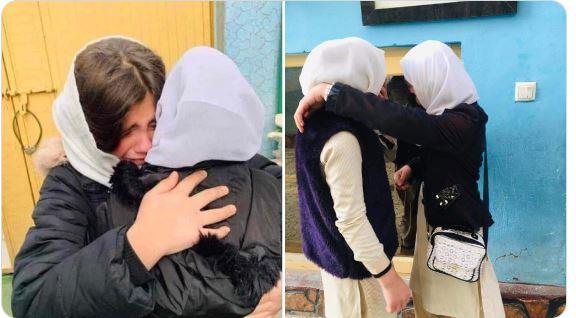
UN Warns Over 4 Million Girls In Afghanistan Will Be Deprived Of Education By 2030 If Schools Remain Closed
(MENAFN- Khaama Press) The United Nations Educational, Scientific and Cultural Organization (UNESCO) reports that the Taliban's restrictions on women and girls in Afghanistan have already affected around 1.5 million female students. UNESCO has warned that if these restrictions continue, by 2030, the number of girls deprived of education could rise to over 4 million.
In a statement issued on International Women's Day, UNESCO highlighted that Afghanistan is the only country in the world where girls are banned from attending school. This setback is particularly alarming as it reverses decades of educational progress for women and girls, pushing the country back into a state of educational deprivation for its female population.
UNESCO further noted that this regression occurs after years of progress in women's rights and education in Afghanistan, marking a significant loss of achievements that had previously been made. It emphasizes that such restrictions not only affect the future of individual girls but also the broader societal and economic development of Afghanistan.
The ongoing discrimination against women and girls in Afghanistan, particularly the ban on education, is a reflection of the Taliban's systemic gender inequality. The restrictions placed on women's rights are not only a violation of basic human rights but also a direct attack on the country's potential for growth and development.
As international organizations, including UNESCO, continue to highlight the severe consequences of these policies, the situation remains dire for Afghan women and girls. Without access to education and basic rights, they are systematically excluded from opportunities that could improve their lives and contribute to the country's rebuilding.
In the long run, this systemic discrimination will lead to profound societal consequences, limiting the ability of Afghanistan to progress economically, socially, and politically. International pressure and support for Afghan women are essential in advocating for a change in policies that promote equality, education, and opportunities for all.
Taliban officials, however, continue to justify the ban on girls' education as an internal issue, rooted in their interpretation of Islamic law. This statement underscores the Taliban's position that their policies are in line with their interpretation of Sharia law, ignoring the international concerns over the fundamental rights of women and girls. The continued suppression of girls' education in Afghanistan represents a systemic form of discrimination that deeply impacts the country's future.
ShareFacebook Twitter WhatsApp Email Print Telegram
Legal Disclaimer:
MENAFN provides the
information “as is” without warranty of any kind. We do not accept
any responsibility or liability for the accuracy, content, images,
videos, licenses, completeness, legality, or reliability of the information
contained in this article. If you have any complaints or copyright
issues related to this article, kindly contact the provider above.
Most popular stories
Market Research







Comments
No comment