






403
Sorry!!
Error! We're sorry, but the page you were looking for doesn't exist.
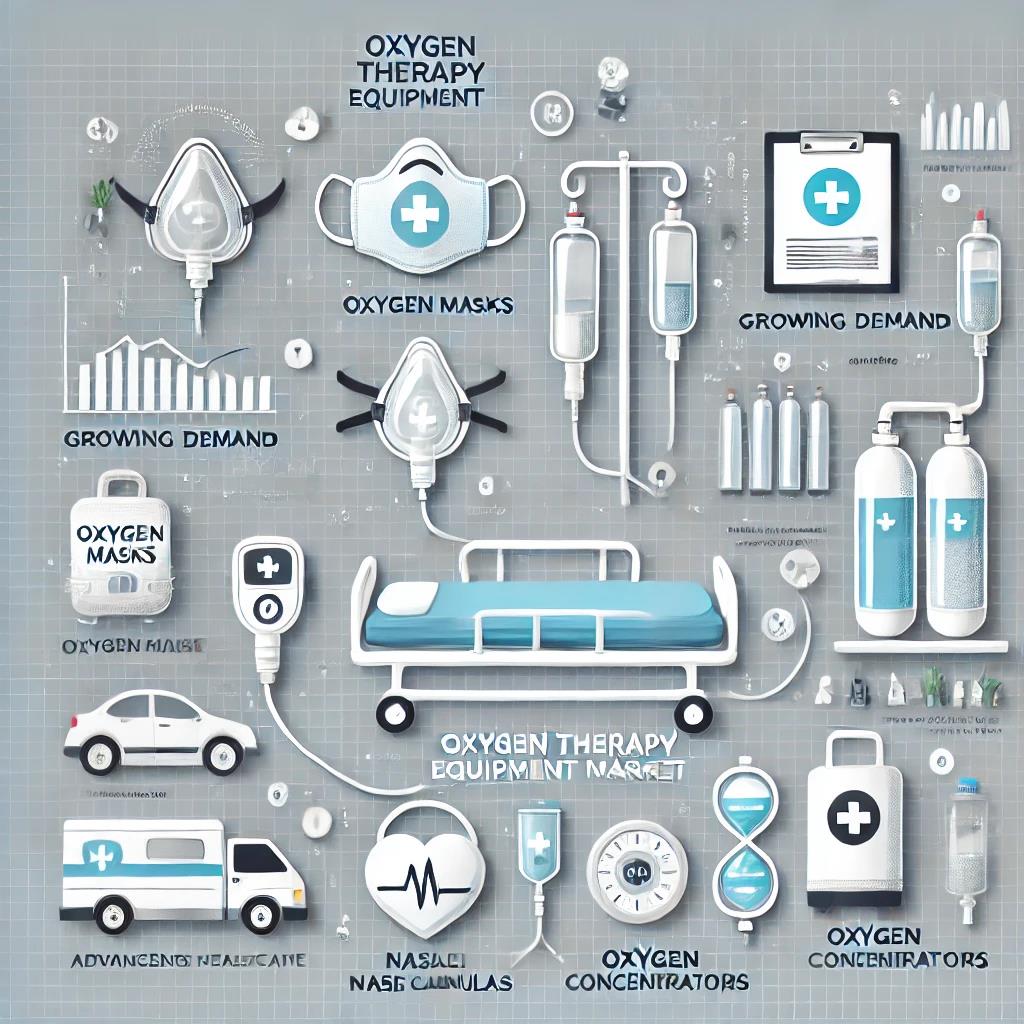
Oxygen Therapy Equipment Market To Reach At USD 6,995.0 Million In 2034 And Is Expected To Grow At A CAGR Of 6.9% From 2024 To 2034 | Future Market Insights, Inc.
| Region | 2024 Market Size (USD Million) | 2034 Market Size (USD Million) | CAGR (2024–2034) | |
| North America | 1,250.5 | 2,384.0 | 7.0 | % |
| Europe | 865.3 | 1,622.5 | 6.5 | % |
| Asia Pacific | 930.7 | 1,865.1 | 7.2 | % |
| Latin America | 298.2 | 543.6 | 6.0 | % |
| Middle East & Africa | 244.6 | 580.8 | 7.8 | % |
Market's Prime Determinants of Growth, Trends, and Opportunities
Several factors are driving the growth of the Oxygen Therapy Equipment Market, including:
- Rising Prevalence of Respiratory Diseases: The increasing number of people suffering from respiratory ailments, such as COPD and asthma, is fueling demand for oxygen therapy equipment. Home Healthcare Trend: The shift towards home-based care, especially after the COVID-19 pandemic, is driving the demand for portable and easy-to-use oxygen therapy devices. Technological Advancements: Innovations such as portable oxygen concentrators and smart oxygen therapy devices that provide real-time monitoring are creating new opportunities for market growth. Aging Population: The global elderly population is expected to rise, leading to increased demand for oxygen therapy equipment as the elderly are more prone to respiratory issues.
Key Companies & Market Share Insights
Key players in the Oxygen Therapy Equipment Market include:
- Philips Healthcare Invacare Corporation ResMed, Inc. Drive DeVilbiss Healthcare Chart Industries
These companies are investing in R&D to develop advanced products, particularly portable and user-friendly oxygen concentrators, to gain a competitive edge in the growing market.
Growth Drivers
The growth of the Oxygen Therapy Equipment Market is primarily driven by the rising prevalence of respiratory disorders, the shift towards home-based healthcare, and technological innovations in oxygen therapy equipment. The growing geriatric population, coupled with increasing air pollution and smoking rates, is further boosting demand for oxygen therapy solutions globally.
By investing in advanced technologies and addressing the rising demand for portable devices, key market players are expected to benefit from the rapid growth of the Oxygen Therapy Equipment Market over the next decade.
To Gain In-Depth Insights on Market, Browse the Complete Report:
Key Segments of Oxygen Therapy Equipment Industry
By Product:
In terms of product, the industry is divided into oxygen source equipment, oxygen therapy equipment for cardiovascular & thoracic surgeries (oxygen concentrators, liquid oxygen, oxygen cylinders), and oxygen delivery devices (oxygen masks, nasal cannulas, venturi masks, non-rebreather masks, bag-valve masks, and other oxygen delivery devices).
By Portability:
In terms of Portability, the industry is divided into stationary oxygen therapy equipment devices and portable oxygen therapy equipment devices.
By Application:
In terms of application, the industry is divided into oxygen therapy equipment for COPD, oxygen therapy equipment for asthma, oxygen therapy equipment for cystic fibrosis, oxygen therapy equipment for respiratory distress syndrome, oxygen therapy equipment for pneumonia, oxygen therapy equipment for other diseases.
By Region:
The report covers key countries in North America, Latin America, Europe, East Asia, South Asia & Pacific, the Middle East, and Africa (MEA).
Translation in German:
Der globale Markt für Sauerstofftherapiegeräte soll von 3.589,3 Millionen USD im Jahr 2024 auf 6.995,0 Millionen USD im Jahr 2034 wachsen , was einer robusten durchschnittlichen jährlichen Wachstumsrate von 6,9 % im Prognosezeitraum entspricht. Die zunehmende Verbreitung von Atemwegserkrankungen sowie Fortschritte in der Medizintechnik werden voraussichtlich die Expansion dieses Marktes vorantreiben.
Der globale Markt für Sauerstofftherapiegeräte steht vor einem erheblichen Wachstum, angetrieben durch die weltweit zunehmende Zahl von Atemwegserkrankungen. Chronisch obstruktive Lungenerkrankung (COPD), Asthma und andere Atemwegserkrankungen sind aufgrund steigender Umweltverschmutzung, Rauchgewohnheiten und einer alternden Weltbevölkerung häufiger geworden. Daher werden Sauerstofftherapiegeräte zu einem wichtigen Instrument zur Behandlung dieser Erkrankungen, sowohl im Krankenhaus als auch zu Hause.
Darüber hinaus hat die COVID-19-Pandemie den Einsatz von Sauerstofftherapiegeräten beschleunigt, insbesondere in der häuslichen Pflege, wo Patienten die Behandlung nach dem Krankenhausaufenthalt fortsetzen können. Da Gesundheitsdienstleister und Patienten zunehmend tragbare und benutzerfreundliche Sauerstoffversorgungssysteme einsetzen, wird erwartet, dass der Markt im nächsten Jahrzehnt ein stetiges Nachfragewachstum verzeichnen wird.
Treiber und Chancen
Einer der Haupttreiber des Marktes für Sauerstofftherapiegeräte ist die steigende Zahl chronischer Atemwegserkrankungen. Da immer mehr Menschen von Luftverschmutzung, Rauchen und sitzender Lebensweise betroffen sind, ist die Nachfrage nach Sauerstofftherapiegeräten stark gestiegen. Darüber hinaus trägt das wachsende Bewusstsein für die Vorteile der Sauerstofftherapie und die Bequemlichkeit tragbarer Sauerstoffkonzentratoren zur Expansion des Marktes bei.
Der Markt bietet Herstellern auch erhebliche Möglichkeiten zur Innovation. Technologische Fortschritte wie die Entwicklung intelligenter Sauerstofftherapiegeräte, die Fernüberwachung und Echtzeit-Feedback ermöglichen, eröffnen neue Möglichkeiten in der Patientenversorgung und schaffen lukrative Gelegenheiten für Marktteilnehmer.
Markt für Sauerstofftherapiegeräte: Regionale Aufteilung
| Region | 2024 Market Size (USD Million) | 2034 Market Size (USD Million) | CAGR (2024–2034) | |
| Nordamerika | 1.250,5 | 2.384,0 | 7,0 | % |
| Europa | 865,3 | 1.622,5 | 6,5 | % |
| Asien-Pazifik | 930,7 | 1.865,1 | 7,2 | % |
| Lateinamerika | 298,2 | 543,6 | 6,0 | % |
| Naher Osten und Afrika | 244,6 | 580,8 | 7,8 | % |
Die wichtigsten Marktfaktoren für Wachstum, Trends und Chancen
Das Wachstum des Marktes für Sauerstofftherapiegeräte wird durch mehrere Faktoren vorangetrieben , darunter:
- Steigende Prävalenz von Atemwegserkrankungen : Die steigende Zahl der Menschen, die an Atemwegserkrankungen wie COPD und Asthma leiden, treibt die Nachfrage nach Geräten zur Sauerstofftherapie an. Trend zur häuslichen Gesundheitspflege : Der Übergang zur häuslichen Pflege, insbesondere nach der COVID-19-Pandemie, treibt die Nachfrage nach tragbaren und einfach zu bedienenden Geräten zur Sauerstofftherapie voran. Technologischer Fortschritt : Innovationen wie tragbare Sauerstoffkonzentratoren und intelligente Sauerstofftherapiegeräte mit Echtzeitüberwachung schaffen neue Möglichkeiten für Marktwachstum. Alternde Bevölkerung : Die Zahl älterer Menschen wird weltweit voraussichtlich steigen, was zu einer erhöhten Nachfrage nach Sauerstofftherapiegeräten führt, da ältere Menschen anfälliger für Atemwegserkrankungen sind.
Wichtige Unternehmen und Einblicke in die Marktanteile
Zu den Hauptakteuren auf dem Markt für Sauerstofftherapiegeräte gehören:
- Philips Healthcare Invacare Corporation ResMed, Inc. Drive DeVilbiss Healthcare Chart Industries
Diese Unternehmen investieren in Forschung und Entwicklung, um fortschrittliche Produkte, insbesondere tragbare und benutzerfreundliche Sauerstoffkonzentratoren, zu entwickeln und sich so einen Wettbewerbsvorteil auf dem wachsenden Markt zu verschaffen.
Wachstumstreiber
Das Wachstum des Marktes für Sauerstofftherapiegeräte wird vor allem durch die steigende Prävalenz von Atemwegserkrankungen, die Verlagerung hin zu häuslicher Gesundheitsversorgung und technologische Innovationen bei Sauerstofftherapiegeräten vorangetrieben. Die wachsende geriatrische Bevölkerung, gepaart mit zunehmender Luftverschmutzung und Raucherquoten, steigert die Nachfrage nach Sauerstofftherapielösungen weltweit weiter.
Durch Investitionen in fortschrittliche Technologien und die Deckung der steigenden Nachfrage nach tragbaren Geräten werden die wichtigsten Marktteilnehmer voraussichtlich vom schnellen Wachstum des Marktes für Sauerstofftherapiegeräte im nächsten Jahrzehnt profitieren.
Schlüsselsegmente der Sauerstofftherapiegeräteindustrie
Nach Produkt:
Produktmäßig ist die Branche in Sauerstoffquellengeräte, Sauerstofftherapiegeräte für Herz-Kreislauf- und Thoraxoperationen (Sauerstoffkonzentratoren, flüssiger Sauerstoff, Sauerstoffflaschen) und Sauerstoffabgabegeräte (Sauerstoffmasken, Nasenkanülen, Venturimasken, Nicht-Rückatmungsmasken, Beatmungsbeutelmasken und andere Sauerstoffabgabegeräte) unterteilt.
Nach Portabilität:
In Bezug auf die Tragbarkeit ist die Branche in stationäre und tragbare Sauerstofftherapiegeräte unterteilt.
Nach Anwendung:
Hinsichtlich der Anwendung ist die Branche in Sauerstofftherapiegeräte für COPD, Sauerstofftherapiegeräte für Asthma, Sauerstofftherapiegeräte für Mukoviszidose, Sauerstofftherapiegeräte für das Atemnotsyndrom, Sauerstofftherapiegeräte für Lungenentzündung und Sauerstofftherapiegeräte für andere Krankheiten unterteilt.
Nach Region:
Der Bericht deckt die wichtigsten Länder Nordamerikas, Lateinamerikas, Europas, Ostasiens, Südasiens und des Pazifiks sowie des Nahen Ostens und Afrikas (MEA) ab.
Author
Sabyasachi Ghosh (Associate Vice President at Future Market Insights, Inc.) holds over 12 years of experience in the Healthcare, Medical Devices, and Pharmaceutical industries. His curious and analytical nature helped him shape his career as a researcher.
Identifying key challenges faced by clients and devising robust, hypothesis-based solutions to empower them with strategic decision-making capabilities come naturally to him. His primary expertise lies in areas such as Market Entry and Expansion Strategy, Feasibility Studies, Competitive Intelligence, and Strategic Transformation.
Holding a degree in Microbiology, Sabyasachi has authored numerous publications and has been cited in journals, including The Journal of mHealth, ITN Online, and Spinal Surgery News.
Have a Look at the Related Report from the Oxygen Therapy Equipment Market:
The global Medical Carts are estimated to be worth USD 1,136.9 million in 2024 and are anticipated to reach a value of USD 2,817.6 million by 2034. Sales are projected to rise at a CAGR of 9.5% over the forecast period between 2024 and 2034.
The global teleradiology market is estimated to be worth USD 8,894.3 million in 2024 and anticipated to reach a value of USD 47,748.5 million by 2034.
The global suture needles market are estimated to be worth USD 625.0 million in 2024 and anticipated to reach a value of USD 1,008.3 million by 2034.
The global wearable healthcare devices market are estimated to be worth USD 19,163.1 million in 2024 and anticipated to reach a value of USD 43,327.4 million by 2034
The global ultrasound conductivity gels market are estimated to be worth USD 325.9 million in 2024 and anticipated to reach a value of USD 690.7 million by 2034.
The global contrast media injectors market is estimated to be worth USD 4,949 million in 2024 and anticipated to reach a value of USD 8,832.8 million by 2034.
The global anaesthesia machines market is estimated to be worth USD 11,126.0 million in 2024 and anticipated to reach a value of USD 17,780.9 million by 2034.
The global dermal fillers market are estimated to be worth USD 6,411.8 million in 2024 and anticipated to reach a value of USD 8,819.6 million by 2034.
The Acetaminophen-Opioid Combination market is estimated to be worth USD 3,144.1 million in 2024 and is projected to reach a value of USD 4,522.6 million by 2034
The cardiac rehabilitation market is estimated to reach USD 2,343.5 million in 2024. Revenue is estimated to increase at a CAGR of 4.6% between 2024 and 2034.
About Future Market Insights (FMI)
Future Market Insights, Inc. (ESOMAR certified, recipient of the Stevie Award, and a member of the Greater New York Chamber of Commerce) offers profound insights into the driving factors that are boosting demand in the market. FMI stands as the leading global provider of market intelligence, advisory services, consulting, and events for the Packaging, Food and Beverage, Consumer Technology, Healthcare, Industrial, and Chemicals markets. With a vast team of over 400 analysts worldwide, FMI provides global, regional, and local expertise on diverse domains and industry trends across more than 110 countries.
Contact Us:
Future Market Insights Inc.
Christiana Corporate, 200 Continental Drive,
Suite 401, Newark, Delaware - 19713, USA
T: +1-845-579-5705
For Sales Enquiries: ...
Website:
LinkedIn | Twitter | Blogs | YouTube


Legal Disclaimer:
MENAFN provides the
information “as is” without warranty of any kind. We do not accept
any responsibility or liability for the accuracy, content, images,
videos, licenses, completeness, legality, or reliability of the information
contained in this article. If you have any complaints or copyright
issues related to this article, kindly contact the provider above.
Most popular stories
Market Research

More Story







Comments
No comment