(MENAFN- AzerNews) By Ayya Lmahamad
Azerbaijan's victory in second Karabakh war marks the
most significant diplomatic and military achievement Prime Minister Nikol Pashinyan rejected the entire
negotiating framework, that have been developed during the course
of three decades Azerbaijan's stunning victory in Shusha and halting war
wise strategic choice Azerbaijan's goodwill and strategic wisdom under
President Aliyev's leadership as Commander-in-Chief crucial in
building strong army Aliyev has shown a strong strategic vision that has
placed Azerbaijan in the most advantageous position Aliyev pursued vigorous diplomacy to try to
well-implement November 10 ceasefire statement and January 11,
2021, trilateral statement Armenia has a chance to integrate itself now into the
regional economy & into economies beyond the South
Caucasus President Aliyev's strong international interviews,
before and during the war particularly compelling to explain
Azerbaijan's position on international law
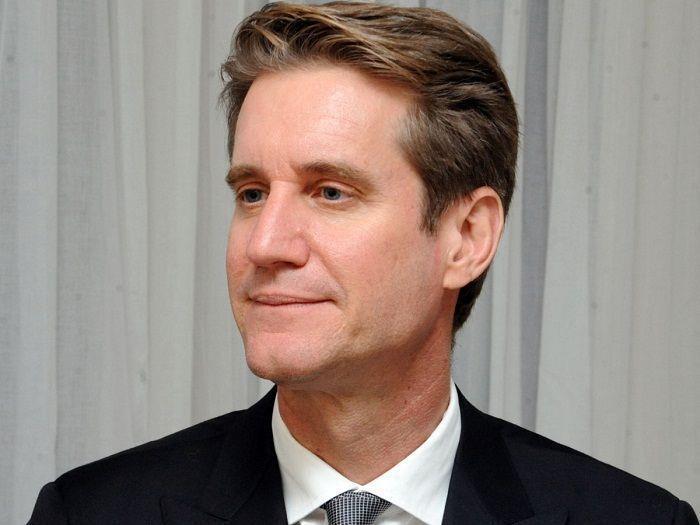
On the second anniversary of the 2020 Karabakh war, former
U.S. Ambassador to Azerbaijan Matthew Bryza in an exclusive
interview with English-language Azernews news agency shared his
views about President Ilham Aliyev's role in the Victory,
highlighted crucial elements that made it possible for Azerbaijan
to liberate its own lands, underscored the president's political
and media performance in the course of the 44-day war.
Azerbaijan's victory in the second Karabakh war probably marks
the most significant diplomatic and military achievement in
Azerbaijan's history.
Effectively, Azerbaijan enforced international law on its own,
using military force. But only after the leader of Armenia, Prime
Minister Nikol Pashinyan, rejected the entire negotiating
framework, that have been developed over the course of three
decades, and which the then President of Armenia Serzh Sargsyan and
President of Azerbaijan Ilham Aliyev accepted in principle back in
January 2009, and that were so-called Madrid principles; that would
allow for the settlement of the Karabakh conflict on the basis of
recognition and restoration of Azerbaijan's territorial integrity,
and that would be in the form of the return of the occupied lands
to Azerbaijan's control.
A second core principle would have been the self-determination
of people, which meant, in theory, at some point the (ethnic)
Armenian residents of Karabakh would be able to decide the legal
status of the region that is different than unambiguously being
part of Azerbaijan, which would have happened to a vote of the
population.
And then the third principle would have been the non-use of the
force and non-threat of force. Therefore, by extension the security
of everyone, of Azerbaijanis, who returned to their previous homes
in the previously occupied territories and of Armenians, who would
remain there by mutual agreement, so Azerbaijan ended up going to
war with Armenia only after Armenian Prime Minister Nikol Pashinyan
rejected that formula.
Throughout the war, Pashinyan had a chance to secure a
settlement of the conflict on the basis of the principles I just
discussed. And during these 44 days, there were at least three
occasions, where he was offered that and he rejected it.
And so, in the end, Azerbaijan after its stunning victory in
Shusha, regaining an incredibly important city, at that point,
Azerbaijan was able to stop the war. I think President Aliyev made
a very wise strategic choice, knowing the military phase of the war
was finished, and then there was no need for any more soldiers from
both sides and civilians to die by continuing military operations
all the way down to Khankendi and clearing out all the Armenians
from Karabakh.
So, that was a wise and humane decision by President Aliyev, it
was also smart strategically because it concerned Azerbaijan's
military forces and other resources and it also established
Azerbaijan as a country that fought according to the rules of war
and also by treating the Armenian population humanely after the
conflict.
We recall Azerbaijan facilitated the shipment and movement of
humanitarian goods into the Armenian population and also allowed
the former residents of the occupied Kalbajar, the Armenian
residents, to have 10 more days to evacuate, 10 more days than were
stipulated in the November 10 ceasefire agreement.
All of these things shown, I think, goodwill and strategic
wisdom on a part of Azerbaijan, and of course, under the leadership
of President Aliyev, who is the Commander-in-Chief, and was
responsible for the entire war, both preparation for it over the
course of a decade and a half, when he invested much of
Azerbaijan's oil and natural gas revenue in modernizing, reforming
and strengthening Azerbaijan's military.
But also President Aliyev prepared for the war over a decade and
a half by negotiating in good faith to elaborate those principles I
talked about at the beginning, those basic principles.
And during the war, as I said, his leadership resulted in the
wise decision to stop in Shusha, and afterward, he has pursued
vigorous diplomacy to try to well implement the November 10
ceasefire statement and January 11, 2021, trilateral statement
among President Aliyev, Prime Minister Pashinyan and President
Putin to develop regional projects, economic projects, you know,
infrastructure projects together, especially transportation
projects.
So, all of these have shown a strong strategic vision that has
placed Azerbaijan in the most advantageous position, it
has ever been in its history, in terms of its strategic situation,
the reintegration of the lost territories, and the restoration of
Azerbaijan's territorial integrity, but also strong position now to
stimulate regional economic growth through new and all
transportation corridors, and that will lead to the foundation of
the lasting peace because Armenia has a chance to integrate itself
now into the regional economy and into economies beyond the South
Caucasus.
The key factor in the conflict's stunning victory by Azerbaijan
was that Russia did not intervene on Armenians' behalf and that was
for a couple of reasons. One, in my experience, is as the Minsk
co-chair Russia always acted in good faith as much as the USA and
Russia disagreed about Georgia, we agreed strongly about the way
forward toward the Karabakh settlement, and so cooperation mine
with my Russian co-chair counterpart Yuriy Merzlyakov was always
really positive. We really behaved as a single team along with our
French counterpart Ambassador Bernard Fassier.
But now only the ambassador Yuriy Merzlyakov was collaborative,
we worked directly with minister Lavrov, and his boss too was quite
cooperative in brainstorming with leaders of Azerbaijan and Armenia
on ways to advance the peace process and work toward a negotiated
settlement of the Nagorno-Karabakh conflict. And I think that
President Putin was unaware of when Prime Minister Pashinyan when
Pashinyan rejected the diplomatic framework that Russia had helped
to negotiate along with the US and France.
I think that Pashinyan was in general behaving provocatively
toward Azerbaijan and trying to poll Russia and CSTO into the
conflict. But CSTO, of course, had no mandate to get involved in
the military-political conflict on the territory of Azerbaijan, its
mandate only calls for intervention if one of the member states is
attacked, from an international actor on the territory of the
attacked state, and that's not what happened, the Nagorno-Karabakh
conflict obviously took place on the Azerbaijani territory. So
these are the reasons why Russia did not get involved.
President Aliyev gave strong international interviews, before
and during the war. I remember a particularly compelling interview
he gave to Al Jazeera when he explained Azerbaijan's position on
international law, which I agree with, by the way, Armenia was in
breach of international law by occupying Azerbaijani territory and
then refusing to negotiate in good faith when Prime Minister
Pashinyan rejected the Madrid principles.
President Aliyev also made strong arguments when he consistently
said that Armenians are welcome to remain in Karabakh and that
Azerbaijan has no intention to force them all out of Karabakh. He
simply insists that international law be restored by virtue of
restoring Azerbaijan's territorial integrity, which of course meant
returning control of occupied territories to Azerbaijan.
I am not sure that the international community was listening
very carefully though, in European and US news outlets, I detected
a strong bias toward blaming Azerbaijan and Turkiye, by the way,
for starting a war and using military force, which meant they were
not paying a close enough attention to President Aliyev's legal
arguments. Nonetheless, his argumentation was compelling from an
expert's perspective and that would be me someone who worked with
global experts when I was a co-chair of the OSCE Minsk Group. I
think I generally agree with his arguments.
I think Prime Minister Pashinyan is sincerely in favor of
implementing everything agreed and outlined in the November 10,
2020, trilateral statement, as well as in the January 11, 2021,
trilateral statement about joint infrastructure projects. But he
has been prevented from doing so by his own political opponents.
Largely, led by the so-called Karabakh clan, who want to return to
power and therefore, have to humiliate Pashinyan in any way they
can. Also, they are affiliates and they are the allies with the
Armenian diaspora, like the Armenian national community of
America.
They together with the so-called Karabakh clan also want to oust
Pashinyan because they want the conflict with Azerbaijan to
continue. They do not want peace; they want to continue the war
because they want to restore what they called the idea of the
greater Armenia, which was a medieval country, a state that
stretched from parts of present-day Armenia, all the way to Cilicia
on the Mediterranean coast of Türkiye.
And so peace with Türkiye does not serve their interests, they
prefer to have conflict. However, Pashinyan is growing stronger, as
we saw with his political movement's victory in June 2021
parliamentary elections. He has also consistently made clear his
commitment to negotiating in good faith with President Aliyev with
multiple meetings with the EU playing a crucial role now.
Now, when the OSCE Minsk Group is essentially defunct because
France chose one side during the second Karabakh war, chose the
Armenian side, the US was not focused during the war and the
conflict, and Russia has invaded its neighbor, illegally annexed so
much of Ukraine, that it cannot credibly play a role of mediator
notwithstanding President Putin's recent convening of discussions
in Sochi between President Ilham Aliyev and Prime Minister
Pashinyan .
So, I think Pashinyan is growing stronger, I think we are going
to see him work with President Aliyev on a peace treaty as well as
on an agreement to define the international boundary between
Azerbaijan and Armenia though Pashinyan's opponents are against
this.
And then the next step I think with be the joint economic
projects, including transportation infrastructure, like the
Zangazur corridor, I mean many other transportation links that will
reintegrate Armenia into the regional economy, which means of
course restoring its transportation and other economic ties with
Azerbaijan and Türkiye.
It will take a while, I think for the last step to happen, but I
think the parties are moving now in this direction. Though again
there are plenty of people in Armenian, who would like to destroy
this reconciliation process.
---
Follow us on Twitter







Comments
No comment