




403
Sorry!!
Error! We're sorry, but the page you were looking for doesn't exist.
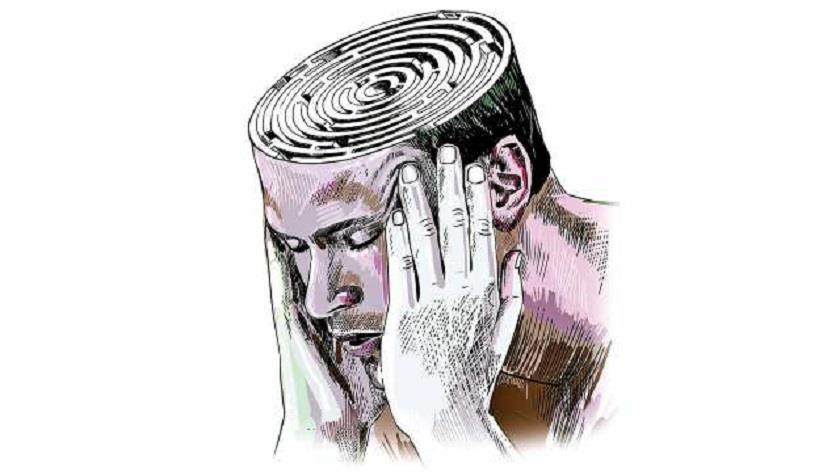
Understanding Conversion Disorder
(MENAFN- Kashmir Observer) It’s advisable to get medical help as soon as possible if you see any of the symptoms of conversion disorder in a friend or loved one. Before diagnosing conversion disorder, doctors will try to be sure your symptoms aren’t caused by something else. It’s critical to get checked out since you don’t want to neglect any major medical conditions. Keeping a journal of symptoms may aid in diagnosis by assisting the doctor in ruling out any other medical conditions. A person suffering from conversion disorder requires assistance and empathy. You can assist a loved one suffering with conversion disorder by understanding what conversion disorder is about, believing that their symptoms are real, and encouraging them to go for treatment. Encourage your loved one to get professional help from a clinical psychologist /psychotherapist. The underlying psychological trauma or stress that produced the conversion disorder can be treated with the professional help of a clinical psychologist and/or psychiatrist. You or your loved one can get an in-depth evaluation from a clinical psychologist to see if you have conversion disorder. Inform your psychologist that you are experiencing symptoms that are bothering you. Discuss when they happen and how they impact your life. For example, you may be experiencing pains at work to the point that you’ve reduced your working hours or been fired as a result of the symptoms. Your clinical psychologist may then start treating you with therapies such as psychodynamic therapy or Schema therapy or cognitive behavior therapy depending upon their expertise and need of the case. People with conversion disorder are more common to have other mental health conditions also such as depression, anxiety etc. Your therapist may also have to work on those issues at the same time in order to reduce their contribution to your conversion disorder. Physical therapy/physiotherapy/occupational therapy may be beneficial for your loved one if they have physical problems that affect movement, such as paralysis, tremors, or other limb weakness. Encourage your loved one to consult a physiotherapist/occupational therapist to help them gain muscle control and coordination. Stretching, biofeedback, gait and locomotion training, and relaxation training are some of the exercises that a physiotherapist may offer. If your loved one is temporarily paralysed, for example, they can go to physiotherapist/occupational therapist to work on their limbs so that their muscles don’t atrophy or weaken while they heal from their psychological trauma with the help of psychotherapy. If the affected person is kid or adolescent, you may need to assist them in receiving extra therapies to address their underlying issues. This is usually required if the child suffers from conversion disorder as a result of an abusive or stressful home environment. Research shows that psychosocial stress in the lives of children is primarily caused by school and household issues. Academic difficulty, school failure, and parental pressure to perform have been found to be some of the major sources of stress in lives of children. In one study, it was found that there was a significant correlation between the start of school exams and the onset of conversion symptoms. Academic challenges serve as both a continual stressor and a reinforcing factor, and conversion symptoms may allow a child with academic difficulties to avoid failure at school. A high frequency of recent family crises, unresolved grief reactions, and family communication problems were reported in a retrospective analysis of 105 inpatient children with a diagnosis of conversion disorder. Another study found severe stressors in 71% of children with conversion reactions. Punitive parents, financial challenges, parental discord, domestic violence, sibling rivalry, academic difficulties, and peer adjustment problems were among the stressors mentioned. If the child is facing difficulty to deal with their social or school stressors and hence has conversion reactions, the therapist will help in training the child in stress management. Work on preventing relapsing. Despite the fact that the majority of people heal from the physical symptoms of conversion disorder after psychological treatment, over 25% of patients relapse within the first year. You should be ready for a relapse in case it happens. Encourage your loved one to continue seeing their clinical psychologist/occupational therapist to address the underlying issues to avoid a relapse. One strategy to avoid a relapse is to manage and recover from the trauma by working on past sources of trauma in depth. It may take some time for them to heal from the trauma or emotional stress, so be patient and supportive while they are working with their therapist on their past traumas. Spend time with them and include them in home affairs so that they can get back to their regular routine. Assist your loved one in managing the stress in their daily life. A relapse could be triggered by too much stress. Follow their therapist's instructions in helping them manage their stress.
Photo credits: DNA
By Wasim Kakroo
CONSIDER what would happen if you fell off your bike and were unable to move your arm. Your arm is unharmed and no other part of your body is harmed either. Your doctor could find no physical/neurological reason for your inability to move the arm and it made you feel confused about your situation. You went to various doctors with no avail and in this state of desperation you consulted various faith healers as well, many of whom suggested that you have been affected by evil eye or you have been possessed by some evil spirit and then they tried to help you by teaching you a few spiritual rituals. Even after all such practices, you find yourself unable to move your arm.
Actually the emotional and psychological stress of your fall was“ converted” into the physical response of a paralysed arm by your body. Your symptoms may appear weird, but they are genuine, and you have no control over them. These symptoms are explained through a mental health issue called conversion disorder.
Conversion disorder is a mental health condition characterized by blindness, paralysis, or other neurological symptoms that cannot be explained by any neurological diagnosis, implying that no real physiological/neurological malformation can explain such symptoms. It is a mental health issue in which a person experiences physical sensations like pain or numbness as a result of psychological stress. A person with conversion disorder goes through a stressful or terrifying (traumatic) incident and they avoid emotionally dealing with it. When this avoidance continues for quite some time, then their mind converts the resulting psychic crisis into a medical or physical problem, which can cause distress and discomfort. If you know someone who has conversion disorder, they will likely be confused when their doctor tells them that there appears to be no underlying physical basis for their symptoms. In this article, I will discuss with you the basics of this mental health condition, its causes, symptoms and its psychosocial management.
Why it happens?
The actual reason for conversion disorder is yet to be discovered by researchers, however, they think that conversion disorder is your brain's way to cope with emotional stress. The symptoms may be induced by emotionally or psychologically painful experiences or stress, however this is not always the case. If a person has a neurological disease, a mobility issue, or a mental health condition such as anxiety or depression, they may be at a higher risk of getting the condition. They’re also more likely to develop conversion disorder if any of the family members has one, or if they’ve been the victim of physical, emotional or sexual abuse as a child, or any other traumatic event in their lives. Women are two to three times as often as men to be diagnosed with conversion disorder. It also occurs more frequently in those who have a history of emotional stress or who have difficulty expressing their emotions.
What are the symptoms?
Conversion disorder symptoms usually appear after a person has been through a physical or psychological trauma or traumatic incident. Psychological stress may impair a person’s ability to move or may impair his or her senses.
Abnormal movements, such as tremors or difficulties walking, difficulty eating, spells of unresponsiveness, loss of consciousness, loss of balance, seizure like signs, as well as weakness or paralysis, are all examples of movement-related symptoms.
Hearing difficulty or deafness, numbness or loss of physical sensations, inability to speak or speaking with much difficulty, inability to smell, inability to see or vision problems are all examples of sensory-related symptoms.
Conversion disorder symptoms are not self-initiated or motivated by a desire for attention. They are a result of real mental health condition as mentioned above.
Conversion Disorder Diagnosis:
There is no diagnostic test for conversion disorder. To begin, your general physician/neurologist will rule out any other physical, mental, or neurological causes for your symptoms. They may inquire as to whether or not you have had any recent stressful situations and may usually find some temporal relation of the symptoms with some recent stressor in your life. Your symptoms may be observed by a doctor, who may then create some distraction to take your attention away from symptoms. If your symptoms go away when you’re distracted, you might have conversion disorder.
The American Psychiatric Association has established a list of criteria for diagnosing conversion disorder:
- You have no control over how they affect your movement or senses.
- You aren’t faking them.
- There is no other ailment, medication, or habit that can explain them.
- They aren’t the result of another mental health issue.
- They are a source of stress in both social and work settings.
How Can You Assist a Loved One Who Has Conversion Disorder?
Don’t tell the person that their symptoms aren’t real. It won’t help to tell someone with conversion disorder that their symptoms aren’t real or that they’re just a stress reaction. The person is unlikely to believe you. Don’t try to convince them that there’s no “cause” for their illness or that it’s all in their head. Even if you’re upset or frustrated, keep your cool. Yelling or attempting to persuade the person that their symptoms are psychological rather than physical may be more harmful than beneficial.
Rather than attempting to persuade the person that their symptoms are all in their head, utilise evidence to persuade them that their bodily symptoms are not something to be concerned about. The results of lab tests performed by doctors will reveal that there is no medical or physical condition. When lab test results come out to be negative, celebrate this news with the person.
If the person with the conversion disorder has blindness, seizures, or paralysis, for example, the doctor will conduct tests. When the tests come back negative, you can exclaim, “This is fantastic news!” your eyes and brain are in perfect working order. This is quite encouraging in terms of a full recovery.”
If the child is living in a challenging home atmosphere, family counselling may be beneficial. Family therapy can help with conflicts, difficult relationships and dysfunctional family dynamics. Children with conversion disorder may benefit from group treatment to learn how to socialize and deal with stressful situations. This may also be beneficial if the child is overly reliant on his or her family. If physical symptoms do not respond to usual treatments, children may be admitted to the hospital.
- The author is a licensed clinical psychologist (alumni of Govt. Medical College Srinagar) and is currently working as a child and adolescent mental health therapist at Child Guidance and Well-Being Centre at Institute of Mental Health And Neurosciences-Kashmir (IMHANS).Author can be reached at [email protected]

Legal Disclaimer:
MENAFN provides the
information “as is” without warranty of any kind. We do not accept
any responsibility or liability for the accuracy, content, images,
videos, licenses, completeness, legality, or reliability of the information
contained in this article. If you have any complaints or copyright
issues related to this article, kindly contact the provider above.
Most popular stories
Market Research

More Story







Comments
No comment