


India's Maritime Engagement Helps Smaller Indian Ocean Nations Strengthen Strategic Autonomy


It argued that the real challenge for the Indian Ocean is not to mirror the growing rivalries in the wider Indo-Pacific, but to build a regional order strong enough to withstand their consequences.
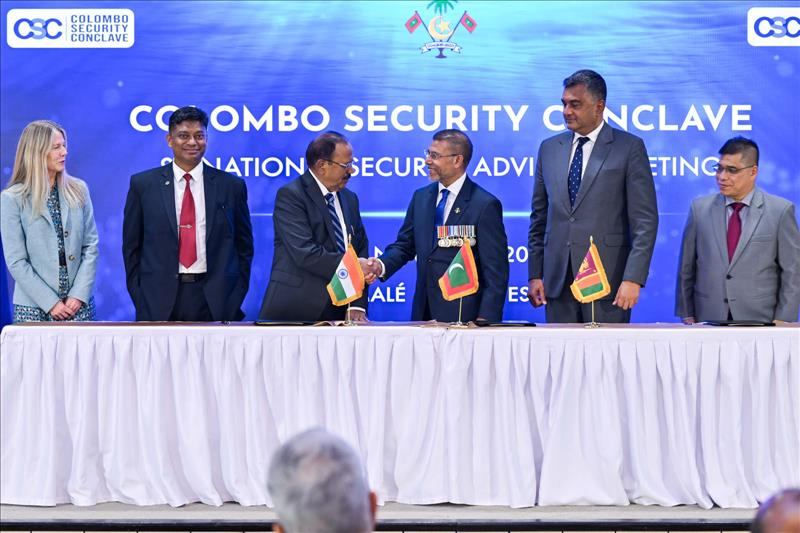
“On November 25th, the Maldives hosted the eighth National Security Advisers' meeting of the Colombo Security Conclave (CSC). Bringing together regional security officials, the meeting addressed a familiar but increasingly consequential set of challenges: maritime surveillance, transnational crime, terrorism and the protection of shared oceanic resources,” a report in 'One World Outlook' detailed.
“Its significance, however, extended well beyond the formal agenda. At a time when the Indo-Pacific is increasingly defined by geopolitical competition, an alternative approach to regional security is taking shape in the Indian Ocean, one driven by the practical requirements of its littoral states rather than the strategic doctrines of distant powers,” it added.
According to the report, India is central to this evolving approach, with its maritime policy shifting from SAGAR, announced in 2015, to MAHASAGAR in 2025, reflecting a broader understanding that regional stability cannot be ensured through military dominance alone.
“It requires building the institutional and operational capacities of neighbouring countries, particularly those whose economic security is inseparable from the waters surrounding them. For smaller Indian Ocean nations, closer security cooperation with India need not represent a concession of strategic autonomy. Increasingly, it offers a means of exercising it,” the 'One World Outlook' report mentioned.
It noted that the hosting of the Colombo Security Conclave in the Maldives in November 2026 underscores the resilience of India-Maldives relations, which earlier predictions of strategic estrangement had underestimated.
It further highlighted India's support for Seychelles, including the handover of the patrol vessel Lespwar in June 2026 and assistance in the refitting of another coast guard vessel, Zoroaster.
Such assistance, it said, bolsters the island nation's ability to carry out maritime surveillance, search and rescue, and the protection of its waters under its own national authority.
“The strategic importance of such assistance lies precisely in the capabilities it leaves behind. India's MAHASAGAR framework has begun extending this logic across the Western Indian Ocean. In April 2025, the deployment of Indian Ocean Ship Sagar brought together 44 naval personnel from nine partner countries, including Sri Lanka, Mauritius, Seychelles, Kenya, Tanzania and Mozambique, alongside an Indian crew,” the report noted.
“The initiative offered practical experience in multinational maritime operations and coordinated surveillance. More importantly, it demonstrated how regional security cooperation could extend beyond diplomatic declarations into shared professional expertise,” it added.

Legal Disclaimer:
MENAFN provides the
information “as is” without warranty of any kind. We do not accept any
responsibility or liability for the accuracy, content, images, videos,
licenses, completeness, legality, or reliability of the information
contained in this article. If you have any complaints or copyright issues
related to this article, kindly contact the provider above.


Comments
No comment