


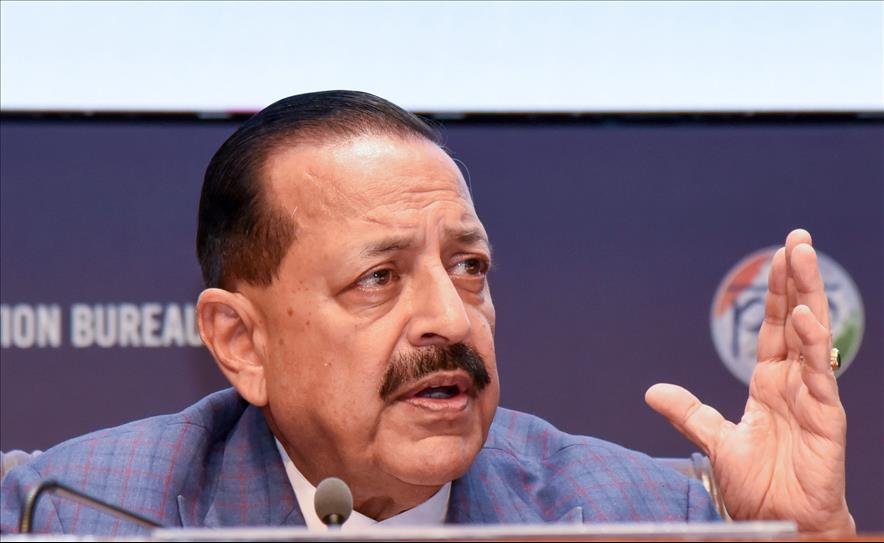
India Becoming A Global Healthcare Powerhouse With Innovation, AI: Minister


Dr Singh said that while AI, quantum technologies and advanced diagnostic tools are transforming healthcare, technology cannot replace the fundamental clinical understanding required of a doctor.
He said that medical education must continue to place strong emphasis on bedside learning, direct patient interaction, clinical examination, and practical experience.
India, which once depended considerably on foreign medical technologies and advanced treatment facilities, is now developing indigenous solutions in vaccines, antibiotics, gene therapy and cancer treatment, while emerging as a cost-effective destination for quality healthcare.
The minister said that India's growing scientific capabilities, unique genomic diversity and advancements in precision medicine have created unprecedented opportunities to contribute to global healthcare, adding that the next generation of doctors must combine technological advancements with strong clinical acumen to address the evolving challenges of modern medicine.
Addressing the 'Global Healthcare Conclave 2026', organised by the Global Association of Indian Medical Students (GAIMS), Dr Singh said that medical science has progressed from conventional X-ray-based diagnostics to advanced technologies such as ultrasound, CT scans and MRI, alongside significant advancements in therapeutics and disease management.
He said that while communicable diseases once accounted for a major share of morbidity and mortality, India is now facing a dual burden of communicable and non-communicable diseases, with Type-2 diabetes, cardiovascular diseases, hypertension, dyslipidemia and fatty liver disease emerging as major public health challenges.
India's extraordinary genetic and population diversity provides a unique resource for medical research, with the country's diverse population groups offering valuable opportunities to understand genetic variations and disease patterns.
Referring to the Indian Genome Programme, he said that around 10,000-15,000 individuals from 84 different populations have already been sequenced, with an initial target of reaching one million individuals.
This extensive genomic database has the potential to strengthen India's precision medicine capabilities and generate scientific knowledge that could benefit healthcare research across the world, he mentioned.
The Minister also referred to the changing disease profile of the country, particularly the increasing incidence of metabolic disorders among younger populations. He said that Type-2 diabetes, cardiovascular conditions and fatty liver disease are increasingly being detected at younger ages, making it essential to strengthen research into the relationship between metabolic disorders and develop more targeted approaches to prevention and treatment.
Dr Singh said that the global perception of Indian medical professionals has also changed significantly, with Indian doctors and researchers gaining increasing recognition for their capabilities, knowledge and contribution to medical science.
Highlighting the government's efforts to strengthen access to affordable healthcare, Dr. Jitendra Singh said that initiatives such as Ayushman Bharat have expanded financial protection for patients, including provisions covering pre-existing diseases.

Legal Disclaimer:
MENAFN provides the
information “as is” without warranty of any kind. We do not accept any
responsibility or liability for the accuracy, content, images, videos,
licenses, completeness, legality, or reliability of the information
contained in this article. If you have any complaints or copyright issues
related to this article, kindly contact the provider above.


Comments
No comment