


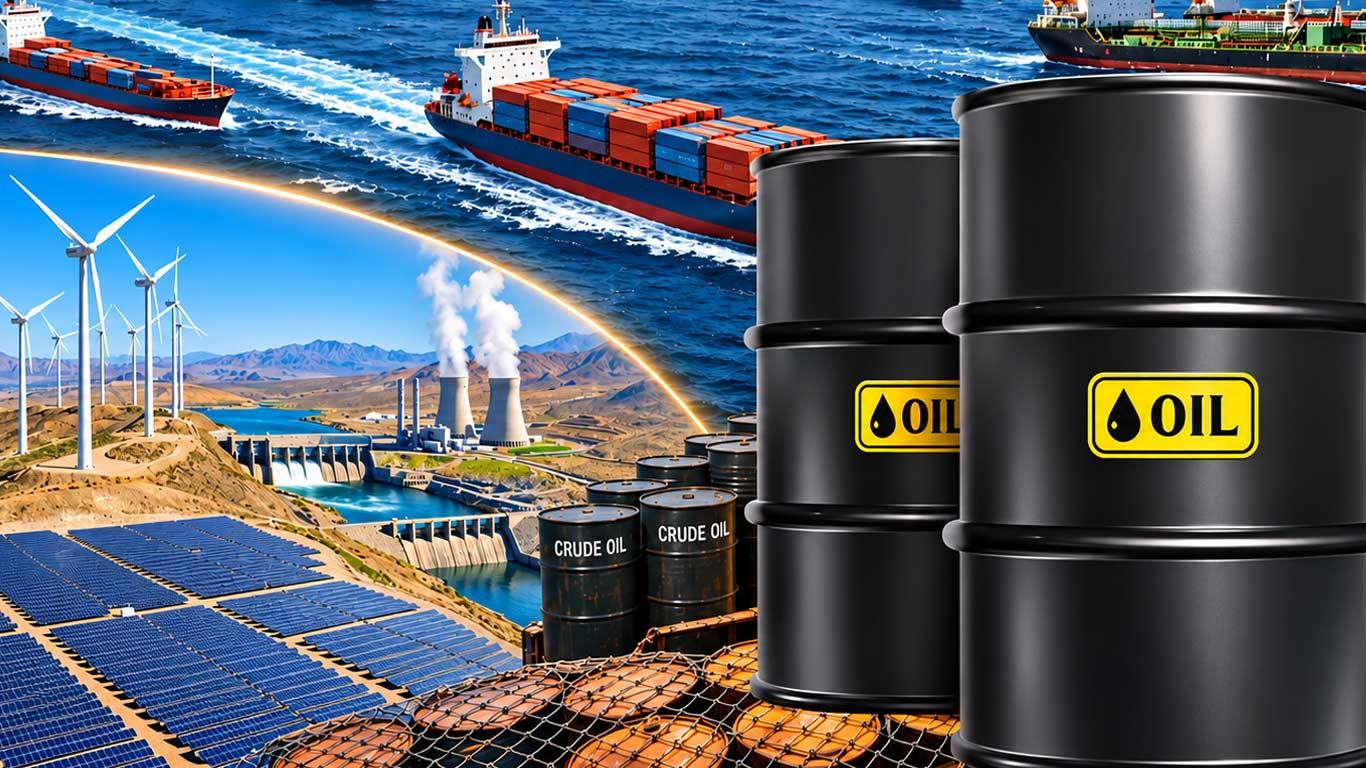
Global Energy Disruptions Strengthen Case For A New Energy Order Focused On Security And Sustainability


These developments have exposed the vulnerabilities of the fossil fuel-dependent energy system and strengthened the case for a new global energy order focused on energy availability, self-sufficiency, security, affordability and environmental sustainability, as mentioned by The Hindu.
Rising Demand and Fossil Fuel Dependence
Global energy demand has tripled over the past 50 years, driven by population growth and rising energy consumption. Demand has increased particularly sharply in China, where it has grown tenfold, and across Asia.
However, around 720 million people still lack access to electricity, while two billion rely on polluting fuels for cooking. At the same time, energy-intensive data centres are expanding rapidly.
Fossil fuels accounted for approximately 86.2 per cent of global primary energy supply in 2025, comprising oil at 33.5 per cent, coal at 27.7 per cent and natural gas at 25.1 per cent.
Low-carbon sources contributed the remaining 13.8 per cent, including renewables at 5.9 per cent, nuclear energy at 5.2 per cent and hydropower at 2.7 per cent.
This dependence has contributed to supply constraints, pollution, climate change and geopolitical tensions. Global temperatures could rise by 2.5 degrees Celsius by 2100 under current trends, exceeding the 1.5-degree threshold associated with the risk of severe and irreversible climate damage.
The failure of COP31 to secure agreement on fossil fuel phase-out and clean technology financing has further highlighted the challenges of the energy transition.
Geopolitical Conflicts Deepen Energy Security Risks
Wars in Ukraine and the Gulf have disrupted supplies from major hydrocarbon-producing regions, adding to volatility in global energy markets.
The US-Israel war against Iran has particularly affected the Strait of Hormuz, through which nearly one-fifth of global maritime oil and gas shipments pass.
The conflicts have resulted in an estimated cumulative loss of 2.8 billion barrels of crude oil and 60 billion cubic metres of natural gas. The disruptions have global implications, as three-quarters of the world's population live in countries that import oil and gas.
More than four billion people live in countries dependent on the Strait of Hormuz for over 30 per cent of their oil supplies.
Before the Iran conflict, most hydrocarbons and related products passing through the strait were destined for Asian markets, while much of the remaining supply served Africa.
The crisis has intensified vulnerabilities in both regions, particularly in transportation and agriculture, while continuing to fuel supply and price uncertainty.
In its annual World Energy Outlook, the International Energy Agency described 2026 as a year of "unprecedented disruption" and termed the Strait of Hormuz crisis the "largest threat to energy security in history".
(KNN Bureau)

Legal Disclaimer:
MENAFN provides the
information “as is” without warranty of any kind. We do not accept any
responsibility or liability for the accuracy, content, images, videos,
licenses, completeness, legality, or reliability of the information
contained in this article. If you have any complaints or copyright issues
related to this article, kindly contact the provider above.


Comments
No comment