


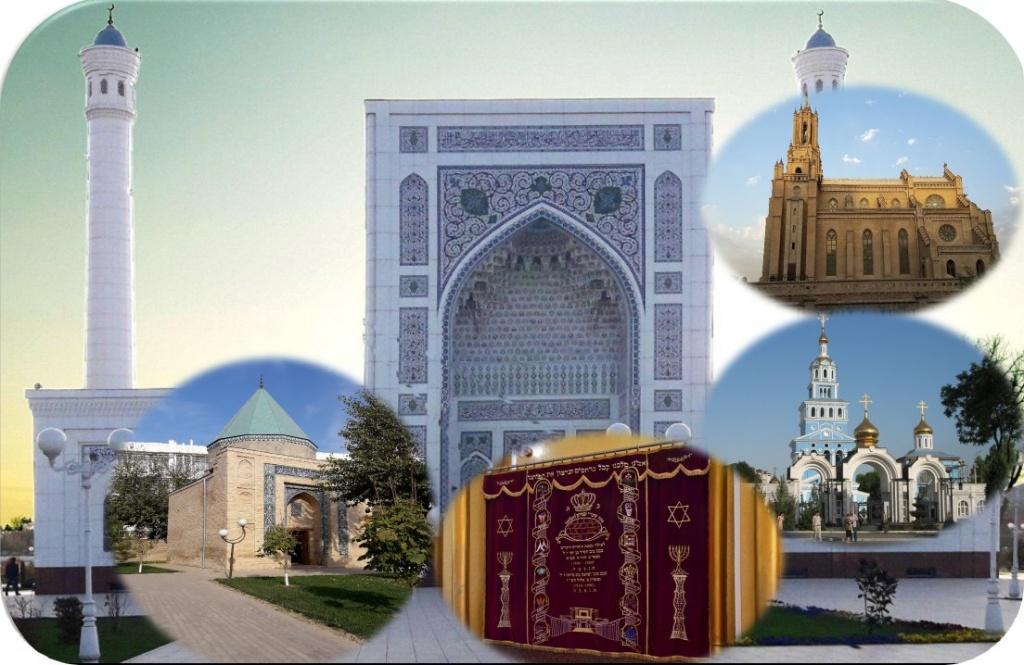
Uzbekistan: A Centuries-Old Tradition of Religious Tolerance and Coexistence


(MENAFN- National News Agency of Uzbekistan) From ancient Buddhist monasteries and medieval religious communities to the Mennonites of Khiva and wartime solidarity, Uzbekistan’s history reflects a diverse tradition of coexistence.
At a time when relations between religions, cultures and civilizations are becoming increasingly important worldwide, Uzbekistan’s historical experience offers a perspective worth exploring. Located at the crossroads of Central Asia, the country has served for centuries as a center of trade, scholarship, culture and spiritual life. Different peoples, languages, traditions and religious beliefs met here, with some becoming deeply rooted in local society and leaving traces that remain visible today.
The historic cities of Uzbekistan — Samarkand, Bukhara, Termez, Khiva and others — are renowned not only as major centers of Islamic civilization, but also as places where different religious traditions emerged, developed and interacted.
This heritage provides an opportunity to understand religious tolerance not merely as an abstract principle, but through the lives of communities, archaeological discoveries, architectural monuments and the accumulated experience of coexistence.
Ancient civilizations and the traces of different faiths
Long before Islam spread across the territory of present-day Uzbekistan, the region was home to diverse religious beliefs and traditions. Zoroastrianism, Buddhism, early Christian communities, Manichaeism and other religious and philosophical movements played a role in its spiritual and cultural life.
Evidence of this diversity comes not only from written sources but also from archaeological excavations that have uncovered temples, murals, sculptures, ritual objects and other artifacts associated with different faiths.
The ancient city of Termez, in southern Uzbekistan, was one of the major centers of Buddhism in Central Asia. Archaeological complexes such as Kara-Tepa and Fayaz-Tepa have revealed Buddhist temples, monasteries, stupas and religious artwork. These discoveries demonstrate the prominence of Buddhism in the region during the Kushan period, particularly between the first and fourth centuries AD, and highlight cultural and religious connections with India, Afghanistan and other territories.
Buddhist-related archaeological findings have also been recorded in areas associated with Samarkand, Bukhara and the Fergana Valley. The travel accounts of the Chinese Buddhist monk Xuanzang, who journeyed through Central Asia in the seventh century, provide valuable written evidence of Buddhist centers in the region and offer insight into its diverse religious landscape.
Archaeological research in ancient settlements around Bukhara, including Paykend and Romitan, has also contributed to the understanding of pre-Islamic religious life. Findings associated with Zoroastrian traditions, fire worship and other ancient religious practices shed light on the spiritual beliefs of communities that inhabited the region before the arrival of Islam.
The writings of Narshakhi, a historian of Bukhara, provide additional information about ancient religious sites, local beliefs and their place in urban life.
Taken together, archaeological discoveries and historical texts reveal that the religious history of this region was complex and multifaceted, shaped by successive civilizations and cultural influences.
Religious diversity during the rise of Islamic civilization
Beginning in the eighth century, Islam spread throughout the region. Samarkand and Bukhara subsequently developed into major centers of Islamic scholarship, theology, jurisprudence, hadith studies and Sufism. However, the region’s earlier cultural and religious connections did not disappear overnight.
Historical sources and research indicate that certain Buddhist, Christian and other religious traditions continued to exist in parts of Central Asia for periods following the spread of Islam.
Cities such as Samarkand and Bukhara were important centers of trade and diplomacy, attracting merchants, craftsmen, travelers and religious communities from different parts of the world. The Silk Road facilitated the movement not only of goods but also of ideas, knowledge, languages and beliefs.
The history of the Jewish community in Samarkand is another important example. The twelfth-century travel accounts of Benjamin of Tudela mention a Jewish community in the city. In subsequent centuries, the community continued to exist under changing political and social circumstances. By the nineteenth century, a distinct Jewish quarter had developed in Samarkand. According to figures from 1897, the city was home to 4,307 Jews.
Bukharan Jews also played an important role in the region’s historical and cultural life. They contributed to trade, craftsmanship, music, architecture and other fields while preserving their language, customs and religious traditions.
These examples demonstrate that relations between different faiths were shaped by the political, economic and social conditions of their time. At the same time, the region’s history also included periods of restrictions and persecution affecting religious communities. A balanced understanding of this heritage therefore requires acknowledging both its traditions of coexistence and its more complex historical realities.
The German Mennonites of Khiva: A distinctive chapter in history
One of the notable examples of religious diversity in Uzbekistan’s history is the settlement of German Mennonites in the Khorezm region during the second half of the nineteenth century.
Mennonites belong to an Anabaptist Christian tradition. Some Mennonite communities migrated from Europe to territories of the Russian Empire because of religious and social circumstances, including their views on military service. In later years, some groups moved further into Turkestan and Khorezm.
In the early 1880s, Mennonites arrived in the Khiva region during the reign of Khiva's ruler Muhammad Rahim Khan II, known as Feruz. Local authorities provided them with land and an opportunity to establish a settlement. They initially settled near Qipchak and later moved to an area known as Ak-Masjid.
Historical records from 1912 indicate that the Mennonite settlement at Ak-Masjid consisted of 24 households with a population of 141 people. The community maintained its religious beliefs, language, customs and way of life while developing economic and social relations with the local population. Its members were engaged in agriculture, craftsmanship, carpentry, blacksmithing and other occupations.
Historical accounts also indicate that the Khiva ruler granted the Mennonites a four-year tax exemption and allowed them to establish a place of worship and organize their religious life. The community had its own church and school.
The history of the Khiva Mennonites is significant because it illustrates how a religious community with different beliefs was able to preserve its identity within a region where Islamic traditions were deeply rooted. Rather than remaining entirely isolated, its members participated in local economic life and contributed through their work and professional skills.
This episode offers a historical example of how religious diversity could be accommodated and how members of different faiths could find a place within society.
World War II: A test of humanity and solidarity
Uzbekistan’s history of tolerance is not limited to ancient times. The years of World War II were another important test of relations between peoples and cultures.
Beginning in 1941, large numbers of people were evacuated to Uzbekistan from territories close to the front lines. They included children, families, scientists, artists, workers and representatives of various ethnic groups, among them Jews, Russians, Ukrainians, Belarusians and others.
Despite difficult economic and living conditions, the local population made considerable efforts to provide evacuees with shelter, food and assistance. In Tashkent and other cities, newcomers lived alongside local residents, worked, studied and participated in social life.
Humanitarian relationships formed during this period remain part of the memories of many families and generations. Historical accounts and personal testimonies describe cases in which Uzbek families welcomed evacuated children into their homes, cared for them and treated them as members of their own families.
Historians do not portray this period as entirely free of difficulties. Wartime shortages, social tensions and instances of discrimination also existed. Nevertheless, mutual assistance, compassion and efforts to protect human dignity were important aspects of this experience.
Research into the relations between Jewish evacuees and the local population in Uzbekistan highlights the complexity of these interactions while documenting numerous examples of solidarity and cooperation.
The broader lesson of this history is that religious or ethnic differences need not prevent people from helping one another, protecting lives and overcoming hardship together.
Modern Uzbekistan: A multi-confessional society and legal guarantees
Historical experience remains one of the cultural foundations of religious and ethnic diversity in contemporary Uzbekistan. The country's Constitution establishes Uzbekistan as a secular state and guarantees freedom of conscience. Every citizen has the right to profess any religion or to have no religious beliefs.
On February 25, 2025, Uzbekistan adopted Law No. ZRU-1037, aimed at ensuring freedom of conscience and approving the concept of state policy in the religious sphere. The document emphasizes secularism, freedom, equality, social justice and harmony as important principles for the development of a multi-ethnic and multi-confessional society.
Official information on religious organizations also reflects the country's diversity. Uzbekistan is home to non-Islamic religious organizations representing Christian communities, Jewish communities, Baháʼís, Buddhists, the Krishna Consciousness movement and other religious traditions.
Mosques operate alongside Orthodox and Catholic churches, Protestant congregations, synagogues and other religious institutions in various cities across the country. These organizations conduct religious services, spiritual activities and community events, serving the religious needs of their members.
Mutual respect among religious communities, interethnic harmony and the preservation of social stability remain important aspects of public life.
At the same time, ensuring freedom of religion in accordance with international standards requires continuous attention, improvements in legislation and the further development of practical implementation. The fundamental measure of religious tolerance is the effective protection of every person's rights and dignity, as well as equality before the law regardless of religious belief.
Uzbekistan’s experience as a contribution to international dialogue and peace
Today, the world faces challenges related to religious and ethnic conflicts, cultural misunderstandings, extremism and radical ideologies. In such circumstances, promoting mutual respect, dialogue and cooperation among people of different faiths remains an important task for governments and the international community.
Uzbekistan's historical experience offers examples worth studying. The preservation of traces of different religious traditions, the coexistence of diverse communities in historic cities, the settlement of German Mennonites in Khiva and the assistance extended to evacuees during World War II all illustrate the region's multifaceted history.
This experience demonstrates that religious tolerance means more than simply accepting another person's beliefs. It also involves respecting human dignity, recognizing the rights of others, engaging with different cultures and working together for the common good.
Uzbekistan's religious and cultural heritage can serve as an important resource for international research and cultural promotion. Ancient temples, archaeological discoveries, historical documents, community memories and the activities of religious organizations today provide valuable material for presenting this experience to a global audience.
Such an approach can help introduce Uzbekistan's heritage to the world while contributing to intercultural dialogue, strengthening trust among religious communities and promoting the values of peace.
The most important lesson drawn from Uzbekistan's historical experience is that peace and stability are strengthened not by eliminating diversity, but by respecting it, preserving shared values and ensuring the rights of every individual.
The history of this land, where civilizations and faiths have intersected for centuries, continues to offer the world an important message about the value of mutual respect, tolerance and solidarity.

Legal Disclaimer:
MENAFN provides the
information “as is” without warranty of any kind. We do not accept any
responsibility or liability for the accuracy, content, images, videos,
licenses, completeness, legality, or reliability of the information
contained in this article. If you have any complaints or copyright issues
related to this article, kindly contact the provider above.


Comments
No comment