


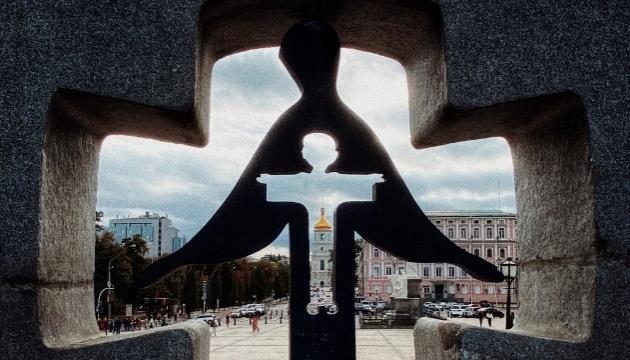
Ukraine Commemorates Victims Of Holodomor Famines


In the 20th century, Ukrainians endured three famines: in 1921–1923, 1932–1933, and 1946–1947. The most devastating was the famine of 1932–1933, which is recognized as the genocide of the Ukrainian people perpetrated by the Stalinist regime.
The Holodomor was preceded by the forced collectivization of agriculture, the "dekulakization" of peasants, grain procurement campaigns, and mass terror in the countryside. The 22-month terror by famine in Ukraine was a deliberate and systematic policy of the Stalinist government, whose strategy and tactics had been implemented since 1928. This punitive and repressive campaign was aimed at subjugating the Ukrainian peasantry and destroying independent peasant farms, which formed the socioeconomic foundation of the Ukrainian nation.
After the sweeping repressions against the Ukrainian intelligentsia and clergy, peasants became the next victims of the regime.
Several developments paved the way for the mass famine in Ukraine. On November 18, 1932, the Central Committee of the Communist Party (Bolsheviks) of Ukraine adopted a resolution "On Measures to Intensify Grain Procurement," which introduced penalties for failure to meet grain collection quotas. Peasant households were subjected to "in-kind fines," involving the confiscation of their 15-month meat quota. Potatoes and lard were subsequently added to the list of goods that could be confiscated, followed by long-storage food products toward the end of the year. Another resolution adopted that same day, "On the Elimination of Counterrevolutionary Cells and the Crushing of Kulak Groups," authorized the confiscation of grain from peasants under the charge of "counterrevolutionary crimes."
Just a few days later, on November 26, the People's Commissar of Justice and the Prosecutor General of the Ukrainian SSR issued an order stating that "repression is one of the powerful means of overcoming class resistance to grain procurement." Thus, the artificially engineered famine became a carefully planned and meticulously concealed punitive operation.
Read also: Coffin to be installed in central Vienna in memory of Holodomor victimsFirst, Ukrainian peasants were stripped of the grain they had grown. Then, through numerous "in-kind fines" and searches, they were deprived of their remaining food supplies. In December 1932, food trading was banned in 82 districts of Ukraine, and supplies of manufactured goods were also cut off. In early 1933, peasants were deprived of their last chance of survival when they were forbidden to leave famine-stricken Ukraine. With no bread left, peasant families resorted to eating various substitutes, including corn cobs and stalks, sifted husks, dried straw, rotten watermelons and beets, potato peelings, acacia pods, and crushed tree bark and leaves.
According to official figures, the 22-month terror by famine in Ukraine claimed approximately four million lives. One particularly horrific aspect of the Holodomor, according to the Ukrainian Institute of National Memory, was the extremely high death toll among children. In many parts of Ukraine, around two-thirds of schoolchildren failed to return to their desks in September 1933. The Poltava, Cherkasy, Kirovohrad, and Kyiv regions were hit hardest. In some districts of these regions, more than half the population died in 1933. Mortality rates were eight to nine times or more above average. In what are now the Vinnytsia, Odesa, and Dnipropetrovsk regions, mortality was five to six times higher, while in the Donetsk and Luhansk regions it was three to four times higher.
For decades, the Holodomor remained a taboo subject. Under the communist regime, even speaking about the famine of those years was strictly prohibited. Research into the tragedy began only in the late 1980s.
Under the Law "On the Holodomor of 1932–1933 in Ukraine," adopted on November 28, 2006, the famine of 1932–1933 is recognized as an act of genocide against the Ukrainian people. Its "public denial... is recognized as an affront to the memory of millions of Holodomor victims, the humiliation of the dignity of the Ukrainian people, and an unlawful act."
In a ruling issued by the Kyiv Court of Appeal on January 13, 2010, Soviet leaders Joseph Stalin, Vyacheslav Molotov, Lazar Kaganovich, Pavel Postyshev, Stanislav Kosior, Vlas Chubar, and Mendel Khatayevich were found guilty of organizing the Holodomor in Ukraine.
According to the Ministry of Foreign Affairs, as of 2024, approximately 30 countries had recognized the 1932–1933 Holodomor as genocide against the Ukrainian people at the parliamentary level, while 11 had done so at the regional (municipal) level. In addition, the Parliamentary Assembly of the Council of Europe, the European Parliament, and the Baltic Assembly have recognized the 1932–1933 Holodomor in Ukraine as genocide against the Ukrainian people.
It is also worth recalling that 2026 marks the 80th anniversary of the beginning of the mass famine of 1946–1947. According to the Ukrainian Institute of National Memory, the famine resulted from a combination of factors, including a devastating drought, postwar destruction, a shortage of men to work the land, and the termination of food supplies from the United States under the Lend-Lease program. Another factor was the Soviet Union's decision to send grain to Eastern European countries that had also suffered from drought, in an attempt to demonstrate the superiority of communism to the world.
To implement this plan, collective farms were given unrealistic targets to harvest and ship more than 360 million poods of grain from Ukraine to Moscow. To meet these quotas, collective farms began confiscating food reserves from private peasant households. Much of the harvested grain was left to get wet and spoil on collective farm threshing floors, but people were not allowed to take it. Stalin's notorious "Law of Five Ears of Grain," which threatened even children who collected grain left in the fields with imprisonment in labor camps, remained in force. To survive, people ate lamb's quarters, acacia blossoms, mallow plants, sparrows, and mice.
Thousands of Ukrainians traveled to western Ukraine to exchange their belongings for food. Famine was less severe there because Soviet power was still weak, collective farms were only being established, and parts of the territory were controlled by the Ukrainian Insurgent Army (UPA). Meanwhile, the Soviet press made no mention of the famine, neither its scale nor even the existence of the problem, the Ukrainian Institute of National Memory said.
According to estimates by specialists from the Ptoukha Institute for Demography and Social Studies of the National Academy of Sciences of Ukraine, the famine claimed more than 700,000 lives above the expected mortality level in Ukraine, with children under 14 accounting for more than a quarter of the victims.
Today, more than 90 years after the tragedy, Russia continues its attempts to erase Ukraine from the map of the world and destroy the Ukrainian people, their culture, language, and history.
As is customary, Ukrainians light a candle in their homes on this day in memory of those who died in the artificially engineered famine. A nationwide minute of silence is also observed at 16:00, and commemorative events are held across Ukraine.

Legal Disclaimer:
MENAFN provides the
information “as is” without warranty of any kind. We do not accept any
responsibility or liability for the accuracy, content, images, videos,
licenses, completeness, legality, or reliability of the information
contained in this article. If you have any complaints or copyright issues
related to this article, kindly contact the provider above.


Comments
No comment