


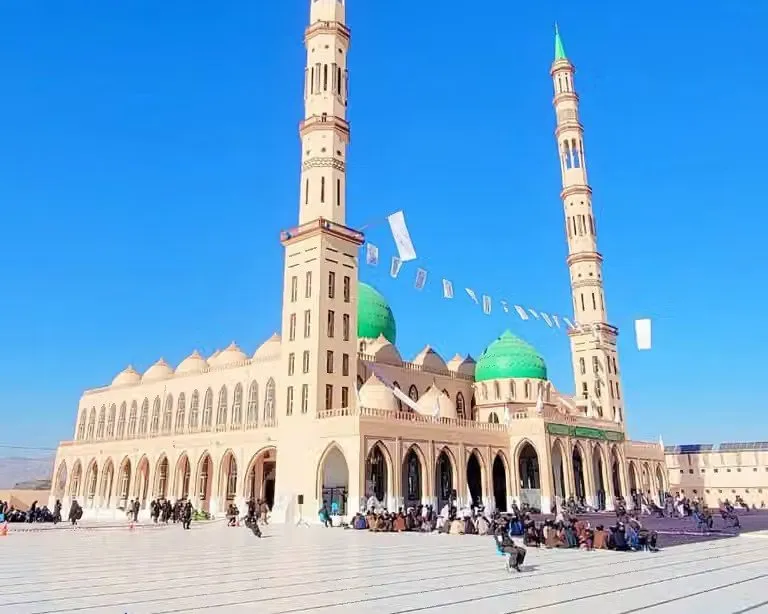
Taliban Open $2.8 Million Mosque In Uruzgan Amid Poverty


The office of Abdul Ghani Baradar, the Taliban's deputy prime minister for economic affairs, announced the inauguration on Friday, November 27. The mosque, located in Tarinkot, the provincial capital, was constructed on 12 jeribs of land and can accommodate more than 35,000 worshippers at a time, according to the statement.
Baradar congratulated residents of Uruzgan on the opening and urged religious scholars to use the mosque to provide regular religious education and promote Islamic teachings, the Prophet's moral values and unity among the population.
The inauguration comes amid a broader expansion of religious institutions since the Taliban returned to power in August 2021. Taliban supreme leader Hibatullah Akhundzada recently laid the foundations for at least eight mosques and religious schools, including so-called jihadist madrasas, during a journey from Kabul to Kandahar.
However, the expansion of religious facilities has taken place while investment in essential public infrastructure, employment opportunities and basic services remains limited. The World Bank's November 2026 Afghanistan Development Update warned that investment in the country remains weak, with net investment close to zero, while inadequate infrastructure, unreliable electricity and limited access to finance continue to constrain economic development and job creation.
The country's humanitarian situation also remains severe. According to the United Nations' 2026 Humanitarian Needs and Response Plan, approximately 21.9 million people, or 45 percent of Afghanistan's population, require humanitarian assistance. Millions face food insecurity, inadequate healthcare and difficulties accessing clean drinking water.
The announcement of the mosque's inauguration is also likely to renew public debate over government spending priorities. While religious institutions play an important role in society, critics have increasingly called for greater investment in hospitals, schools, roads, electricity, water systems and job-creating infrastructure projects.
For many Afghans struggling with poverty, unemployment and uncertainty about their future, the construction of another large religious facility raises questions about how available resources are being prioritised while basic economic and humanitarian needs remain unmet.

Legal Disclaimer:
MENAFN provides the
information “as is” without warranty of any kind. We do not accept any
responsibility or liability for the accuracy, content, images, videos,
licenses, completeness, legality, or reliability of the information
contained in this article. If you have any complaints or copyright issues
related to this article, kindly contact the provider above.


Comments
No comment