


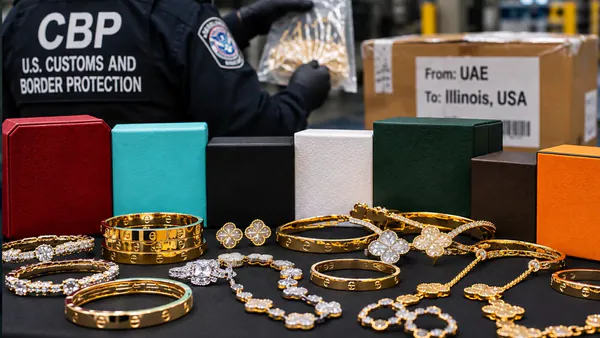
How US Customs Caught 440 Fake Cartier, Chanel And Tiffany Jewellery Pieces Worth '$2.4 Million': Here's What Happened


The shipment was inspected on November 11, when officers selected the parcel for examination. According to a CBP release issued on November 18, the jewellery carried trademarks associated with Cartier, Tiffany, Chanel, Christian Dior, Van Cleef & Arpels, Bvlgari and Hermes.
The agency's Centers of Excellence and Expertise, which employs industry-trained trade specialists, examined the items and determined that they were not authentic. The entire shipment was subsequently seized for carrying counterfeit versions of registered and recorded trademarks.
Why the fake jewellery had a potential value of $2.4 millionThe shipment's estimated value of more than $2.4 million refers to what the jewellery could have fetched if the pieces had been genuine.
According to CBP, the combined manufacturer's suggested retail price of the items would have exceeded $2.4 million had they been authentic. The figure, therefore, does not represent the actual value of the counterfeit jewellery.
The seizure highlights the agency's efforts to prevent counterfeit branded merchandise from entering the US market and protect businesses against trademark infringement.
How US Customs can seize counterfeit goodsCBP has the authority to detain, seize, forfeit and ultimately destroy imported merchandise that infringes registered trademarks or copyrights.
Under the process outlined by the agency, the relevant trademark or copyright must be registered with the United States Patent and Trademark Office or the US Copyright Office and subsequently recorded with CBP through its e-Recordation programme.
Apart from intellectual property violations, the agency also deals with other import-related violations, including incorrect merchandise classification, false country-of-origin markings, health and safety issues, and valuation discrepancies.
What CBP says about counterfeit productsCincinnati Port Director Eric Zizelman said counterfeit products impose costs on American businesses through lost revenue, jobs and tax collections.
"Counterfeit goods are poor quality products that cost the U.S. businesses billions of dollars a year while robbing our country of jobs and tax revenues," Zizelman said.
He added that CBP remained committed to preventing counterfeit smuggling, disrupting profits linked to organised crime and protecting communities from potentially hazardous imitation products.
The agency also listed several warning signs that consumers should watch for when buying branded merchandise. These include peeling labels, poor-quality printing, spelling errors on packaging and generally substandard packaging.
Counterfeit clothing and handbags may have uneven stitching, incorrect sizing or designs that are not part of the original brand's product range. Fake electronic products may also have short battery life or overheat during use.
CBP advises consumers to buy products directly from trademark owners or authorised retailers. For online purchases, it recommends checking seller reviews and verifying whether the seller provides a working US phone number and a valid contact address.

Legal Disclaimer:
MENAFN provides the
information “as is” without warranty of any kind. We do not accept any
responsibility or liability for the accuracy, content, images, videos,
licenses, completeness, legality, or reliability of the information
contained in this article. If you have any complaints or copyright issues
related to this article, kindly contact the provider above.


Comments
No comment