


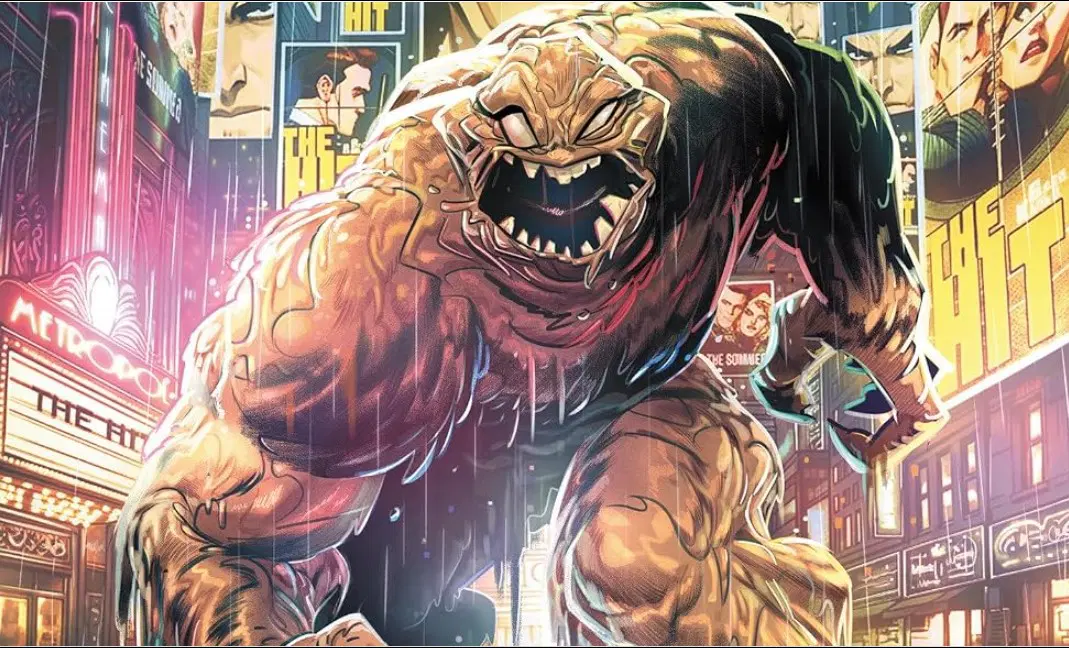
Feats Of Clay: Meet The 10 Clayface Characters Of DC Comics, Film, And Animation


While the recent Clayface film did not set the world on fire, it did receive praise for its cast performances and willingness to give a B-List Batman villain a star turn. While casual fans often think of Clayface as a single monster made of living mud, the truth is far more complex. Across the comics, film, and DC animation, ten Clayface characters have used the name at one time or another.
From tragic actors and criminal masterminds to shape-shifting monsters and misunderstood antiheroes, each Clayface character has a tragic backstory. Casual fans remember the character from the 1992 Batman cartoon,“Feats fo Clay,” even if they have never read a comic.
Clayface is a flawed human who won't accept accountability for their flaws, projects their shortcomings onto others, and only comes to prize their humanity after irretrievably losing it. Clayface, a mud monster, is such a compelling character that Hollywood execs took a chance on a Clayface film without Batman in it.
What makes Clayface such a relatable character to fans? Why are there so many versions of the character? Let's take a deep dive into the 10 Clayface characters that have left their mark on DC Comics and animation.
1. Matt Hagen (Batman: The Animated Series)For many casual fans,“Matt Hagen” is the definitive version of Clayface. He was introduced in the two-part Batman: The Animated Series episode“Feat of Clay” in 1992. This animated version of Matt Hagen is actually a character hybrid of the first two comic book versions of Clayface, actor Basil Karlo and adventurer Matt Hagen.
Hagen was a famous actor whose career collapsed after a horrific accident disfigured his face. Desperate to maintain his appearance, he became dependent on a mysterious cosmetic compound called Renuyu. The experimental substance permanently alters his body, transforming Hagen into a shape-shifting clay creature.
What makes this version so memorable is the tragedy at its core. Hagen isn't initially a criminal mastermind or power-hungry villain. He's a desperate celebrity clinging to fading fame and a lost identity. The emotional weight of Hagen's downfall, body horror elements, depictions of corporate greed, and voice work made“Feat of Clay” one of the most acclaimed episodes of the series.
Fun fact: a young and up-and-coming Ron Perlman was the voice of Matt Hagen.
2. Basil Karlo (Clayface I)Basil Karlo was the original Silver Age Clayface in the comics. Karlo was also the first of the 10 Clayface characters to appear in DC canonical history. Debuting in Detective Comics #40 in 1940, Karlo was a horror-film actor driven insane after learning that a classic movie he once starred in was being remade without him.
Consumed by jealousy and rage, Karlo adopts the identity of the movie's villain, Clayface, and then embarks on a murderous rampage.
Unlike later versions, Basil Karlo possessed no superpowers and was never a shapeshifting mud monster. He was essentially a masked serial killer using theatrical disguises and psychological intimidation. Karlo was the 1940s version of Ghostface from the Scream franchise, if you think about it. Later Clayface versions would build upon Karlo's mental instability, ego, and need for validation in a mud monster body.
A modern version of Basil Karlo still exists in the comics. Karlo injected himself with cell samples from Clayface II and Clayface IV to gain powers himself. Karlo's Clayface was once an antihero and allied with Batman. Detective Comics #40 is very rare: a 9.2 CGC grade of the comic is worth about $18,000.
3. Matt Hagen (Clayface II)Before the animated series reimagined him, Matt Hagen first appeared in Detective Comics #298 in 1961. This comic-book version was an adventurer who discovered a strange radioactive pool of protoplasm. Exposure to the substance granted him the ability to reshape his body into any form imaginable.
Matt Hagen was canonically the second, Silver Age Clayface, but the first version to become the mud monster we know today.
This incarnation of the character represented a major shift for the Clayface concept. Clayface now had superhuman abilities rather than relying on disguises, acting skills, and a serial killer's temperament. Hagen could mimic people, objects, and creatures, making him an especially unpredictable opponent for Batman.
Hagen could only become Clayface for short periods of time. He would have to expose himself to the experimental protoplasm every few days to regain his Clayface powers.
As previously mentioned, the“Matt Hagen” casual viewers met in“Feat of Clay,” and the recent film adaptation was a combination of the Karlo and Hagen Clayface characters.
A near-perfect copy of this comic is worth about $46,000.
4. Preston Payne (Clayface III)Preston Payne debuted in Detective Comics #477 in 1978. He remains one of the most tragic Clayface characters ever created. A gifted scientist suffering from hyperpituitarism, Payne became obsessed with finding a cure for his condition. He injects himself with samples of Matt Hagen's blood, transforming him into a grotesque clay creature.
The transformation came with a horrifying twist. Payne could not touch another person without causing them to melt into a clay-like substance. Payne was also the first Clayface who was unable to maintain his human form. Forced to wear a protective containment suit, he became increasingly isolated and mentally unstable.
What makes Preston Payne significant is the psychological horror surrounding his existence. Rather than pursuing wealth or power, he simply longs for human contact and acceptance. His loneliness defines nearly every appearance.
One of the most heartbreaking Clayface stories is“Mortal Clay,” from 1987's Batman Annual #11. Payne, hiding in an abandoned mall, hallucinates a deep, emotional love connection with a mannequin. He battles Batman only because he believes he is trying to separate him from his true love.
5. Sondra Fuller (Clayface IV a.k.a. Lady Clay)Sondra Fuller, better known as Lady Clay, first appeared in Outsiders #21 in 1987. Fuller was a member of the terrorist organization Strike Force Kobra. Fuller hates her aesthetic appearance and volunteers to undergo experimental procedures that grant her shape-shifting abilities similar to those of previous Clayfaces.
Unlike the previous Clayface characters, Fuller has superhuman strength, stamina, and reflexes. She can also mimic the powers and abilities of any hero or villain she physically mimics. Fuller, Karlo, Payne, and other Clayface characters occasionally team up as a supervillain team known as the Mudpack.
Desiring a normal life, Fuller falls in love with Preston Payne. The two try to leave the Mudpack and a life of crime behind, get married, and have a child. They name the child Cassius“Clay” Payne.
6. Cassius Payne (Clayface V)Cassius Payne made his debut in Batman #550 in 1998. The son of Preston Payne and Sondra Fuller, Cassius inherited a horrific variation of the Clayface condition. Unlike many predecessors who retained some level of human appearance, Cassius became a towering, deformed mass of living clay. After his parents' imprisonment, Cassius is placed into an T. Labs prison for study.
Cassius has the same powers as the previous Clayfaces, but he was born with those abilities. He can also detach parts of the mud mass from his body and control those parts. If parts of his body attach to a human, Cassius can control them, turning them into his“Clay-Thing” puppets.
7. Peter Malley (Clayface VI)Peter Malley is one of the lesser-known members of the Clayface family. He is a government scientist who also made his debut in Batman #550. Also known as“Clay-Thing.” Malley permanently becomes a Clay-Thing monster after a mud sample from Cassius Payne's body merges with Malley.
Malley has all the powers of a traditional Clayface monster. Unlike the other Clayface characters, Malley has the power to melt and disintegrate people simply by looking at them. Malley dies when government agent Cameron Chase causes Malley to use his own disintegrating powers against himself. Residual samples of Malley's body are now kept in a government lab.
8. Todd Russell (Clayface VII)Todd Russell debuted in Catwoman #1 in 2001. Russell represents what happens when corrupt government entities in the DC Comics universe try to replicate the Clayface monster as a weapon and the resulting victims created. Russell is a soldier who undergoes lab experiments to gain the powers of Clayface.
Russell develops amnesia and soon becomes a murderous psychopath in Gotham City. He does not remember who he is, assumes the personalities and aliases of others, and uses his shapeshifting powers to kill sex workers in Gotham. The police don't care and barely investigate.
Catwoman tracks down Russell and severs his head, discovering his powers. Russell's head is kept in containment at S.T.A.R. Labs for many years. Russell is never called“Clayface” until years later when Catwoman unwittingly breaks out of the lab. He joins Basil Karlo's new villain team, The Fraternity of Mud, where Karlo attempts to form a new Mudpack featuring every living Clayface.
9. Johnny Williams (Clayface VIII)Johnny Williams made his first appearance in Batman #614 in 2003 but is not named until Batman: Gotham Knights #60 in 2005. Williams is a cautionary tale about what happens when Clayface is used as a pawn and a weapon. Williams is a firefighter who becomes Clayface after he is caught in a chemical explosion while in the line of duty.
Suffering from mental instability and unable to understand his new powers, Williams decides to take his own life after accidentally killing someone. Williams then becomes a pawn of The Joker and Hush. The villains explain his Clayface powers and promise to help him if he does favors for them.
The villainous duo makes Williams shapeshift to fool and confuse Batman. They even use cell samples from Williams to create a Clayface-like virus to infect Alfred. Williams dies aiding Batman, saving Alfred, and foiling Hush and Joker.
10. Matt Hagen (DCU Clayface)Tom Rhy Harries gives a standout performance and is the saving grace of the recent Clayface film. Still, the film has not been a financial hit. The film, made on a $44 million budget before marketing costs, currently sits at the $126 million profit mark. Without knowing the true marketing costs, it is hard to believe that the film has fully broken even or made a profit yet for Skydance.
Still, many critics and audiences laud Harries' performance and the DCU for taking a chance by making a superhero film with body horror themes. Hagen is a movie star who angers the wrong gangster; his celebrity life is ruined after his face is cut. Hagen slowly becomes Clayface after taking an experimental treatment to fix his facial scars.
He then goes on a revenge spree before losing the ability to maintain his human form and permanently becomes Clayface. Even though Batman never appears, the film is notable for trying to humanize a B-list Batman villain for comic book and horror film fans.
Why the Clayface Legacy EnduresThe enduring popularity of these 10 Clayface characters comes down to one powerful theme: identity. Every Clayface story asks what happens when a person can become anyone or anything they want, yet risks losing themselves in the process.
More than eighty years after Basil Karlo first appeared in Detective Comics #40, the Clayface mantle continues to evolve. Few Batman villains have inspired as many reinventions while remaining true to a central idea.
While we may not get another Clayface film anytime soon, the character remains a fan favorite who will inspire future generations the same way 1992's“Feat of Clay” still inspires the current.
Material Connection Disclosure: Some of the links in this article are“affiliate links.” If you click on the link and make a purchase or sign-up, Saving Advice will receive an affiliate commission – which will help keep the site going. We only recommend products we think will add value to our readers. We are disclosing this in compliance with Federal Trade Commission's 16 CFR, Part 255:“Guides Concerning the Use of Endorsements and Testimonials in Advertising.”
Free Guide: The Casual's Guide to Comic Book Investing
Learn which comics hold value and how to protect them. Get the free guide, plus collecting tips and YouTube picks twice a month.
Email addressLeave this emptyFree. Unsubscribe anytime. Privacy Policy.
Allen FrancisAllen Francis is the lead staff writer for ComicsAndAssets at District Media, Inc., specializing in comic book investing, collectibles, popular culture, and practical wealth-building strategies. A New York City native, Marymount Manhattan College graduate, and former college academic advisor, librarian, and adjunct instructor, he brings 15+ years of professional writing experience and a proven personal transformation from financial illiteracy to expert collector. He also the author of The Casual's Guide: Why You Should Get Into Comic Book Investing.
Tags: Batman, Clayface, DC Comics
Legal Disclaimer:
MENAFN provides the
information “as is” without warranty of any kind. We do not accept any
responsibility or liability for the accuracy, content, images, videos,
licenses, completeness, legality, or reliability of the information
contained in this article. If you have any complaints or copyright issues
related to this article, kindly contact the provider above.


Comments
No comment