


Can The International Criminal Court Survive Trump's Attacks And Hold World Leaders To Account?


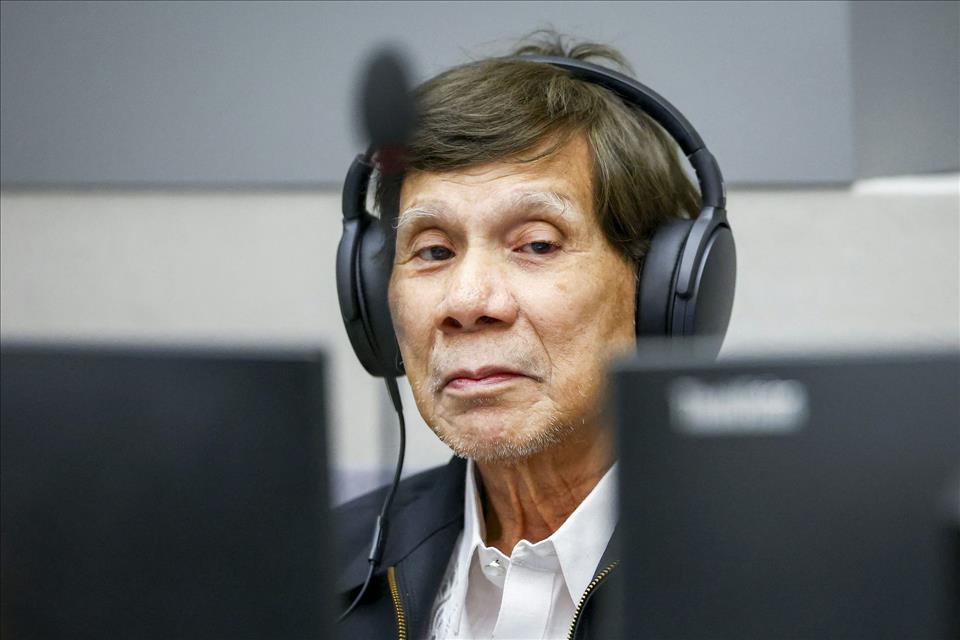
More than eight years after Rodrigo Duterte announced the Philippines would withdraw from the International Criminal Court (ICC), the country's former president is about to begin his trial in The Hague.
Duterte faces charges of crimes against humanity over alleged killings carried out during his deadly war on drugs.
The trial, which begins on 30 November, comes at a precarious moment for the court, as the United States ramps up its efforts to undermine the institution.
“Nothing has really quite approached this level of hostility we're seeing coming from President Trump, or more particularly Marco Rubio,” explains Carrie McDougall, an associate professor at Melbourne Law School, speaking on The Conversation Weekly podcast.
The US has never joined the ICC, citing concerns about politically motivated prosecutions of its nationals. But the court can investigate alleged war crimes committed by Americans on the territory of its member countries.
McDougall says the US has“made no bones” about its opposition to the investigation of US nationals and the prosecution of Israeli nationals.
In October, the Trump administration extended sanctions against individual ICC judges and prosecutors to the court as a whole. The sanctions threaten the court's access to banking and IT services, as well as its ability to engage with victims and witnesses, McDougall says.
The US has also been pressuring countries to withdraw from the court. McDougall attributes the decisions by Venezuela, Chad and Nauru to withdraw from the ICC to that pressure.
Meanwhile, Duterte's case illustrates both the powers and limitations of the court.
“The reality is that the court itself doesn't have any enforcement powers,” McDougall says. Instead, it relies on the Security Council – which has never used its enforcement powers to assist the court – and countries to cooperate with it.
Duterte was arrested by his own country's authorities. Russian President Vladimir Putin and Israeli leader Benjamin Netanyahu are both subject to ICC arrest warrants, but Russia and Israel have refused to cooperate in the arrest of their leaders. Neither country is a member of the ICC.
While the ICC doesn't have its own enforcement powers, arrest warrants still have some power; they can restrict leaders' ability to travel overseas and potentially deter others from committing crimes. And, McDougall says:
Duterte's case also demonstrates that withdrawing from the ICC does not necessarily shield political leaders from prosecution, explains McDougall.
So will the ICC survive?
McDougall says the US sanctions“will impede the court's ability to fulfil its mandate” and that the threat is“very serious.” She also warns that US attacks on international institutions risk emboldening other countries, including China and Russia, that want to reshape that order.
“I think we are facing something of a crossroads,” she says.
McDougall describes the ICC as the“canary in the coal mine” for the international legal order:
Ultimately, though, McDougall does not expect a mass exodus from the ICC.
Disclosure statement
Carrie McDougall does not work for, consult, own shares in or receive funding from any company or organisation that would benefit from this article, and has disclosed no relevant affiliations beyond their academic appointment.
Credits
This episode of The Conversation Weekly was hosted by Justin Bergman and produced by Gemma Ware and executive producer Grace Jennings-Edquist. Sound mixing is by Michelle Macklem, and our theme music is by Neeta Sarl. Ashylnne McGhee is head of editorial innovation. Gemma Ware is head of audio at The Conversation UK. Misha Ketchell and Stephen Khan are our editors-in-chief.
Newsclips in this episode from BBC News, Associated Press, DW News, Robert H Jackson Centre, AP Archive, Channel 4 news and Al Jazeera English.
Listen to The Conversation Weekly via any of the apps listed above, download it directly via our RSS feed or find out how else to listen here. A transcript of this episode is available via the Apple Podcasts or Spotify apps.


Legal Disclaimer:
MENAFN provides the
information “as is” without warranty of any kind. We do not accept any
responsibility or liability for the accuracy, content, images, videos,
licenses, completeness, legality, or reliability of the information
contained in this article. If you have any complaints or copyright issues
related to this article, kindly contact the provider above.


Comments
No comment