


Yemen Urges Stronger International Action Against Houthis, Warns Of Threats To Red Sea Security


Naples, Italy: Yemen has called for stronger international support to counter the growing military capabilities of the Houthis, warning that the group's activities threaten the country's sovereignty, regional stability and international maritime security.
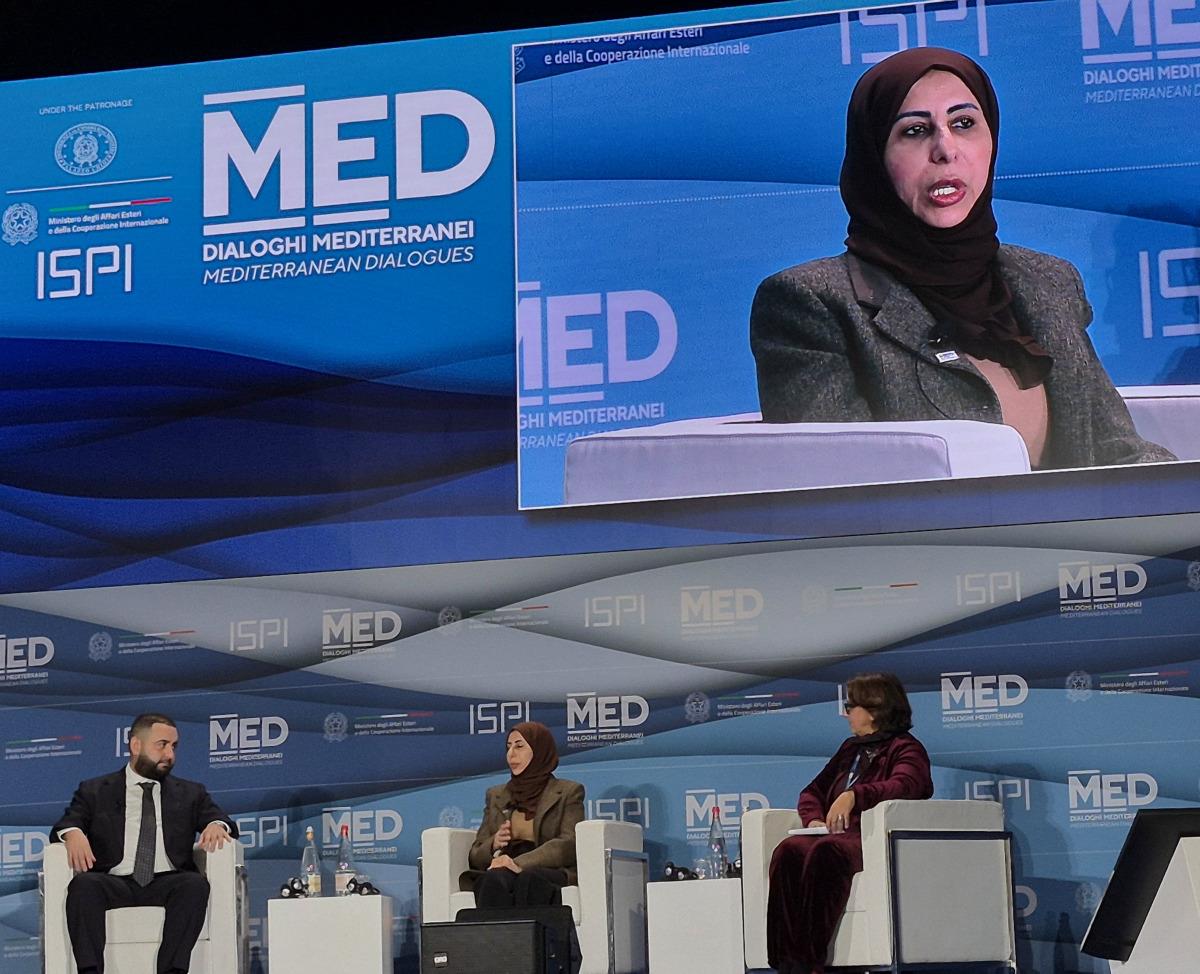
Speaking during a special dialogue session moderated by Adel Hamaizia, Managing Director of Highbridge Advisory, and Laura Silvia Battaglia, a journalist and radio host with Rai Radio3, Yemen's Minister of Foreign Affairs and Expatriates, H E Afrah Al-Zouba, stressed the need for coordinated international action to prevent further Houthi expansion.
Al-Zouba said the Yemeni government remained committed to a political settlement based on the outcomes of the National Dialogue Conference, which provided a foundation for establishing a stable and inclusive state.
However, the minister warned that any peace process must address the Houthis' expanding military capabilities, particularly their continued acquisition of weapons through alleged Iranian support.
The minister said the Houthis had strengthened their military capabilities since 2014, posing threats not only to Yemen but also to neighbouring countries and freedom of navigation in the Red Sea and Bab al-Mandab Strait.
Al-Zouba described terrorist designations and other restrictive measures as important instruments for limiting the group's access to weapons and preventing further military expansion.
Such measures, the minister argued, should be regarded not merely as punitive actions but as essential steps towards creating conditions for sustainable peace and security.
Calling for greater political and security assistance, Al-Zouba urged the international community to strengthen the Yemeni government's defence capabilities and support efforts to prevent Houthi expansion.
The minister also accused the Houthis of recruiting children and young people into their ranks, warning that such practices threatened Yemen's social fabric and future generations.
Highlighting the regional implications of the conflict, Al-Zouba accused Iran of providing military support that had enabled the Houthis to threaten Saudi Arabia and other countries.
The minister said attacks targeting Saudi territory and vital economic infrastructure, including oil facilities, demonstrated the group's ability to disrupt regional economic interests and international energy markets.
Al-Zouba stressed that Saudi Arabia had the right to defend its territory while emphasising the Yemeni government's determination to strengthen its own national security institutions.
Turning to Yemen's internal political divisions, the minister acknowledged longstanding demands for greater autonomy or separation in the south but maintained that no single movement could claim to represent all southern Yemenis.
Despite these differences, Al-Zouba identified the Houthis as the principal threat to Yemen's national unity, sovereignty and identity.
Read Also-
Qatar calls for stronger diplomacy, regional cooperation to address Gulf security challenges at MED 2026
MED 2026 calls for peace, regional stability, stronger economic cooperation
Panellists at MED 2026 call for inclusive regional security framework
The minister warned that the conflict extended beyond territorial control, describing it as a struggle to preserve Yemen's republican institutions, social diversity and future as an independent state.
She also expressed concern over alleged illicit networks connecting Yemen with parts of the Horn of Africa, citing arms smuggling, drug trafficking, human trafficking and possible links with extremist organisations.
The minister warned that instability around the Bab al-Mandab Strait could have far-reaching consequences for international shipping, energy supplies and global trade.
The strategic waterway, which connects the Red Sea with the Gulf of Aden, remains central to maritime commerce between Asia, Europe and other international markets.
On the humanitarian situation, Al-Zouba condemned the detention of United Nations personnel and other aid workers by the Houthis, saying the arrests had disrupted humanitarian operations and raised serious concerns about the safety of relief personnel.
The minister said the Yemeni government had sought to include detained humanitarian workers in prisoner-release negotiations but that efforts to secure their freedom had been unsuccessful.
Al-Zouba also referred to reports of deaths in detention and deteriorating health conditions among some detainees, urging stronger international pressure to secure their release.
The minister called for increased humanitarian and economic assistance to alleviate the suffering of Yemenis, improve public services and support national institutions.
Particular concern was expressed over conditions in Taiz, where prolonged conflict and restrictions on movement have imposed severe hardships on civilians. Therefore, she urged the international community to press for improved humanitarian access and an end to restrictions affecting the city and other vulnerable communities.
The minister also insisted that the internationally recognised Yemeni government must be included in all discussions concerning the country's political future and regional security arrangements.
Al-Zouba cautioned against treating the government and the Houthis as equivalent political actors, arguing that international engagement should recognise the distinction between state institutions and armed groups.
Acknowledging the heavy human and economic toll of the prolonged conflict, the minister said Yemenis had endured years of displacement, insecurity and economic hardship.
Nevertheless, Al-Zouba maintained that surrendering to the Houthis would not deliver lasting peace and warned that the group's political and military ambitions threatened the country's national identity and institutions.
The minister called for stronger measures to prevent weapons smuggling, limit Houthi military capabilities and strengthen the Yemeni government's ability to protect its population.
She concluded by urging the international community to view Yemen not only as a humanitarian crisis but also as a country of strategic importance to regional peace, maritime security and international trade.
A stable Yemen, the minister said, could become an important partner in promoting security, economic cooperation and long-term prosperity across the region.

Legal Disclaimer:
MENAFN provides the
information “as is” without warranty of any kind. We do not accept any
responsibility or liability for the accuracy, content, images, videos,
licenses, completeness, legality, or reliability of the information
contained in this article. If you have any complaints or copyright issues
related to this article, kindly contact the provider above.


Comments
No comment