


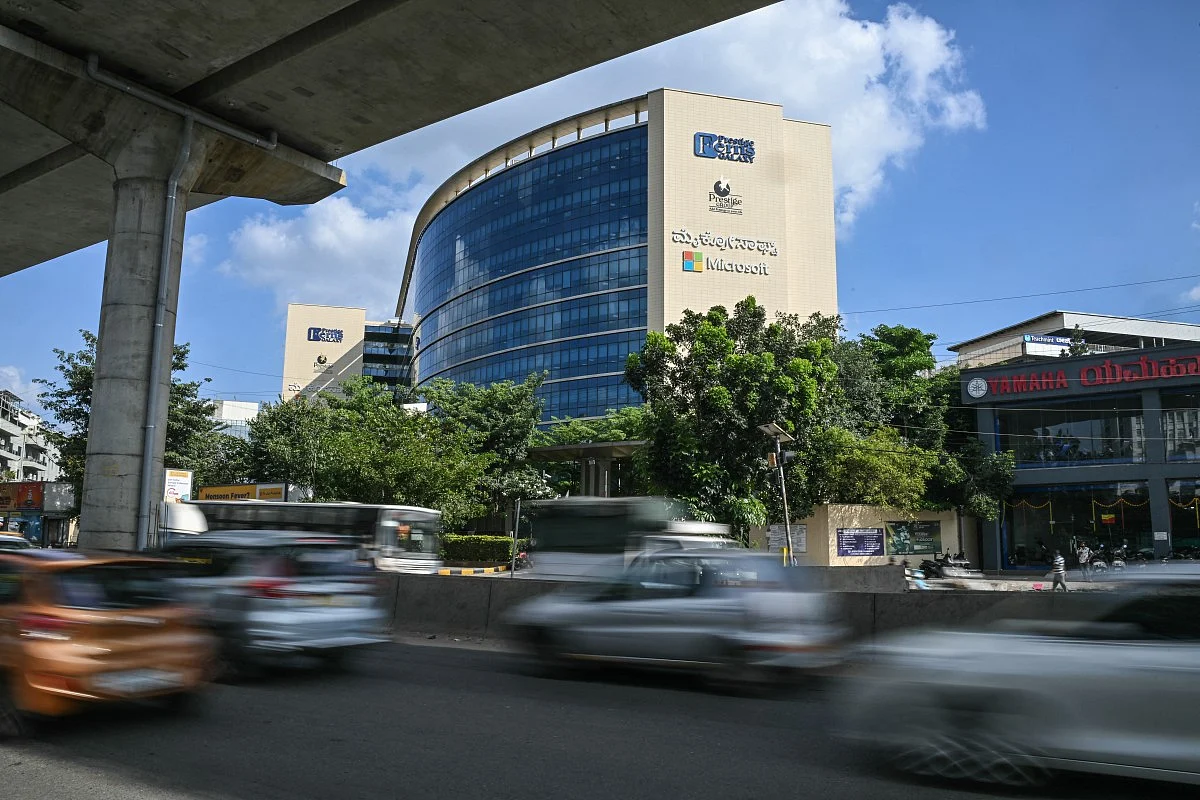
Asia's AI Ambitions Face Growing Risks As US Tech Outages Expose Digital Vulnerabilities


As AI investment accelerates, tech experts also warn businesses in the region to look beyond cybersecurity promises and assess whether their providers can withstand disruptions, recover critical data and keep payments and operations running.
Recommended For YouFor Asian economies seeking to expand their AI capabilities, the challenge is not simply adopting new technologies but ensuring they remain reliable, secure and operational when systems come under pressure.
Stay up to date with the latest news. Follow KT on WhatsApp Channels.
“A security dashboard cannot substitute for evidence that the running service is protected,” Rayad Kamal Ayub, managing director of UAE-based The Rayad Group told Khaleej Times, noting: "For a retailer in the Philippines, an exporter in Vietnam or a Japanese manufacturer, the vital concern is keeping orders and payments moving. A second provider offers little protection if it shares the first provider's network or recovery tools."
'We need assurances'One of the biggest disruptions in November was the Microsoft outage. Ayub noted Microsoft's final report describes a latent defect exposed by maintenance and automatic redistribution spread the failure across regions.
"The company says the defect is fixed, although some testing and recovery improvements extend into 2027 or lack firm deadlines. The report says those operating conditions would normally have been manageable without the defect," added Ayub, underscoring:“Business leaders should ask who verified the fix. We need assurances that records remain accurate and staff can work through disruption."
"Fixes themselves need scrutiny," added Nathaniel Norman, Principal of Aurelian Labs.
He explained: "Companies must test updates, deploy them in stages and retain a way back if they fail. AWS says patches for certain NGINX vulnerabilities are available, including a CloudFront fix, but its web application firewall rules cannot effectively block the affected HTTP/2 attacks.
“An exploit can target HTTP/2 processing before a complete web request exists. AWS's warning concerns its filtering rules; exposure still depends on the server configuration and the path traffic takes to reach it,” Norman added.
Ayub observed:“In South Korea, a slowdown could mean postponed orders for memory manufacturers. In India and Vietnam, businesses buying more computing capacity need to examine what their suppliers have promised to deliver."
“South Korea has already seen why recovery cannot depend on the site that has failed. During the 2022 data centre fire that disrupted Kakao, power loss disabled monitoring tools, while information needed to restore systems was concentrated at the affected facility," Ayub continued.
Need for stronger oversightThe burden also falls on regulators, noted Australian commentator Lochlan Ward, founder and CEO of Street MBA, who wants stronger oversight of technology companies.
He pointed out independent recovery tests and exercises involving banks, airports and public services could show whether backup arrangements survive several failures at once.
Umar Khattak, cofounder of ICM and chief of business at SIXR, has this advice:“Before you sign a technology contract, ask how you would get your records during an outage, who would pay to move you to another provider and whether the backup has been tested with the main service unavailable.”
Khattak underscored:“A promise that everything is under control is not enough. Bringing a payment service back online is only part of the job. Providers must reconcile any uncertain transactions and tell customers clearly whether their payments went through."
"Customers can reduce their exposure by keeping another way to pay and maintaining secure offline copies of essential records and recovery details. They should check whether a payment succeeded before trying again," he added.
The real test of digital progress is not how advanced a system is when everything works, but how quickly it can recover when things go wrong.
Trump's intervention
Meanwhile, another concern for the experts is US President Donald Trump's threat to stop American companies from building data centres abroad, or to impose heavy taxes, makes those decisions harder.
"We still do not have a published worldwide construction ban or clarity on how existing facilities would be treated, but new American licensing rules already cover specified advanced chips going to Singapore, Malaysia and Indonesia, among other destinations," Ayub said.
The bottomline, according to Ayub, is that AI boom is running into a problem that has little to do with algorithms and everything to do with money.
ALSO READ- How much control do people have when digital systems fail, what must be done? Explainer: Can businesses rely on cloud services after Microsoft's global outage? Post US elections: Investors question AI boom as global tech stocks tumble

Legal Disclaimer:
MENAFN provides the
information “as is” without warranty of any kind. We do not accept any
responsibility or liability for the accuracy, content, images, videos,
licenses, completeness, legality, or reliability of the information
contained in this article. If you have any complaints or copyright issues
related to this article, kindly contact the provider above.


Comments
No comment