


Kim's Advanced Missiles Could Cripple South's Economy


This industrial concentration creates not only a serious structural imbalance in the economy but also a significant national security vulnerability. In a military conflict, North Korea or China may place less emphasis on directly confronting South Korea's formidable armed forces and instead focus on attacking its key industrial bases.
They may calculate that destroying or severely disrupting these industries would cripple the country's economy and, in turn, undermine its capacity to sustain military operations. Such a strategy could offer what they might perceive as a quicker and more effective pathway to strategic victory.
Further heightening this vulnerability have been North Korea's recently advancing missile capabilities, including ballistic and hypersonic systems, alongside its expanding drone capabilities. Coordinated attacks against strategically important facilities across these key industries could severely disrupt the wider national economy and generate cascading effects throughout the region.
Key pillars of South Korea's industrial strengthSouth Korea's economic performance increasingly reflects a two-speed economy. While strategic industries – semiconductors, automobiles, shipbuilding and steel among others – continue to drive exports as well as manufacturing and international competitiveness, most other industrial sectors are confronting serious structural challenges.
Such lopsided economic growth poses not only significant economic challenges but also serious national security concerns. South Korea's dependence on a limited number of industries reveals a growing strategic vulnerability. The production capabilities of these industries are concentrated in a relatively small number of highly specialized industrial facilities and geographic clusters.
In an era of increasingly advanced precision centered ballistic and hypersonic missiles and sophisticated drones, this dependence raises serious questions about the resilience of South Korea's industrial infrastructure.
Semiconductors are perhaps the most strategically important pillar of South Korea's economy. They underpin global electronics, artificial intelligence and advanced technology supply chains, while accounting for approximately US$176 billion of the country's total exports of around US$700 billion in 2025, representing roughly 25% of total exports.
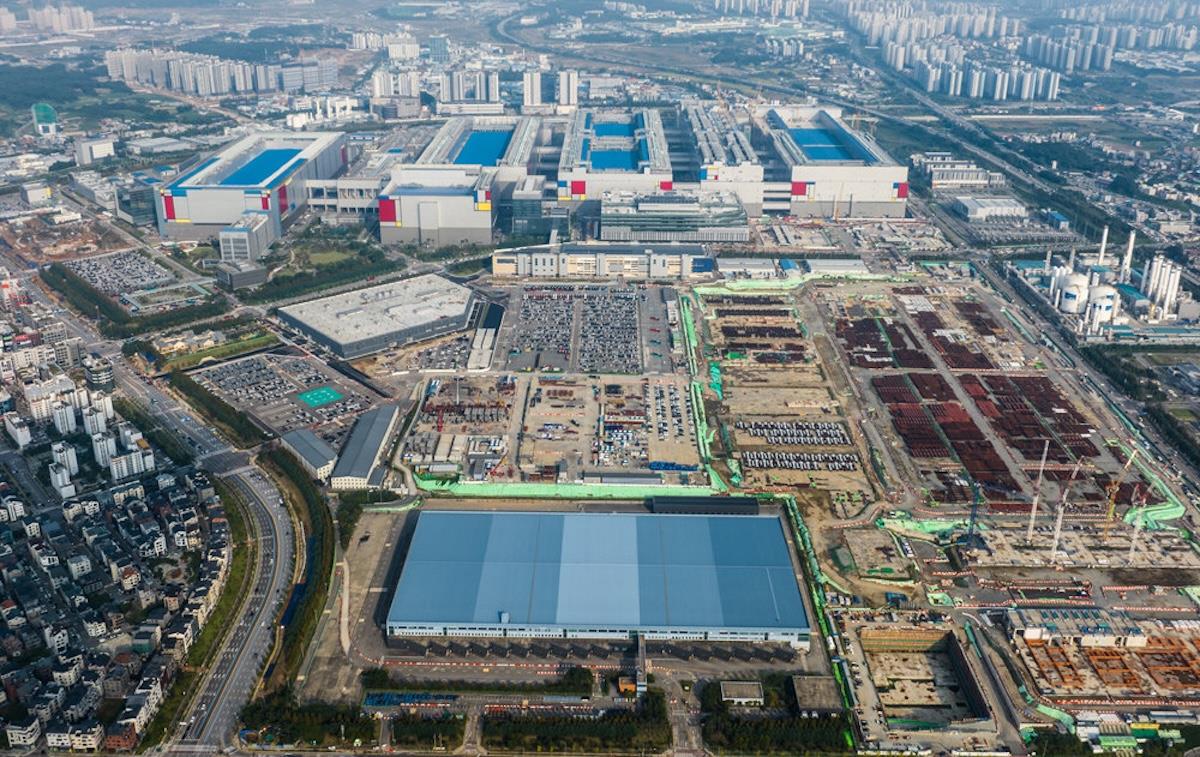
The industry is mainly dominated by Samsung Electronics and SK hynix. Samsung's principal semiconductor manufacturing centers are situated in Pyeongtaek, Hwaseong and Giheung – all in Gyeonggi Province. SK hynix operates major established production facilities in Incheon, bordering on that same province in the northwestern quadrant of the country, and in central South Korea's Cheongju. It's now developing a major new semiconductor complex – but in Yongin, which is in Gyeonggi Province.
The concentration of semiconductor production in a limited number of facilities not far from the North Korean border creates a significant military vulnerability. A serious disruption to even a few manufacturing centers could affect not only South Korea's most valuable export industry but also critical components of global technology supply chains. Given the centrality of advanced memory chips to artificial intelligence and high-performance computing, the consequences could extend well beyond the Korean Peninsula.

Legal Disclaimer:
MENAFN provides the
information “as is” without warranty of any kind. We do not accept any
responsibility or liability for the accuracy, content, images, videos,
licenses, completeness, legality, or reliability of the information
contained in this article. If you have any complaints or copyright issues
related to this article, kindly contact the provider above.


Comments
No comment