


Fewer Dishes, Better Hygiene: Indian Railways Trims Vande Bharat Sleeper Menu What's Included


The initiative aims to address recurring passenger complaints about the quality and hygiene of food served on long-distance trains. The new menus are designed along the lines of airline meals, with fewer dishes and a more streamlined preparation and delivery process.
According to a Hindustan Times report, meals under the pilot programme are being prepared by major cloud kitchens instead of relying on the Railways or its existing catering vendors.
Also Read | Scenic Vande Bharat routes to explore this winterThe compact menu arrangement has currently been introduced on the Mumbai-Bengaluru, Howrah-Kamakhya and New Delhi-Varanasi Vande Bharat Sleeper services.
“We are working with the Mayfair Group for the Kamakhya line, TajSATS in Howrah, and Sarovar Portico Group for the other two Vande Bharat trains,” an official said.
“We have also appointed cell kitchens that supply food to airlines and hotels, where consistent food of a desired quality is produced, packaged and served,” the official added.
IRCTC reduces breakfast, lunch and dinner optionsUnder the revised menu on the Mumbai-Bengaluru Vande Bharat Sleeper service, passengers will have limited choices for breakfast.
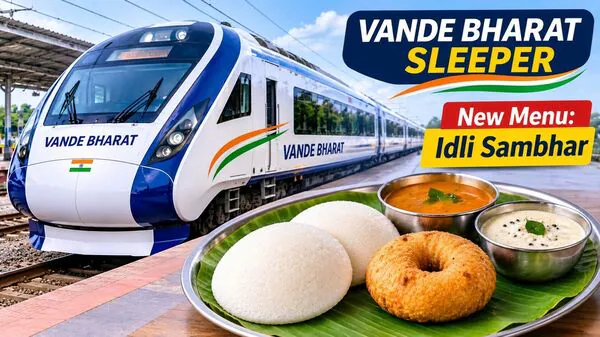
The available options include a plate of idli and vada served with chutney and sambhar, or poha or upma.
For lunch and dinner, passengers will be served chapati, rice, dal and one main dish, with a choice between chicken and a vegetarian preparation.
The revised menu removes several food items that were previously part of the meal service. These included soup, egg omelette, sandwiches, buttermilk and chocolates from the breakfast platter.
Similarly, lunch and dinner menus have been trimmed by removing items such as dry vegetables, curd, salad, pickle and sweets.
The changes are intended to simplify meal preparation and reduce the number of dishes that catering operators need to prepare and distribute during journeys.
Meal weight reduced by nearly 30%Along with reducing the number of food options, IRCTC has also brought down the overall weight of an individual meal.
The weight of meals has been reduced from approximately 700-750 grams to 450-500 grams under the new arrangement.
However, IRCTC officials have clarified that the portion size of individual food items has not been reduced. The lower overall weight is primarily due to the removal of additional dishes and accompaniments from the meal trays.
The move is aimed at focusing on the quality of the selected dishes rather than offering passengers a larger variety of food items.
Cloud kitchens to prepare meals under new modelA key feature of the pilot project is the involvement of major cloud kitchens in preparing meals for passengers.
Instead of depending entirely on the existing railway catering arrangements, the new model uses specialised food preparation facilities to supply meals for selected train services.
IRCTC officials have indicated that the arrangement is already showing encouraging results.
Also Read | Empty Vande Bharat travels 463 km without proper brakes; probe onAccording to the corporation's West Zone group general manager, passenger complaints have declined by around 10% since cloud kitchens began supplying meals under the revised system.
The reduction in complaints is being viewed as an early indication that the streamlined catering arrangement could help improve the passenger dining experience.
Premium trains may also get compact menusThe current initiative is being tested on three Vande Bharat Sleeper routes, but IRCTC could expand the arrangement if the pilot delivers satisfactory results.
If successful, the compact menu model may be extended to other long-distance railway services, including premium trains.
The broader objective is to improve food quality, hygiene and consistency by simplifying menus and strengthening meal preparation arrangements across the railway network.

Legal Disclaimer:
MENAFN provides the
information “as is” without warranty of any kind. We do not accept any
responsibility or liability for the accuracy, content, images, videos,
licenses, completeness, legality, or reliability of the information
contained in this article. If you have any complaints or copyright issues
related to this article, kindly contact the provider above.


Comments
No comment