


Has The AI Bubble Burst And Could US Stocks Enter A Bear Market?


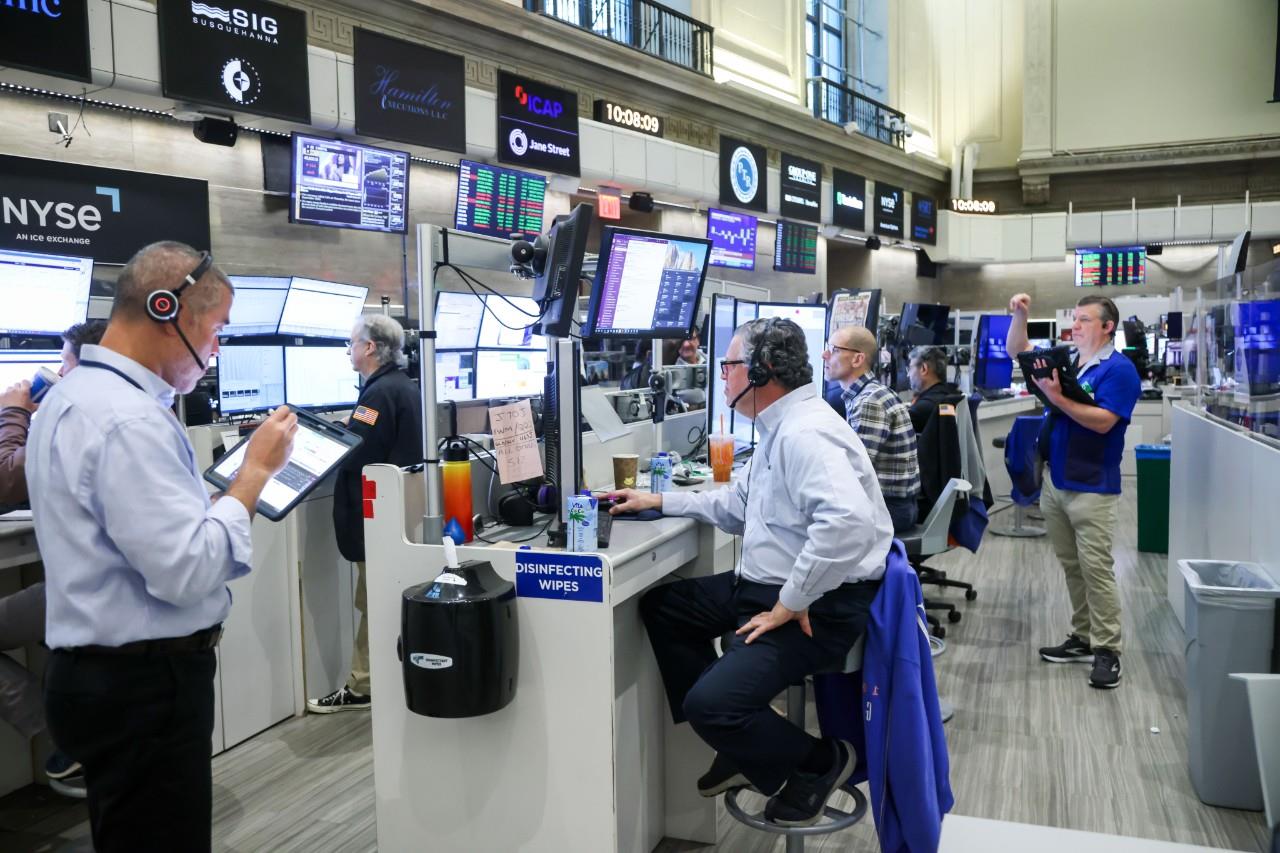
The AI trade has entered a far more dangerous phase. What began as a sell-off in highly valued technology stocks has spread across Wall Street, leaving the S&P 500 in correction territory and the Nasdaq-100 close to a bear market. The question now is whether investors are simply repricing excessive AI valuations or whether the latest decline marks the beginning of a much deeper downturn.
There are reasons to believe the AI bubble has at least partially burst. There are also reasons to think calling the end of the wider US bull market would be premature.
Those looking to trade around the current market volatility can do so through spread betting or CFD trading on our trading platform, with the ability to go long or short on US indices, individual shares and a wide range of other markets.
AI enthusiasm has finally met realityFor much of 2026, investors were willing to look beyond the extraordinary sums being spent on artificial intelligence because the earnings growth of the major technology companies appeared capable of justifying their valuations.
That assumption is now being challenged.
The S&P 500 fell more than 10% from its October record by the end of last week, putting it firmly into correction territory. The Nasdaq Composite fell even further, while the Nasdaq-100 came close to the conventional 20% bear-market threshold.
The scale of the move is significant because it has been accompanied by a change in the narrative. Investors are no longer simply asking whether AI will transform the economy. They are asking how much the transformation is worth paying for today – and whether the enormous investment required will generate adequate returns.
Anthropic's stock has become a particularly useful barometer of this shift. The company's shares opened at $111.50 following an $83 IPO, briefly giving it a valuation of more than $2 trillion. They subsequently fell back through the $83 IPO price as concerns over AI valuations, infrastructure spending and interest rates intensified.
That is an uncomfortable signal for an industry that had hoped the IPO would demonstrate continued investor appetite for frontier AI companies.
The problem is bigger than AnthropicThe sell-off cannot, however, be blamed on one company or even on AI valuations alone.
The market is confronting several problems simultaneously.
First, AI capital expenditure has become enormous. The leading technology companies are committing hundreds of billions of dollars to chips, data centres and electricity infrastructure. Investors increasingly want evidence that these investments will translate into sufficiently large and sustainable cash flows.
Second, interest rates are moving in the wrong direction for highly valued growth stocks. Expectations of further Federal Reserve tightening – one 25 bps rate hike in December and another in January - have increased as inflation remains problematic. Higher rates reduce the present value of distant earnings while simultaneously making it more expensive to finance the AI infrastructure build-out.
CME FedWatch Tool Source: CMEThird, the market has become increasingly concentrated. The biggest technology companies account for an unusually large proportion of the S&P 500, meaning that a correction in AI-related stocks has a much greater impact on the headline index than it would have done in previous cycles.
The 10 largest companies represented about 39.5% of the S&P 500 in late October and roughly 46% of the S&P 500 is in the two sectors most closely associated with technology and AI, while a much larger proportion is economically exposed to the AI investment cycle through companies such as Amazon, Tesla and other suppliers.
The result is a potentially dangerous feedback loop: falling AI shares damage index performance, weaker index performance encourages investors to reduce risk, and that selling puts further pressure on the companies that had driven the market higher.
But has the bubble actually burst?There is an important distinction between an AI bubble bursting and the AI revolution ending.
The latter clearly has not happened.
Demand for computing power, cloud infrastructure and AI applications remains substantial. Nvidia's latest results were strong enough to demonstrate that demand for AI chips has not suddenly disappeared. The issue is whether future growth can continue at the extraordinary rate implied by current valuations.
That is why the current episode may ultimately prove to be more of a valuation reset than the collapse of AI itself.
The technology sector has experienced several sharp corrections during the AI boom, only for investors to return once earnings caught up with share prices. The current sell-off is different in one important respect, however: the market is beginning to question the economics of the AI investment cycle itself.
That makes a rapid return to the previous "buy every dip" mentality less certain.
For those wanting to understand more about what trading is and how market corrections and bear markets work, our resources on trading for beginners cover the key concepts in accessible detail.
Could the S&P 500 enter a bear market?The possibility should now be taken seriously.
The S&P 500 is already more than 10% below its October record, meaning it has met the technical definition of a correction. The Nasdaq-100 is much closer to the 20% threshold generally used to define a bear market.
A move from correction to bear market would probably require another catalyst.
One possibility is further evidence that AI spending is producing diminishing returns. If investors begin cutting earnings estimates for Nvidia, Microsoft, Amazon, Alphabet and other major beneficiaries of the AI boom, valuations could contract further.
Another is higher-for-longer interest rates. If inflation remains sufficiently persistent to prevent the Fed from easing policy, the valuation pressure on growth stocks could intensify. Indeed, Reuters notes that the AI-driven market turmoil has already raised questions about how far the Fed can continue tightening if the recent equity sell-off were to resume.
The third and potentially most dangerous scenario would be an economic slowdown. A correction caused by expensive stocks can be relatively contained; a correction accompanied by falling corporate profits and rising unemployment is much harder to contain.
Why a bear market is not inevitableThere are still several reasons to resist declaring the beginning of a new prolonged bear market.
Corporate earnings remain an important cushion. Unlike the dot-com era, today's largest technology companies generate enormous revenues and profits, possess substantial cash reserves and have genuine competitive advantages.
Furthermore, a 10% correction is not particularly unusual after a prolonged period of gains. The S&P 500 had risen substantially before its latest decline, so part of the move can simply be interpreted as investors taking profits and resetting excessive valuations.
There is also a potentially important policy response. If falling equities threaten to undermine economic confidence and financial conditions tighten substantially, the Federal Reserve could eventually become more supportive. That would be particularly relevant if the current inflation pressures begin to moderate.
And Monday's dramatic 31.5% Nvidia share price rebound following Jensen Huang's return to the Nvidia leadership team showed just how quickly sentiment can change. The Nasdaq and broader US market staged a powerful recovery as investors temporarily returned to AI stocks.
The key test comes nextThe most important question is therefore not whether AI is a bubble. Parts of the AI market almost certainly have bubble-like characteristics.
The more important question is whether the correction remains confined to valuation and positioning, or whether it starts feeding into corporate investment, employment, consumer confidence and economic growth.
For now, the evidence points more towards a severe market correction and AI valuation reset than the beginning of an outright bear market. But the margin for error has narrowed considerably.
The warning signs are clear: the S&P 500 is already in correction territory, the Nasdaq-100 is flirting with a bear market, AI valuations remain elevated and the cost of capital is rising. Meanwhile, investors are demanding something they were largely willing to overlook during the AI boom: proof that the extraordinary spending on artificial intelligence will generate extraordinary returns.
If that proof emerges, the current sell-off could ultimately look like a healthy correction within a longer-term bull market.
If it does not, the AI bubble may not simply have burst – it could become the catalyst that turns an AI correction into a much broader US equity bear market.
S&P 500 and Nasdaq 100 technical analysisThe S&P 500's sharp over 10% drop from its 7,844 early October record high to last week's 6,883 low not only took the index to levels last traded in April but also to the 61.8% Fibonacci retracement of the March-to-October bull market at 6,900. From there the index rallied sharply on the news that Jensen Huang had been reinstated as Nvidia's CEO.
S&P 500 daily candlestick chart Source: TradingViewThe subsequent rally took the S&P 500 to a large resistance band made up of the May-to-early November lows and the 19 November high at 7,238-to-7,415. This resistance zone caps for now and needs to be overcome on a daily chart closing basis for a bullish 'V' reversal to become possible.
Meanwhile – since the daily October-to-November trend is clearly bearish – a slip towards the current November low at 6,883 may remain in play. If this level were to give way, the early April price gap at 6,740-to-6,618 may get filled and perhaps the March low at 6,317 too.
The recent six-week descent in the Nasdaq 100 has been far more brutal than that of other US indices with the index flirting with the 20% bear market territory before rallying by a maximum 'limit up' 7% on Monday 23rd of November before giving back some of its strong gains.
Questions over the US government's role in Jensen Huang's return and renewed scrutiny of Nvidia's China exposure revived governance and regulatory concerns on Tuesday, while Anthropic's slide below its IPO price was seen as another warning that enthusiasm for AI spending is cooling.
Nasdaq 100 daily candlestick chart Source: TradingViewDespite Monday's sharp rally the Nasdaq 100 remains within a bearish daily trend with a series of lower highs and lower lows. For this to change Monday's high at 27,019 and the July low at 27,176 will need to be exceeded on a daily chart closing basis. For such a potential bullish reversal to occur, the next higher 19 November high at 27,749 would also need to be overcome and the October-to-November downtrend line be breached.
Unless this is the case, the risk of a continuation of the recent downtrend resuming remains in play. A fall through last week's low at 24,911 may close the April 24,757-to-24,209 price gap and provoke a sell-off to the late March trough at 22,841.
How to trade US market volatility Do your research on the S&P 500, the Nasdaq and the key macro drivers most likely to influence market direction in the near term Decide whether you want to trade via spread betting or CFD trading Open a trading account with us Search for the index or stock you want to trade in our trading platform Place your trade Important to knowThis information has been prepared by IG, a trading name of IG Markets Limited. In addition to the disclaimer below, the material on this page does not contain a record of our trading prices, or an offer of, or solicitation for, a transaction in any financial instrument. IG accepts no responsibility for any use that may be made of these comments and for any consequences that result. No representation or warranty is given as to the accuracy or completeness of this information. Consequently any person acting on it does so entirely at their own risk. Any research provided does not have regard to the specific investment objectives, financial situation and needs of any specific person who may receive it. It has not been prepared in accordance with legal requirements designed to promote the independence of investment research and as such is considered to be a marketing communication. Although we are not specifically constrained from dealing ahead of our recommendations we do not seek to take advantage of them before they are provided to our clients. See full non-independent research disclaimer and quarterly summary.

Legal Disclaimer:
MENAFN provides the
information “as is” without warranty of any kind. We do not accept any
responsibility or liability for the accuracy, content, images, videos,
licenses, completeness, legality, or reliability of the information
contained in this article. If you have any complaints or copyright issues
related to this article, kindly contact the provider above.


Comments
No comment