


FX Daily: Full EMFX Unwind Underway


If the investment environment wasn't hostile enough already, yesterday's Wall Street Journal report that the US Administration was about to unleash a new set of tariffs on trading partners has not helped the mood. These tariffs are expected to follow Section 301 investigations into excess manufacturing capacity overseas and could add tariffs of around 5-10% on manufactured exports from China, the EU and 14 other trading partners. This comes as the Fed appears intent on pushing policy rates higher, while industrial commodities are under broad-based pressure. The standout has been copper, which has fallen below $12,000/mt.
Commodity currencies and EM currencies are getting hit. AUD/USD overnight price action proves instructive here. After rallying 0.5% initially on a firm October CPI print and expectations of a more hawkish Reserve Bank of Australia, it has since sold off 1.5% to take out major support at 0.6600. Latam currencies remain particularly vulnerable given their metals exposure, but generally the story of greater headwinds to global growth is weighing on the majority of the commodity and EM currency complex.
Unfortunately, it is hard to see this environment changing in the near term. The Fed will have noted the large bounce in US consumer confidence yesterday, and a 0.3% month-on-month core PCE October inflation print today will confirm that inflation is heading in the wrong direction. It would not be a surprise to see a more bearish US yield curve flattening from here, which we noted earlier in the month is a negative for procyclical currencies and a broad dollar positive.
We said yesterday that the dollar may have overshot – and that certainly is the case relative to short-term rate differentials. Yet the continuing unwinding out of EM and commodity currencies is a big dollar positive. Unless today's US inflation data can somehow surprise on the downside, it looks like big resistance in DXY at 104.60 can be tested. Overall, expect a continued preference for a basket of dollars, yen and Swiss francs as defensive currencies.
Chris Turner
EUR: Riding out the stormEurozone business confidence remains remarkably robust despite this year's rise in energy prices and tighter central bank policy. The euro is not feeling the benefits, however, because of the strong dollar. There is also still a modest risk premium in the euro on the back of French election risk. Even though the OAT-Bund spread is a little narrower this week, we doubt that a move towards a 'golden rule' will improve France's fiscal situation. The market will also be on the lookout for S&P's rating decision on French sovereign debt Friday evening, where the A+ stable outlook is at risk of a shift to negative.
EUR/USD has overshot interest rate differentials to the downside and so far technical support at 1.0880 has held. That may continue to be the case, but the global unwind of risk-seeking trades is sucking a lot of money back into the dollar. EUR/USD will have to try and ride out this storm.
Chris Turner
CEE: Local calendar getting more mutedFollowing the release of Polish data on Monday and Tuesday, the CEE calendar is much quieter. The Polish data point to a dovish side for the central bank. Notably, MPC member Ireneusz Dąbrowski commented that the October figures support keeping rates unchanged at the December meeting, suggesting that the current level of interest rates is sufficiently restrictive. This aligns with our call that the National Bank of Poland will not hike rates until the first quarter of next year.
Rates across the region showed a mixed picture yesterday, though there are signs of stabilisation. Meanwhile, FX failed to strengthen despite a rebound in EUR/USD, with EUR/PLN and EUR/HUF moving back higher. As we discussed over the past few days, the global outlook has not shown much improvement, and bearish factors for CEE currencies persist.
Locally, we see little room for further dovish pricing in Poland or the Czech Republic, which should, at the very least, prevent further currency weakening driven by a narrowing of rate differentials against the euro. In the case of EUR/CZK specifically, the rate differential is the primary driver and 24.450 could be a cap for the pair. If the Czech National Bank maintains its hawkish tone alongside rising inflation in the coming months, we could see a short-term rebound. However, in the absence of hawkish central banks, the zloty and the forint will likely have to wait for an improvement in the global environment.
Frantisek Taborsky
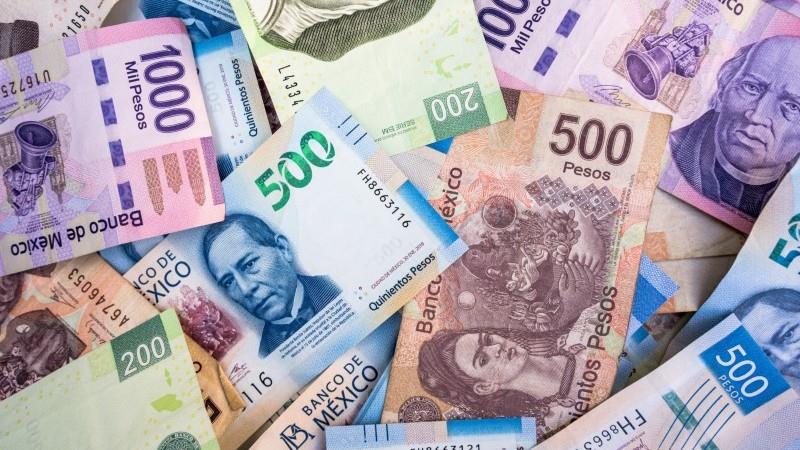
Latam: In harm's wayLatin American currencies have occupied four of the five worst-performing currency spots since 10 November. That was when the Fed's Chris Waller floated the idea of a 50bp rate hike and triggered this broad correction in risk assets. The Colombian peso has fallen close to 10%, reversing earlier gains on its status as one of the world's most popular carry trades, backed by oil and fiscal consolidation. The Brazilian real has been undermined by the fiscal concerns of re-elected President Lula, Chile's peso hit by the copper rout, and Mexico's peso left awfully exposed by Banxico's rate cuts.
Brazil's real tried to rally yesterday on news of extra fiscal consolidation, yet the rally quickly petered out given the size of the proposed spending cuts was small and the global EMFX sell-off dominated.
We are reasonably constructive on the currencies of Brazil and Chile into next year, but remain cautious about the Mexican peso. Banxico might implicitly be welcoming a weaker peso, and we think it will be slow to recover when the dollar finally turns lower. That may not be until the second quarter of next year.
Chris Turner

Legal Disclaimer:
MENAFN provides the
information “as is” without warranty of any kind. We do not accept any
responsibility or liability for the accuracy, content, images, videos,
licenses, completeness, legality, or reliability of the information
contained in this article. If you have any complaints or copyright issues
related to this article, kindly contact the provider above.


Comments
No comment