


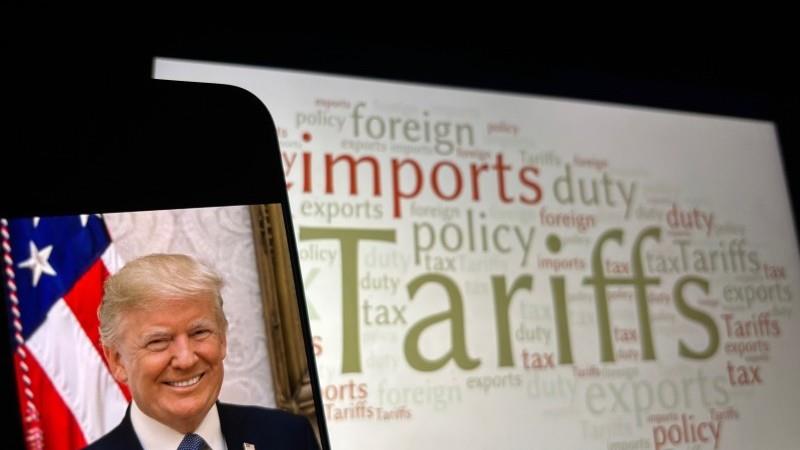
The US Tariff Wall Keeps Changing, But It Isn't Coming Down


If anyone thought the Supreme Court ruling earlier this year marked the beginning of the end of the US tariff wall, think again. The Trump administration is reportedly preparing new tariffs following its Section 301 investigation into structural excess capacity. China is the obvious target, but the list of 16 economies also includes the European Union, Japan, South Korea, Mexico, India and several Southeast Asian manufacturing hubs. The rates and exact product coverage remain unknown, but the direction does not.
We've argued for some time that tariffs are here to stay. In our 2025 trade analysis, we expected that even successful trade negotiations and legal challenges would not significantly bring down the overall tariff level, as Washington had other legal instruments available. And that is pretty much what happened. When the Supreme Court struck down tariffs imposed under IEEPA, Washington initially turned to Section 122 as a temporary solution before replacing it with broader Section 301 tariffs in July. Section 232 tariffs have also expanded considerably, with a growing number of product groups now facing additional duties ranging from 10% to as much as 100%, and more could follow. Investigations into anthracite coal and medical equipment remain open, while robotics, industrial machinery and wind turbines have already moved to the negotiation stage, with tariffs still on the table.
Section 232 tariffs already cover major industriesTariff ranges reflect differences by product and/or country of origin. Minimum import prices for polysilicon and derivatives will also apply from 4 December 2026.
Source: Congressional Research Service, R49481; White House Presidential Actions">In turn, there is no uniform tariff, but rather a complex system of country- and sector-specific duties based on different legal authorities. According to the ETRX US Effective Tariff Rate Index, which is based on US Census Bureau trade data, the effective tariff rate stood at 6.8% for all US imports in September. For imports from China, it was around 21%, compared with 6.6% for imports from the EU.
That gap partly reflects the much broader range of tariffs on Chinese goods, including Section 301 duties dating back to US President Donald Trump's first administration. Both China and the EU are also exposed to newer Section 301 tariffs and relevant sector-specific Section 232 measures. The next overcapacity tariffs would add another legal instrument to this increasingly complex tariff system, although it remains unclear how they would interact with current tariffs and agreed country-specific caps. According to Reuters, Washington is expected to respect the 15% tariff cap agreed with the EU, while the 20% cap on Trump's second-term tariffs on China would remain in place as long as the current US-China truce is extended beyond 10 January 2027.
Overcapacity: the next justificationStructural overcapacity is the latest justification, and it is defined broadly. USTR points not only to subsidies, but also to state-owned enterprises, subsidised lending, market-access barriers, wages, currency practices and environmental and labour standards. And the potential sectoral reach is equally broad, stretching from steel, cars and batteries to semiconductors, machinery, chemicals and solar panels. That gives Washington considerable room to introduce new tariffs.
Another legal fallback?And another legal route for tariffs could matter more than ever. The 10-12.5% Section 301 tariffs introduced in July against 60 trading partners over their failure to impose and effectively enforce prohibitions on imports of goods produced with forced labour are being challenged before the US Court of International Trade. Plaintiffs argue, among other things, that the measures are too sweeping and are insufficiently linked to country-specific findings. The court has heard verbal arguments, and a ruling remains pending.
We don't know how that case will end, and importantly, the two investigations were launched almost simultaneously in March – overcapacity on 11 March and forced labour on 12 March. But with the forced-labour tariffs now facing a legal challenge, the overcapacity investigation could offer Washington another route to maintain part of the tariff wall should the current tariffs be struck down or narrowed.
Different politics, same directionDemocrats taking control of Congress in January will put greater pressure on Trump's tariffs. In theory, Congress has considerable power over trade. It could try to restrict presidential tariff authority, remove individual tariffs and use hearings and investigations to scrutinise the administration's trade policy. In practice, though, actually reversing Trump's tariffs will be difficult. Congress has delegated substantial powers to the executive under laws such as Sections 232 and 301. Curtailing those powers would require legislation, which Trump could veto. Without the two-thirds majority needed to override a presidential veto, Democrats' ability to dismantle the tariff wall will remain limited.
Either way, we don't think the blue wave will mark a return to free trade. The Biden years already showed that tariffs in strategically important sectors enjoy support across political camps. Protectionism may become more targeted, but neither it nor the tariff wall is likely to disappear.

Legal Disclaimer:
MENAFN provides the
information “as is” without warranty of any kind. We do not accept any
responsibility or liability for the accuracy, content, images, videos,
licenses, completeness, legality, or reliability of the information
contained in this article. If you have any complaints or copyright issues
related to this article, kindly contact the provider above.


Comments
No comment