


UNDP Official Calls For Reform Of Global Development Financing Amid Mounting Crises


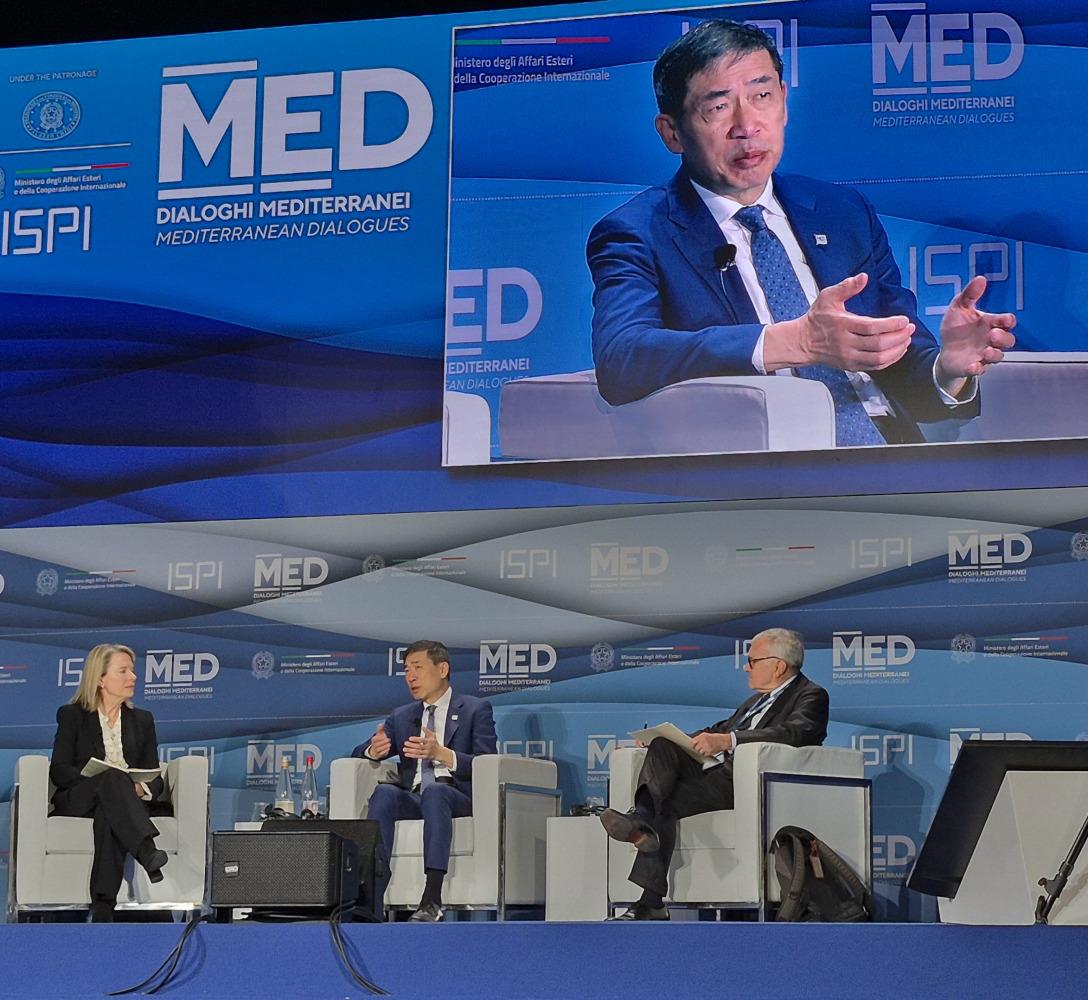
Naples, Italy: United Nations Development Programme (UNDP) Under-Secretary-General and Associate Administrator Haoliang Xu has called for a fundamental rethink of the global development financing system, warning that escalating conflicts, rising debt burdens and repeated economic shocks are threatening sustainable development, particularly in vulnerable countries.
Speaking during a discussion on global development challenges, Xu stressed that the international development system, established nearly six decades ago, must evolve to reflect changing economic realities and growing financing requirements.
He said the traditional model of relying heavily on voluntary contributions from developed countries was no longer sufficient to address the scale and complexity of contemporary development challenges.
Xu stressed that the shortage of development financing was not necessarily due to a lack of global financial resources, but rather the inability to channel available capital towards countries and projects where it was most needed.
He also questioned the growing imbalance between global military expenditure and investment in sustainable development, particularly at a time when many countries were struggling to finance education, healthcare, infrastructure and social protection programmes.
Read Also-
Qatar calls for stronger diplomacy, regional cooperation to address Gulf security challenges at MED 2026
MED 2026 calls for peace, regional stability, stronger economic cooperation
Increasing military expenditure, he argued, did not necessarily translate into greater peace and prosperity.
Emphasising that governments and traditional development assistance alone could not meet global financing requirements, Xu called for greater private-sector participation through innovative financing mechanisms, risk mitigation and the development of bankable projects. Citing Afghanistan as an example, he said a financial guarantee of approximately $1m had helped mobilise around $16m from the domestic banking system for investment in local enterprises, including rural businesses.
He also highlighted UNDP's cooperation with Italy in developing investment opportunities in African countries and mobilising resources from public and private financial institutions.
Beyond financing, Xu said businesses had an important role in promoting innovation, technology transfer and employment generation, particularly for women, persons with disabilities and vulnerable communities.
Xu warned that armed conflicts, climate change, mounting debt burdens and supply chain disruptions were collectively undermining development gains. Many developing countries, he noted, had barely recovered from the economic consequences of the COVID-19 pandemic before being confronted with renewed geopolitical and economic shocks.
The Middle East crisis had further exposed vulnerable economies to rising transportation costs, higher commodity prices and disruptions to food supplies and international trade.
These pressures, coupled with shrinking fiscal space, were limiting governments' ability to maintain essential public services and make long-term development investments.
Despite these constraints, Xu stressed that countries must continue investing in education, healthcare, infrastructure, technology and skills development to improve productivity and safeguard future prosperity.
Drawing on more than three decades of experience in international development, Xu identified a shared national vision, effective institutions and sustained policy implementation as fundamental prerequisites for successful development.
“Development cannot be imposed from outside,” he said, emphasising that international assistance could support but not substitute for national leadership, effective governance and institutional capacity.
Referring to China's successive five-year development plans and the economic transformation of Hong Kong, Singapore, South Korea and Taiwan, Xu highlighted the importance of long-term planning, policy coordination, industrial development and investment in human capital.
While acknowledging that no single development model could be universally replicated, he stressed that countries must establish clear development priorities and translate them into measurable objectives.
Addressing the humanitarian crisis in Gaza, Xu called for immediate humanitarian assistance alongside a lasting political solution based on the implementation of relevant UN resolutions. He emphasised that emergency relief must be complemented by efforts to restore livelihoods, rebuild institutions and establish the foundations for sustainable development.
Xu maintained that peace and development were mutually reinforcing, with economic opportunities, social stability and effective institutions contributing to lasting peace.
Calling for renewed international solidarity, stronger South-South cooperation and more effective multilateral engagement, he urged countries to make greater use of the United Nations as a platform for dialogue and collective action.
Global development challenges, he stressed, could not be addressed through isolated national efforts but required a shared commitment to peace, cooperation and common prosperity.

Legal Disclaimer:
MENAFN provides the
information “as is” without warranty of any kind. We do not accept any
responsibility or liability for the accuracy, content, images, videos,
licenses, completeness, legality, or reliability of the information
contained in this article. If you have any complaints or copyright issues
related to this article, kindly contact the provider above.


Comments
No comment