


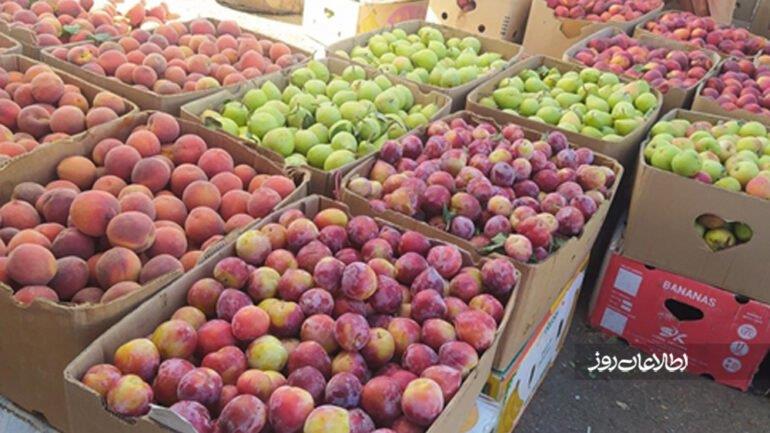
Afghanistan Fresh Fruit Exports Fall 88% Amid Pakistan


In its November 2026 Afghanistan Development Update, published on November 17, the World Bank said Afghanistan shipped $210 million worth of goods through Central Asian countries during the six-month period, more than double the value recorded a year earlier. However, the expansion of alternative trade routes has failed to compensate for the loss of access to Pakistan, traditionally the main destination for Afghanistan fresh produce.
Central Asia accounted for 42.2% of Afghanistan's imports by value in the six months to September, compared with 27.2% during the same period in 2025. The shift followed the closure of major trade crossings between Afghanistan and Pakistan in October 2025, forcing businesses to redirect shipments through neighbouring countries.
Kazakhstan has emerged as an increasingly important supplier. It exported $215.6 million worth of flour to Afghanistan during the first seven months of 2026 and is exploring railway connections through Afghanistan to access Pakistani ports and strengthen regional trade links.
The disruption has been particularly severe for Afghan farmers and fresh produce exporters. Before the border closures, Pakistan accounted for 96% of Afghanistan's fresh fruit exports by weight. According to the World Bank, alternative trade routes recovered only 9% of the lost export volume for fresh fruit, while none of the lost vegetable export volume was recovered.
The bank estimated that approximately 490,000 metric tons of fresh produce lost their export markets over six months. Afghanistan's total food exports fell from 745,000 tons in the April–September period of 2025 to approximately 200,000 tons in the same period of 2026, a decline of about 73%.
Low-value agricultural products have been particularly difficult to redirect to distant markets. Tomatoes, onions, grapes and melons, which typically sell for between 28 and 31 cents per kilogram, cannot absorb the higher costs of air freight or lengthy overland transportation, the World Bank said.
The impact has extended beyond fresh produce. The bank reported that dried fruit exports declined by 18.5% in volume, although their value fell by only 6%, as Afghan exporters found alternative buyers for higher-value products. Exports of dried figs rose to $96 million from $27 million, while raisins generated $69 million and saffron exports reached $43 million.
The October 2026 assessment by the Famine Early Warning Systems Network (FEWS NET) also highlighted the pressure on agricultural livelihoods. It said the harvest of apples, pomegranates, grapes and other horticultural products was significantly higher than both the previous year and the average, but the continued closure of the Pakistani border was restricting access to traditional export markets.
Although shipments to Central Asian countries have helped support farm-gate prices, the loss of trade with Pakistan continues to reduce agricultural income, particularly for farming households dependent on cross-border commerce.
The World Bank said the disruption has concentrated economic losses in rural areas, particularly in Kandahar, Nangarhar and other eastern and southern provinces. It also warned that higher export prices largely reflect a shift towards more valuable products rather than improved trading conditions, as overall export volumes continue to decline.
The findings come as Afghanistan's wider economy faces mounting pressure. In its November update, the World Bank said merchandise exports fell by 15.1% between April and September 2026 compared with the same period a year earlier, while imports increasingly shifted towards Central Asian countries and Iran.
FEWS NET said the continued border closure was expected to restrict horticultural exports and reduce farming incomes through at least January 2027, unless trade routes reopened.

Legal Disclaimer:
MENAFN provides the
information “as is” without warranty of any kind. We do not accept any
responsibility or liability for the accuracy, content, images, videos,
licenses, completeness, legality, or reliability of the information
contained in this article. If you have any complaints or copyright issues
related to this article, kindly contact the provider above.


Comments
No comment