


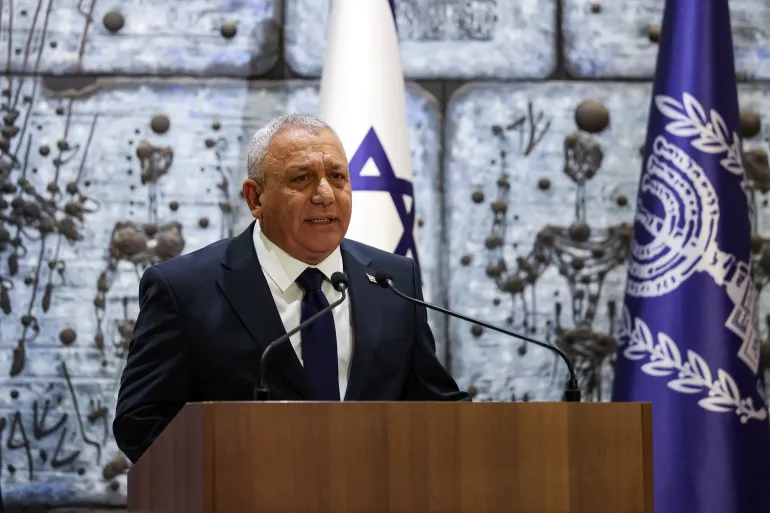
Gadi Eisenkot Secures First Coalition Deal In Israel Govt


Reuters reported on Tuesday, November 24, that Yashar announced an agreement with Avigdor Lieberman's Yisrael Beiteinu party following a meeting between the two leaders. The agreement brings together Eisenkot's party, which won 21 seats, and Lieberman's party, which secured seven seats in the 120-member Knesset.
The deal marks an important development in coalition negotiations, but it does not resolve the wider challenge of securing the 61 seats required for a parliamentary majority.
Israel's October 27 election left no political bloc with enough seats to govern independently. Prime Minister Benjamin Netanyahu's Likud-led alliance, which includes far-right and ultra-Orthodox parties, holds 53 seats. Eisenkot's broader opposition bloc has 48, while parties representing the Arab minority hold the remaining 19 seats.
President Isaac Herzog has tasked Eisenkot, a former chief of staff of the Israeli military, with forming the next government. Netanyahu remains caretaker prime minister while negotiations continue.
Eisenkot has until December 6 to assemble a government under the 28-day mandate granted to him. He can request an additional 14 days. If he fails, Netanyahu will have another opportunity to form a government. Should both attempts fail, Israel could face another election next year.
The agreement with Lieberman is politically significant because he has previously opposed forming a government dependent on support from Arab parties and has also rejected joining a unity government with Netanyahu. However, removing Netanyahu from power has been one of his stated political priorities.
The Arab-led parties could become important to Eisenkot's efforts. Together, they hold 19 seats and have strongly opposed Netanyahu, potentially providing the support needed to overcome the opposition bloc's shortfall. However, their positions and willingness to support a government must be considered separately; their seats do not automatically translate into a unified coalition.
At the same time, negotiations remain complicated by disagreements within the opposition. The Democrats party, which holds eight seats, announced that it was suspending talks with Eisenkot over his discussions with Likud about a possible unity government and the lack of progress towards forming an alternative government.
The party's leader, Yair Golan, has said he favours a government without Netanyahu that includes Arab parties.
The negotiations leave Israel facing competing coalition possibilities, with neither major bloc holding a parliamentary majority. Eisenkot's agreement with Lieberman is the first formal step in his effort to build a government, but further negotiations will determine whether he can secure enough support to take office.

Legal Disclaimer:
MENAFN provides the
information “as is” without warranty of any kind. We do not accept any
responsibility or liability for the accuracy, content, images, videos,
licenses, completeness, legality, or reliability of the information
contained in this article. If you have any complaints or copyright issues
related to this article, kindly contact the provider above.


Comments
No comment