


'I Diagnose Human Cruelty': Australian And NZ Medical Workers On Treating Palestinians In Gaza


Othman, a medical mission coordinator with the Palestinian Australian and New Zealand Medical Association, was the first Australian Palestinian woman – and Muslim woman – to volunteer as a doctor in Gaza. She completed three tours there.
Review: The Weight of Witness, edited and introduced by Dr Bushara Othman (Readers and Writers Against the Genocide)
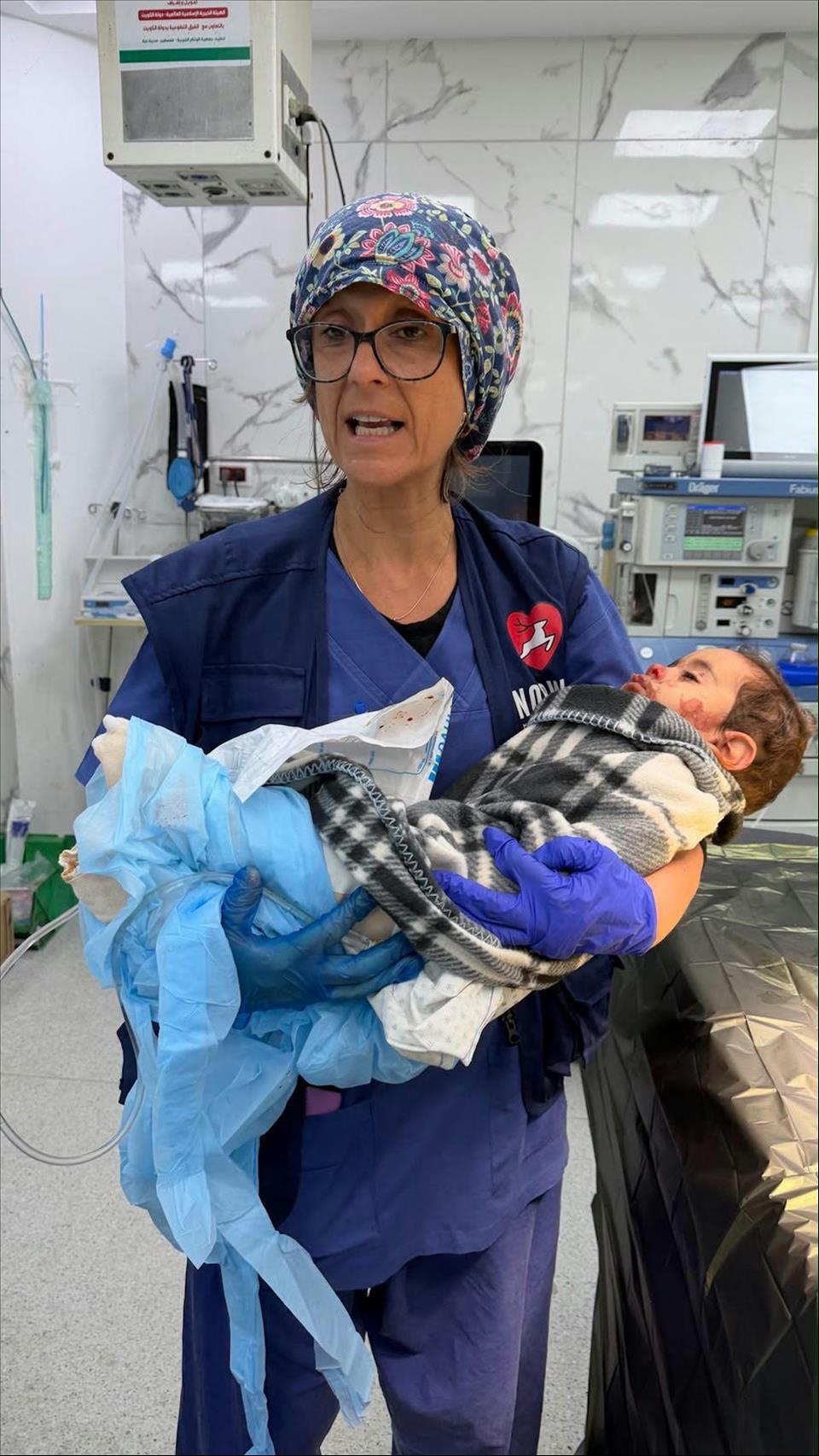
The book's collection of firsthand accounts paints a vivid and morally confronting picture. Its stories show what it's like to treat the thousands of wounded Palestinians who daily flood into the hospitals and treatment centres scattered throughout the Gaza Strip.
Wajdi Hadi, a Sydney-based specialist anaesthetist, recalls of his time at Al-Shifa Hospital:
The Gaza War began with Hamas' surprise attacks against Israel on October 7 2023, which killed 1,139 Israelis, with another 240 taken prisoner. In the devastating response by Israel's military since, the UN estimates approximately 74,500 Palestinians have been killed and a further 175,800 wounded.
Reports by an independent United Nations commission, Human Rights Watch, Amnesty International, and the Israeli human rights organisation B'Tselem concur the Palestinians in Gaza have become victims of genocide, war crimes and crimes against humanity, perpetrated by the Israeli government and military.
Under the UN Genocide Convention of 1948, genocide is defined any of five acts“committed with intent to destroy, in whole or in part, a national, ethnical, racial or religious group”.
This book reveals the anatomy of these crimes. It exposes the Israeli military's intentional targeting of both medical facilities and practitioners throughout the Gaza Strip, in contravention of international law. And it shows how it sought to destroy the ability of Palestinians and international aid organisations to treat these wounded. By doing so, the military precipitated the disintegration of Palestinian society.
Deliberate policies enacted by IsraelRemembering her time in Gaza, critical care nurse Cass Lillis observes:
Just as importantly, these accounts raise serious questions about the complicity of Western democracies, including Australia, in these crimes.
“We need our government to stand by Palestinians,” declares Perth-based nurse and Médecins Sans Frontières emergency coordinator Claire Manera.
Despite the tragedy of the war, displayed so powerfully in these accounts, the reader is occasionally provided with glimpses of humanity. These sit alongside a strong sense of Palestinians' determination to survive this catastrophe – and to refuse to submit to Israeli efforts to erase them as individuals and as a people.
Overall, the book is a testament to its contributors, all medical staff. It allows them to record their experiences of treating victims of a genocide, and the devastating effects this has on them – physically, mentally and morally.
As Othman writes,
Screams from wounded childrenModher Albeiruti, an Iraqi–Australian emergency consultant, says life in Gaza removes the distance between observer and participant.
He travelled to Gaza as a volunteer with the Palestinian American Medical Association for two weeks. But he was one of 16 international doctors and medical workers stranded inside a hospital after Israel took control of the Palestinian side of the Rafah border crossing in May 2024. He was evacuated later that month.
Scarlett Wong, a clinical psychologist and member of Médecins Sans Frontières, gave a speech to Australia's Parliament about her experiences in August. She tells of colleagues who now enter Gaza with the calories of any food items they bring counted by the Israeli military, in case they decide to share their food with Palestinians.
“Anything to sustain life is forbidden from being brought in: batteries, formula, medication,” she said. She goes further, declaring:“You want to know the diagnosis of mental health issues in Gaza: I diagnose human cruelty; I diagnose erasure; I diagnose genocide.”
Other contributors speak of the stark contradictions between the perception and reality of the war for Palestinians as outsiders and witnesses. They regularly note the horrors they saw were far worse than they had imagined, or had seen portrayed by the Australian and international media.
A regular theme is the devastating effects modern weapons and warfare have on the human body, especially on children. According to a 2026 independent UN commission report, at least 21,000 children have been killed since the outbreak of hostilities in October 2023, with a further 44,000 wounded.
Remembering the child casualties, general and colorectal surgeon Sanjay Adusumilli recounts countless amputations, opening numerous chests, and performing endless intestinal resections.
And Albeiruti relates the story of a ten-year-old boy refusing sedation during painful procedures. The boy declared:“I am strong. I am patient.”
Raised in the United Kingdom and the son of Palestinian refugees, Mohammed Mustafa was a trainee emergency doctor from Perth when he first went to Gaza. He recalled hearing the screams from wounded children entering the emergency department of the European Hospital in Gaza, after a children's playground had been struck by an Israeli drone.
Witness to genocidePerhaps most disturbing and revealing of all is the account by Sydney general surgeon Jamal Merei. He details the deliberate targeting of the genitals of young Palestinian boys and men by Israeli snipers.
While the wounds were generally survivable, the lack of functioning testes will dramatically affect the fertility of the next generation of Palestinian men, he writes,“[erasing] their biological markers with a single gunshot to thwart their masculinity”. These actions would certainly qualify as genocide under international law.
Coming to terms with these accounts leaves us, as readers, with a sense of helplessness and futility. It also leaves us with a searing sense of anger at the world's failure to do more to intervene as yet another genocide unfolds on our televisions and mobile phones.
The accounts of these doctors and nurses serve as the weight of witness to genocide – and to their compassionate efforts to treat the thousands affected by this tragedy.


Legal Disclaimer:
MENAFN provides the
information “as is” without warranty of any kind. We do not accept any
responsibility or liability for the accuracy, content, images, videos,
licenses, completeness, legality, or reliability of the information
contained in this article. If you have any complaints or copyright issues
related to this article, kindly contact the provider above.


Comments
No comment