


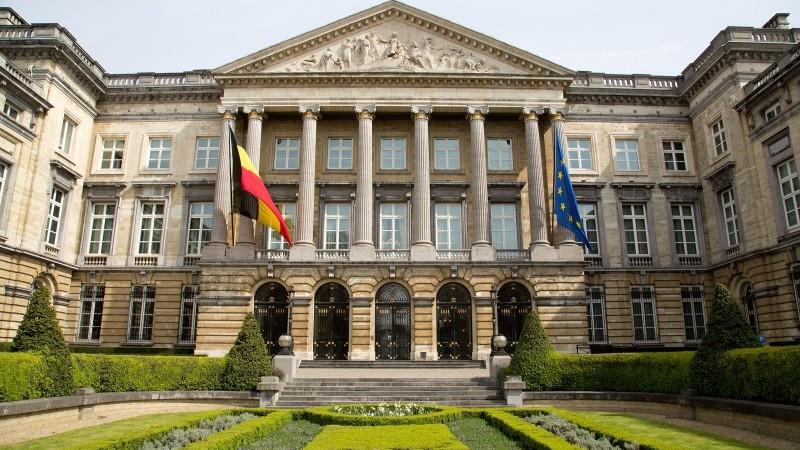
Belgium's Government Faces Year-End Deadline For Budget Deal


In its autumn forecasts, the European Commission projects a public deficit of 5.2% of GDP this year, in line with our own forecast, rising to 5.5% in 2027 and 5.7% in 2028. That would give Belgium the largest deficit in the eurozone over the forecast horizon. These figures are hardly a surprise, however. Several Belgian institutions, including the Federal Planning Bureau, the Monitoring Committee and the National Bank of Belgium, have already warned that the deficit will continue to widen without corrective action.
The Commission also notes that Belgium has yet to submit its budget for next year at the federal level, although the regions have submitted theirs. Its forecasts therefore reflect the information currently available and assume unchanged policy, taking account only of measures already adopted.
Pension reform, time limits on unemployment benefits and measures to curb income indexation have prevented an even sharper deterioration. But they are clearly insufficient to offset the rising costs of population ageing, debt interest and defence in the years ahead. Without further action, the budget position will continue to worsen. Previously agreed cuts in taxes on workers are also included in the projections, adding to the pressure on the deficit.
Budget talks now have a clear deadlineThe federal coalition is still seeking agreement on a €10 billion savings package that could bring the public deficit closer to 4% of GDP by the end of the parliamentary term in 2029. Only the broad outlines of the measures under discussion are known. Higher taxation of financial wealth is clearly on the agenda, alongside healthcare savings that would require patients to pay a larger share of their care costs. Changes to income indexation mechanisms also appear to be under consideration. Beyond that, considerable uncertainty remains.
Politically, the past few weeks have been turbulent, with the prime minister even offering his resignation to the King at one point. A clearer timetable is now emerging. Coalition parties will continue negotiating, but the prime minister has made clear that he intends to step down if no agreement is reached by 31 December. In that case, it would most likely lead to new elections in the spring.
A deal remains our base caseOur base case is unchanged: the government will reach an agreement on the €10 billion package. Every coalition party will have to accept measures that are difficult to sell to its voters, but most have more to lose from failure than from a compromise. A breakdown in the talks remains possible, although we continue to see it as a low-probability scenario.
Meanwhile, Fitch reaffirmed Belgium's A+ rating with a stable outlook late last week. Like S&P before it, the agency pointed to the diversity of the Belgian economy as a source of resilience, despite public finances that are considerably weaker than those of the median sovereign with the same rating. The rating agencies appear to share our view that the necessary measures will ultimately be taken.

Legal Disclaimer:
MENAFN provides the
information “as is” without warranty of any kind. We do not accept any
responsibility or liability for the accuracy, content, images, videos,
licenses, completeness, legality, or reliability of the information
contained in this article. If you have any complaints or copyright issues
related to this article, kindly contact the provider above.


Comments
No comment