


Qatar Calls For Stronger Diplomacy, Regional Cooperation To Address Gulf Security Challenges At MED 2026


Naples, Italy: Qatar has called for stronger international cooperation, greater investment in diplomacy and renewed commitment to international law to address growing security challenges in the Gulf and safeguard regional and global stability.
Advisor to the Prime Minister and Official Spokesperson for the Ministry of Foreign Affairs (MoFA) Dr. Majed bin Mohammed Al Ansari emphasised these priorities during his participation in the Mediterranean Dialogues (MED 2026), held in Naples, Italy, from November 19 to 21.
Speaking at panel discussions examining the future of Gulf security and the protection of strategic maritime corridors, Dr. Al Ansari warned that violations of international law and the erosion of the rules-based international order have consequences extending far beyond individual regions, affecting global energy security, international trade and economic stability.
Read Also-
Qatar Airways launches amazing Friday offers with savings of up to 25%
Middle East cannot withstand renewed US-Iran escalation: PM
MED 2026 calls for peace, regional stability, stronger economic cooperation
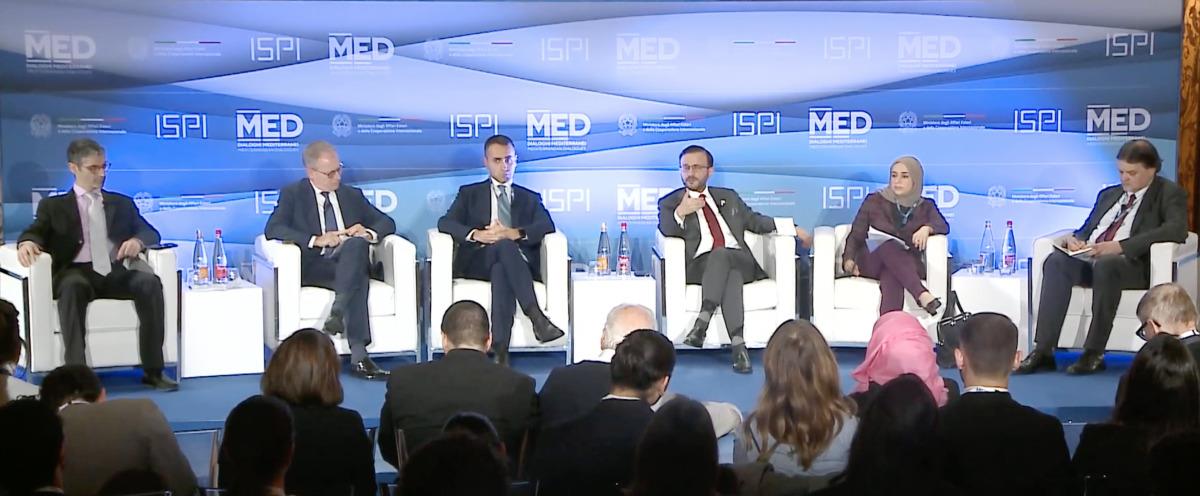
During a session titled“Reframing Security: What's Next for the Gulf Regional Architecture”, Dr. Al Ansari stressed that countries could no longer remain passive observers of transformations taking place in the international system.
He called for stronger cooperation among states and greater use of mediation, conflict resolution mechanisms, and defence and security partnerships to enhance their collective ability to respond to emerging crises.
The session, moderated by Özgür Ünlühisarcıklı, Managing Director for South and Wider Europe and Regional Director for Türkiye at the German Marshall Fund of the United States, brought together senior officials and international security experts to examine the changing strategic environment in the Gulf.
Participants included Saudi Arabia's Vice Minister of Foreign Affairs Waleed Elkhereiji; Research Fellow at Chatham House Farea Al-Muslimi; and Non-Resident Senior Fellow at the Atlantic Council Valbona Zeneli.
The discussion focused on the growing challenges facing the Gulf's security architecture, particularly following attacks targeting Gulf Cooperation Council (GCC) member states, including industrial facilities and military installations, and renewed tensions affecting the Red Sea.
These developments have raised questions about the sustainability of a regional security framework that encourage GCC countries to strengthen their defence capabilities and diversify security partnerships.
The session also examined whether expanding defence cooperation and overlapping strategic partnerships could enhance regional autonomy and deterrence or create a more fragmented and unpredictable security environment.
He stressed that states benefiting from the rules-based international order must also fulfil their responsibilities by supporting peace initiatives, facilitating mediation and contributing to international stability.
Al Ansari noted that the consequences of regional conflicts and the closure of the Strait of Hormuz had demonstrated the interconnected nature of global security, with disruptions affecting energy markets, international supply chains and economic stability.
He underlined the importance of collective action in addressing these challenges, emphasising that regional crises could no longer be viewed in isolation from wider international developments.
He also outlined the concept of“prosperous states”, introduced by Prime Minister and Minister of Foreign Affairs H E Sheikh Mohammed bin Abdulrahman bin Jassim Al-Thani during his address to the Oxford Union.
He explained that the concept refers to countries distinguished by resilience, prosperity and credibility within the international community, which dedicate part of their political and economic resources to advancing mediation and supporting international peace efforts.
He highlighted Qatar's belief that countries with the political credibility and economic capacity to facilitate dialogue have an important responsibility to contribute to international peace and stability.
In a separate session titled“The Revenge of Geography: Securing Chokepoints, Rethinking Maritime Security”, Dr. Al Ansari addressed the strategic importance of maritime corridors and the global consequences of disruptions to international shipping routes. He warned that the repercussions of the closure of the Strait of Hormuz extended beyond the Gulf, affecting economies and societies across the world.
Dr. Al Ansari stressed that developments in the region represented not merely a regional security challenge but an international crisis requiring coordinated responses from the global community.
Addressing Qatar's mediation efforts between the United States and Iran, he reaffirmed that diplomatic engagement and the pursuit of negotiated solutions remained the most effective path towards de-escalation and lasting stability.
He highlighted the collective efforts of countries in the region to support mediation initiatives, reduce tensions and strengthen regional security.
The discussions also underscored the growing strategic significance of maritime chokepoints, including the Strait of Hormuz and the Red Sea, which play a critical role in global energy transportation, international commerce and supply-chain connectivity.
Participants considered the future trajectory of GCC-Iran relations, the role of external security partners and opportunities for developing a regional security architecture that combines stronger national capabilities with effective international cooperation.
Qatar's continued participation in the MED Dialogues reflects its commitment to dialogue, diplomacy, mediation and constructive international engagement as essential means of addressing regional tensions and promoting stability.

Legal Disclaimer:
MENAFN provides the
information “as is” without warranty of any kind. We do not accept any
responsibility or liability for the accuracy, content, images, videos,
licenses, completeness, legality, or reliability of the information
contained in this article. If you have any complaints or copyright issues
related to this article, kindly contact the provider above.


Comments
No comment