


Personal AI Assistants Are Coming To Switzerland. Do We Want Them?


Life is hard. I have a stack of bills waiting to be paid. There are retirement account payments to make, emails from friends to answer and Christmas presents to order. And on my kids' school app, a bunch of messages are waiting for me. Wouldn't it be handy if I had a personal assistant?
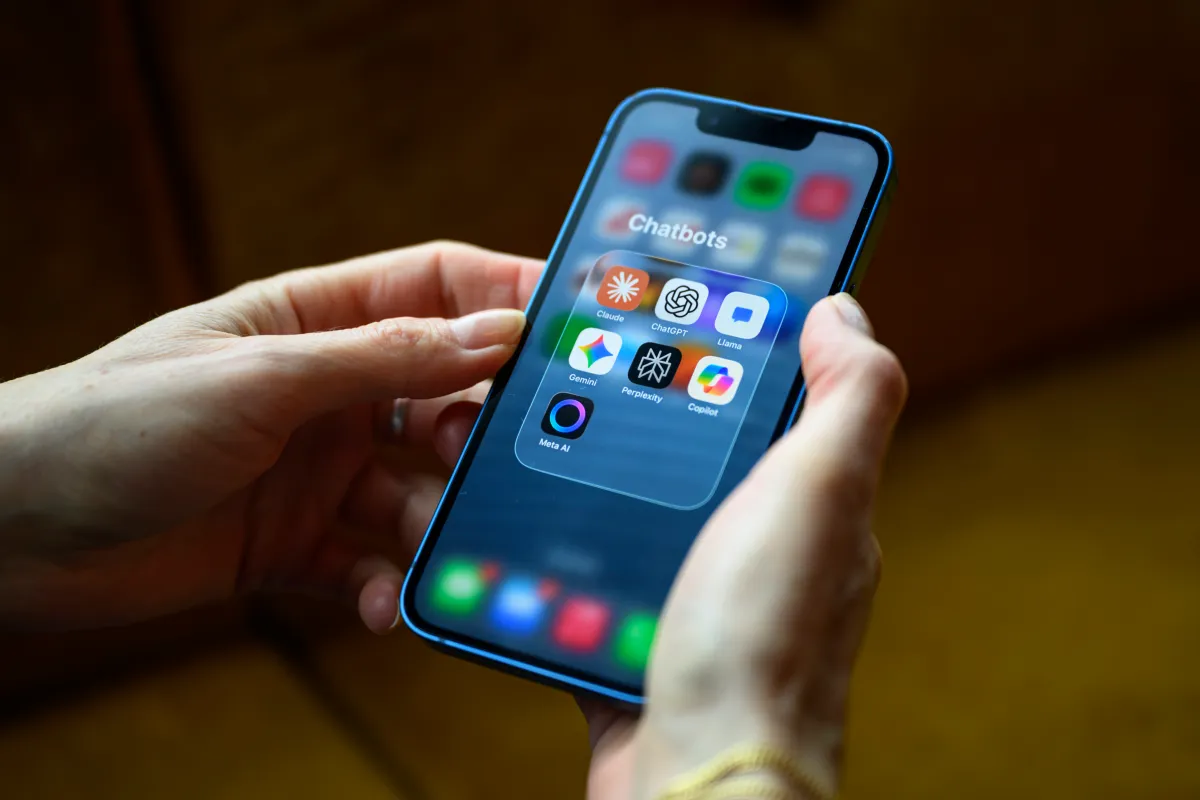
For two months I've been testing so-called personal AI agents: software that answers your email, books your appointments and does your shopping – once you hand it the keys to your digital life. They're all the rage in the United States, especially in tech circles, and they could reshape how we interact with the internet and one another.
The big-name products, such as Meta's Muse and OpenAI's dots, have not yet been launched in Switzerland and the EU for individual consumers. But a couple of agents, including one called Instinct, do work here. Are private consumers, Swiss retailersExternal link and our existing laws ready for the agent revolution?
It's not just Instinct, OpenAI and Anthropic. Google launched its personal agent, Gemini Spark, in May. Elon Musk's SpaceX followed in August with Grok Bot, which lets you deploy several agents at once and is aimed mainly at companies and teams. Scores of start-ups, such as Hark and Pally, have launched competing personal agents.
Apart from Meta, the companies have released little data on how many people use them. Running the agents seems to eat up huge amounts of computing power: Musk called Grok Bot's costs “unsustainably high relative to revenue”External link, and OpenAI admits dots are“compute heavy”.
Handing over the keysWhile personal AI agents as a consumer product are relatively new, AI agents are not. Roughly three-quarters of Google's new code is written by these agents, and they have reshaped the IT and cybersecurity sectors. In Switzerland, 60% of employees already say they use them regularly. Cisco has an AI agent assisting each of its more than 90,000 employees. AI agents are being used in diverse sectors, for example in customer service, gambling, government, sales and video game development.
I signed up for Instinct, the personal AI agent that started a craze in Silicon Valley this summer. You chat with it over WhatsApp, and it surfs the web for you and does a lot more. I asked it to bid for tennis shoes on the auction site Ricardo, to place monthly orders for dog food with an online retailer and to reschedule a doctor's appointment. It handled such tasks well. It got the shoes for CHF5 ($5.90), ordered the dog food and rescheduled the appointment.
I have used Instinct and other agents to unsubscribe from over 70 newsletters. One agent combed through my subscriptions to find what I could cancel. Agents are especially powerful when they have access to a cloud computer. This makes them independent of your personal phone and laptop.
For an AI product to achieve all of this, it needs access to your tools such as email, calendars and cloud files. The more access you give your agent, the more it can do. Ideally, it wants your credit card number, too. That's where I drew the line.
A built-in weaknessSigning up for one of these assistants means giving an experimental product unprecedented access to your life and your data.“Personally, I haven't touched any of these agents,” says my colleague Guido Berger, who heads digital technology coverage at Swiss public television SRF.
That's because the most discussed risk with AI agents is security – and for good reason, according to Berger. Large language models, the engines behind most current AI products, have a basic flaw: they can't tell content from instructions.
“Say I've trained my dog to go to the bakery and fetch me a croissant,” says Berger.“I put a CHF10 note in its mouth and off it goes. Now imagine the dog can read. Outside the bakery there's a basket and a sign: 'Please drop the money here. Good dog.'.”
“That's exactly what will happen with agents,” says Berger.“They will be manipulated.” And far more than CHF10 is at stake. British developer Simon Willison warns of a“lethal trifecta”: agents can read your private data; they see third-party content, such as web pages and incoming email; and they can send information out. Combine the three, and a stranger's email can tell your agent to forward your passwords.
Florian Tramèr is less alarmed than Berger. He leads the Secure and Private AI Lab at federal technology institute ETH Zurich and has studied how an older generation of AI agents could be vulnerable to manipulation.“Hacking the personal AI agents currently on the market will be no walk in the park,” he says.“AI companies have become much better at safeguarding their products from attacks,” he tells me. But he won't rule out that a sophisticated attack could succeed.
There are also legal questions that have yet to be answered.“If an agent buys something on my behalf in Switzerland, it's unclear whether that's even a valid contract. We simply don't know,” Berger says. Swiss contract and product liability laws haven't been adapted to account for AI agents.
But it turns out the risk I had taken by signing up for these agents was far simpler.
My darkest secretsThe more immediate problem is data protection. Now it's not only my email provider that can potentially read my mail, but another company, too. In the case of Instinct, it's a small company that no one had heard of a year ago. What happens if one of these companies gets hacked or goes bankrupt?
Matthias Stürmer, who heads the Institute for Public Sector Transformation at the Bern University of Applied Sciences and co-leads the Swiss Centre for Digital Sovereignty, has argued for years that we are too dependent on foreign software and cloud solutions. Open-source technologies and European cloud solutions are the key to achieving digital sovereignty, he says.“Otherwise, what happens to your data is a black box.”
I now have no idea where my email addresses, my passwords and a large part of my digital life now sit. Instinct's privacy policy even states that it might share my data with third-party AI model providers.
Are agents just hype?In theory, AI agents are rational and ruthlessly persistent. I, like most humans, lack such qualities. I'm a creature of habit and emotions. I use one or two online shops for most of my purchases. I forget to change my health insurance by the end of November. In economics and marketing, they call this customer inertia.
An AI agent that has been given a goal or a task doesn't do inertia. It doesn't care if it must fill in dozens of forms or trawl online shops to save a few cents. That's the theory. In practice, Instinct and Hark, another AI agent that works in Switzerland, needed lots of handholding and guidance from me. It took 40 minutes to sign up for new health insurance.
More More Four in ten Swiss use AI for self-diagnosisThis content was published on Nov 3, 2026 The Swiss population is now using AI chatbots for health-related enquiries twice as much as they did a year ago.
Read more: Four in ten Swiss use AI for self-diag
Legal Disclaimer:
MENAFN provides the
information “as is” without warranty of any kind. We do not accept any
responsibility or liability for the accuracy, content, images, videos,
licenses, completeness, legality, or reliability of the information
contained in this article. If you have any complaints or copyright issues
related to this article, kindly contact the provider above.


Comments
No comment