


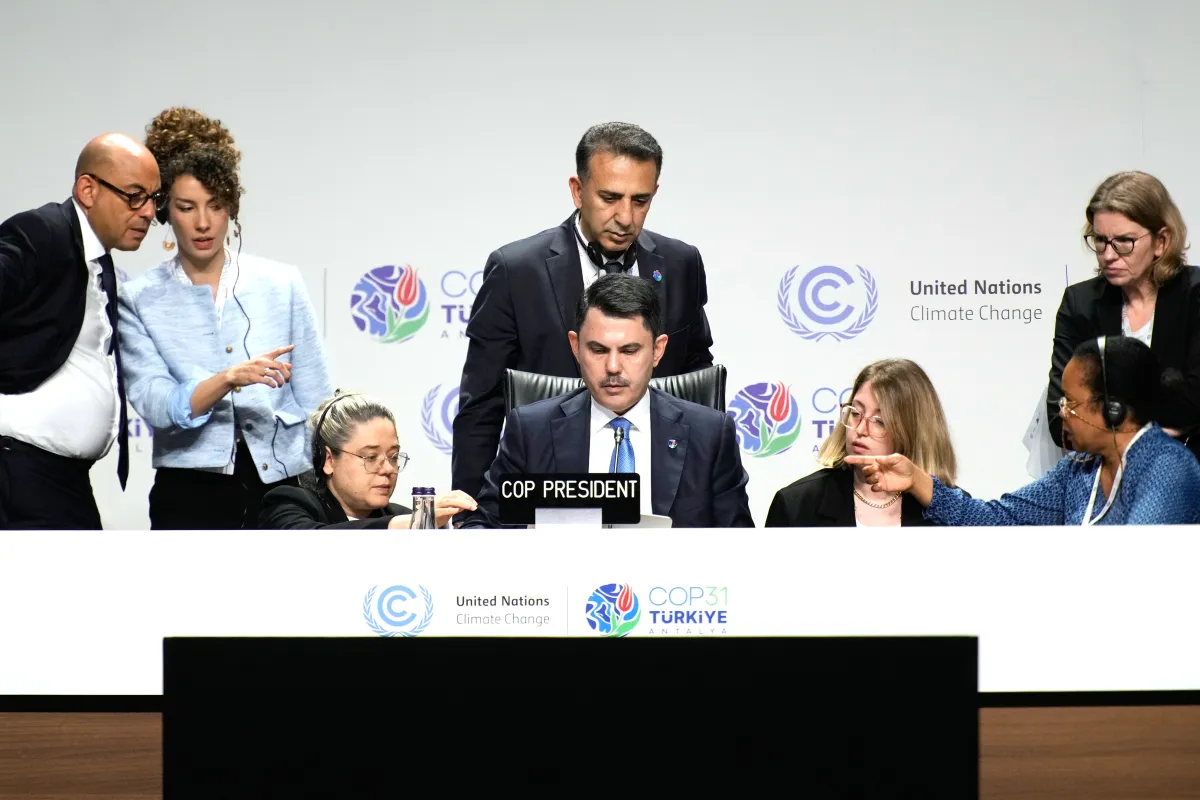
COP Flop: Swiss Reactions To Climate Talks Collapse


-
Deutsch
de
COP31: Schweizer Reaktionen auf die gescheiterten Klimaverhandlungen
Read more: COP31: Schweizer Reaktionen auf die gescheiterten Klimaverhandl
Italiano
it
COP31, le reazioni dalla Svizzera e dal mondo al fallimento dei negoziati sul clima
Read more: COP31, le reazioni dalla Svizzera e dal mondo al fallimento dei negoziati sul
After two weeks of negotiations, the COP31 climate meeting in Antalya, Turkey, failed to produce a joint final declaration. Numerous countries, including Switzerland and other European nations, rejected the final declaration, known as the“Antalya Pact”. According to Switzerland's environment ambassador, Felix Wertli, at the time of its collapse the Swiss delegation had been negotiating alongside others for 36 hours without sleep.
Why was the draft rejected?“It would have sent a strong, positive signal for more robust implementation of climate measures,” said Wertli.
But he added that Switzerland was right not to support the final draft, as key elements were missing.
“We were part of a broad coalition of many countries from all regions of the world who said: 'Too much is missing here; we do not want to support this,'” said the Swiss ambassador.
Ireland's climate minister, Darragh O'Brien, said on behalf of the EU at the talks that it would not accept a declaration that did not mention fossil fuels.
Which countries influenced the negotiations?The talks were influenced by attempts by powerful oil-producing states such as Saudi Arabia and Russia to reverse earlier decisions. More than 130 countries, including the EU, small island states, African nations and less-developed countries, opposed this. Because climate summits work by consensus, any state can block decisions.
Saudi Arabia defended the final negotiating draft, pointing out that Arab countries were responsible for only a small proportion of historical emissions. The Gulf state also promoted carbon capture and storage (CCS) technologies as a climate solution. China, Pakistan and African states expressed their regret at the collapse of COP31.
More More Energy transition How the fossil fuel industry intervenes at COP conferences and in SwitzerlandThis content was published on Nov 8, 2026 The fossil fuel industry's presence at UN climate conferences has drawn criticism. In Switzerland, too, the oil sector has sought to downplay its role in climate change.
Read more: How the fossil fuel industry intervenes at COP conferences and in Switze
Legal Disclaimer:
MENAFN provides the
information “as is” without warranty of any kind. We do not accept any
responsibility or liability for the accuracy, content, images, videos,
licenses, completeness, legality, or reliability of the information
contained in this article. If you have any complaints or copyright issues
related to this article, kindly contact the provider above.


Comments
No comment