


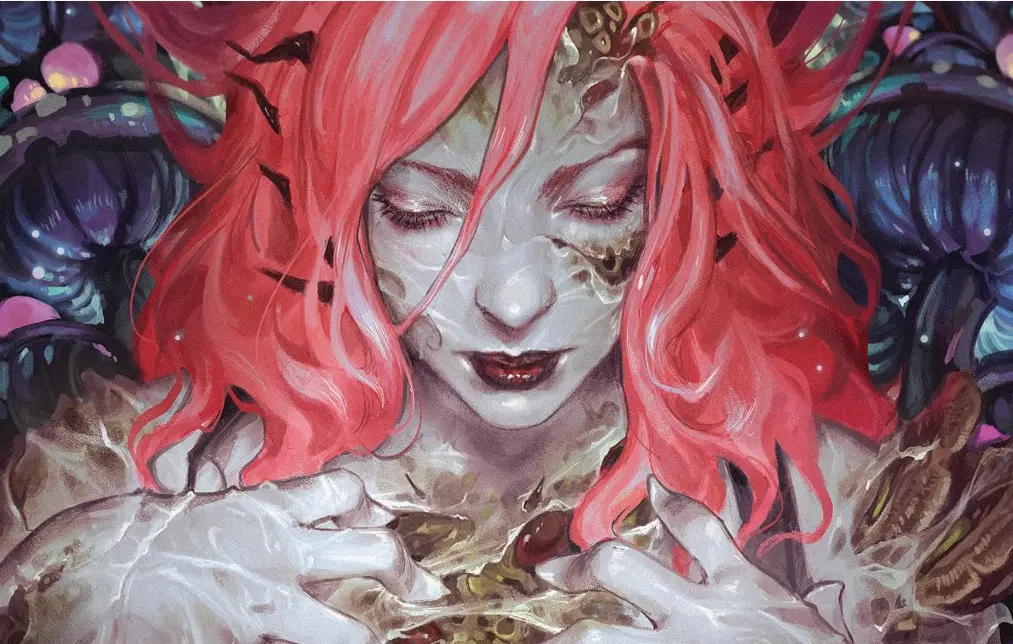
Plant Life Matters: Why Poison Ivy Is One Of The Most Successful Bat Villains In DC Comics


This post includes affiliate links. If you purchase anything through these affiliated links, the author/website may earn a commission.
“Big things often have small beginnings.” That is a quote often attributed to seeds that grow into plants and trees. Batman has one of the greatest rogues' galleries in comic book history. The Joker, Catwoman, Two-Face, the Riddler, and even the Penguin have become household names. Yet one of Gotham City's most enduring and surprisingly successful Bat villains is Poison Ivy.
What's especially impressive is that Poison Ivy has accomplished something many modern solo comic book series struggle to achieve. After launching in 2022 as a limited series, the current Poison Ivy solo series hit 50 issues and counting in December 2026. Meanwhile, many solo comics launch with fanfare only to disappear six to twelve issues later.
Poison Ivy's first-ever solo series, Poison Ivy: Cycle of Love and Death, lasted only five issues in 2015. Outside of Wonder Woman, Poison Ivy, a Batman villain with less popularity than Harley Quinn, is one of the few female comic book characters with a long-running title in an era where that is uncommon.
Poison Ivy's recent solo title enjoys remarkable longevity and critical acclaim.
Let's explore why Poison Ivy has grown from a colorful and wacky Silver Age Batman adversary into one of DC Comics' most fascinating ecoterrorists, humanity-hating plantkind advocates, and successful bat villains.
Let's start by examining the three eras when creators introduced and modernized Poison Ivy's origin.
A Villain With a Memorable And Shifting OriginPoison Ivy made her first appearance in Batman #181 in 1966. The first and Silver Age version of Poison Ivy was genius botanist Dr. Lillian Rose. After a peer poisons her after an adventure in an Egyptian tomb, Rose survives the attempt. She now has the power to control all plant life, communicate with plants, use pheromones to control others, and become immune to all toxins and poisons.
Rose is an egotistical beauty with a crush on Batman. Rose's Poison Ivy is also the first to wear a vine, leaf, and plant motif costume. The character was born out of the popularity of Catwoman on Adam West's Batman show and DC's comics desire to capitalize on female characters and villains in that era.
However, the character lost her popularity and visibility in comics until the late 1980s.
Secret Origins #36 (1989)In Secret Origins #36 in January 1989, writer Neil Gaiman and artist Buckingham's story“Pavane” modernized Poison Ivy's origin. She became Dr. Pamela Lillian Isley, a genius botanist and plant geneticist. Isley develops a connection to“The Green,” a supernatural elemental force that connects all plant life.
It is her connection to the Green that gives her powers now, not a Silver Age misadventure in an Egyptian cave.
It is also in this issue that Poison Ivy gains a lot more depth as a character. Her Poison Ivy persona partially develops due to an unhealthy obsession with Batman. Ivy's mentor in botany is now Jason Woodrue, also known as the Floronic Man, a Swamp Thing villain.
Ivy's detachment from humanity, severe mental instability, and zealot-like philosophy and advocacy for plantkind also begin in this issue. In this new origin, Poison Ivy develops a kinship with the plant kingdom that can't compare with humanity because she no longer relates to humanity.
Poison Ivy (2022 – Present)2022's Poison Ivy by writer G. Willow Wilson and artist Marcio Takara was originally a six-issue miniseries. Due to overwhelming popularity and reader demand, the series became a solo ongoing that is still publishing today. That is an incredible feat for a B-List Batman villain, relatively speaking, in comparison to Batman's A-list rogues' gallery.
The series adds more nuance to Dr. Isley's newer and modern origin from Secret Origins #36, especially in regard to her relationship with mentor Jason Woodrue. This new series also expands on Dr. Isley's anti-humanity philosophy in newer and darker ways; she now wants to eradicate humanity to save the plant kingdom from humanity's toxic and self-destructive ways.
Still, is a new and darker origin story the sole reason why Poison Ivy and her comic series resonate with readers?
Environmental Themes Have Become More Relevant Over TimeWhen Poison Ivy debuted in the 1960s, environmental issues rarely occupied the center of public discussion. Today, however, topics like climate change, pollution, deforestation, habitat destruction, and corporate environmental negligence appear regularly in global conversations.
This shift has dramatically benefited the character. Modern readers often understand Ivy's concerns even when they disagree with her methods. She is no longer simply a wacky villain who controls plants. She has become an ecoterrorist and symbol of environmental frustration taken to dangerous extremes.
What makes Poison Ivy fascinating is that she often feels partially right. Readers may oppose her willingness to harm innocent people, but they understand her anger toward corporations destroying ecosystems. This moral ambiguity creates richer stories than simple“good versus evil” narratives. It also helps explain why she continues to resonate with modern audiences and remains one of the most successful bat villains in comics.
Her Powers Are Uniquely VersatileMany Batman villains are memorable because of their personalities rather than their abilities. Poison Ivy has both. Her connection to plant life gives her an exceptionally broad power set that keeps stories visually exciting and narratively unpredictable.
She can control vines, create giant plant monsters, communicate with vegetation, generate toxins, produce mind-controlling pheromones, and manipulate entire ecosystems. In some stories, she can transform landscapes into living weapons.
These abilities allow writers to scale Ivy's threat level dramatically. She can challenge Batman in a Gotham alley or threaten entire regions when operating at her most powerful. Her powers also make her more threatening as an ecoterrorist who sympathizes with Earth's ecosystem more than humans.
The Harley Quinn Connection Expanded Her AudienceA major factor in Poison Ivy's rise over the last several decades has been her relationship with Harley Quinn. Originally developed through animated adaptations and later embraced by the comics, their partnership became one of the most popular relationships in modern superhero storytelling.
In the comic books, Poison Ivy and Harley Quinn became lovers in the 2010s. While the relationship may have been toxic due to their trauma bonding, it was a lot healthier than Harley's obsession with the Joker. In contrast to the toxic, dangerous, and controlling relationship the Joker had with Harley, Harley's relationship with Ivy was much more nurturing and safer.
Ivy's relationship with Harley was also more realistic than her own obsession with Batman, who has eyes for Catwoman anyway.
Although the couple is no longer together in current DC Comics continuity, fans enjoyed the relatively healthy portrayal of their relationship.
The connection introduced Poison Ivy to readers who might not ordinarily follow Batman comics. Harley's enormous popularity helped elevate Ivy from a respected supporting villain to a mainstream fan favorite.
Also, the relationship works because the characters complement one another so well. Harley is chaotic, impulsive, and emotional. Ivy is often calculated, intellectual, and strategic. Their contrasting personalities create compelling drama, humor, and emotional depth.
The success of Harley and Ivy stories has significantly increased Poison Ivy's visibility and contributed to her becoming one of DC's most successful bat villains.
Readers Appreciate Sympathetic AntagonistsComic book audiences have increasingly embraced complex antagonists whose motivations are understandable. Poison Ivy excels in this area.
While she often commits terrible acts, her goals frequently stem from real-world concerns. She wants to protect the environment, preserve endangered life, and stop humanity from destroying natural ecosystems. Readers can recognize legitimacy within those objectives.
This creates a fascinating dynamic where audiences may disagree with Ivy's methods while supporting portions of her message. Few villains generate that kind of nuanced response.
Batman himself often struggles with this reality. He recognizes Ivy's danger but occasionally acknowledges the validity of some of her concerns. That tension creates richer storytelling opportunities than villains driven purely by greed or madness.
The Solo Series Succeeds Because It Isn't Just About BatmanOne reason many spinoff comics fail is that they rely too heavily on their connection to larger franchises. Poison Ivy's solo series found success because it established its own identity. Also, Batman does not have to appear to satisfy the comic's readership.
The book often explores themes of environmentalism, humanity, personal growth, unrequited love, revenge, and self-discovery. Batman may exist in the background, but he is not the central focus.
This allows Poison Ivy to operate in stories uniquely suited to her worldview. Readers aren't simply getting“another Batman book.” They're experiencing a different perspective on the DC Universe through Ivy's eyes.
Why Poison Ivy's Monthly Series Lasts Longer Than Most Modern ComicsPoison Ivy's success isn't built on luck, nostalgia, or association with Batman alone. She has evolved into a compelling character capable of carrying stories on her own merits. Her environmental themes remain timely, her powers offer limitless creative potential, and her moral complexity encourages deeper engagement than many traditional villains.
Most importantly, Poison Ivy continues to grow. She is no longer just a plant-themed criminal trying to rob a bank or defeat Batman. She is an eco-warrior, antihero, activist, romantic lead, and philosophical challenge to the modern world. That versatility allows her to remain fresh decade after decade.
Free Guide: The Casual's Guide to Comic Book Investing
Learn which comics hold value and how to protect them. Get the free guide, plus collecting tips and YouTube picks twice a month.
Email addressLeave this emptyFree. Unsubscribe anytime. Privacy Policy.
Allen FrancisAllen Francis is the lead staff writer for ComicsAndAssets at District Media, Inc., specializing in comic book investing, collectibles, popular culture, and practical wealth-building strategies. A New York City native, Marymount Manhattan College graduate, and former college academic advisor, librarian, and adjunct instructor, he brings 15+ years of professional writing experience and a proven personal transformation from financial illiteracy to expert collector. He also the author of The Casual's Guide: Why You Should Get Into Comic Book Investing.
Tags: Batman, DC Comics, Poison Ivy
Legal Disclaimer:
MENAFN provides the
information “as is” without warranty of any kind. We do not accept any
responsibility or liability for the accuracy, content, images, videos,
licenses, completeness, legality, or reliability of the information
contained in this article. If you have any complaints or copyright issues
related to this article, kindly contact the provider above.


Comments
No comment