


9 Lakh Waqf Properties Can Transform Muslim Community: Rijiju - Kashmir Observer


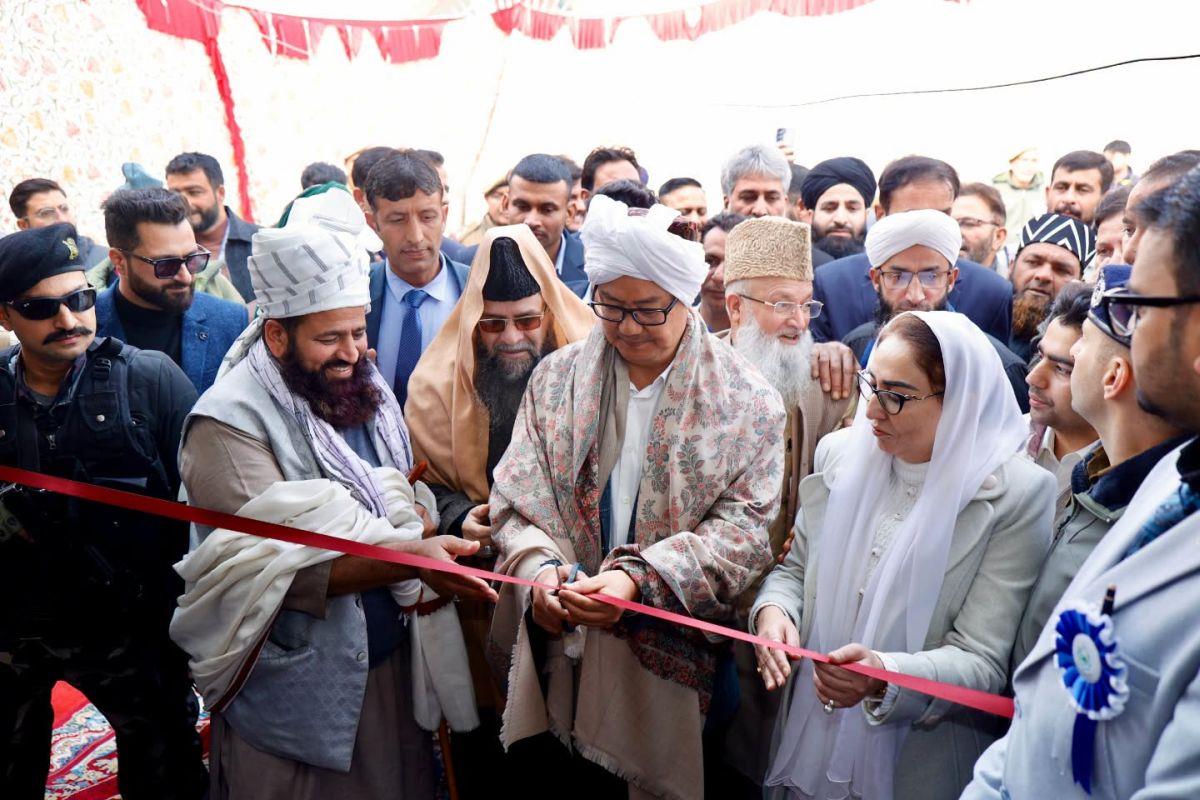
“There are more than 9 lakh Waqf properties in the country. If all these Waqf properties are converted for the welfare of the Muslim community, it can transform the entire situation in the Muslim community,” Rijiju told reporters after attending the first-ever Waqf Day 2026 celebrations at Sher-e-Kashmir University of Agricultural Sciences and Technology of Kashmir (SKUAST-K).
He said proper management of these properties could provide substantial support to poor, helpless and marginalised members of the Muslim community.
Referring to the Jammu and Kashmir Waqf Board, Rijiju said its work over the past three to four years had demonstrated how Waqf properties could be utilised for community welfare. He described it as the country's top Waqf Board and said he had cited its functioning as a model for other state boards, including Uttar Pradesh.
The Union Minister also invited the J&K Waqf Board to submit comprehensive proposals for skill-development and employment-generation projects, particularly targeting educated unemployed youth.
He said the Ministry of Minority Affairs could consider dedicated funding for such initiatives, adding that proposals worth Rs 15 crore, Rs 20 crore or even Rs 50 crore could be examined.
ADVERTISEMENTRijiju said the projects should promote local arts and culture while creating employment opportunities for young people in Jammu and Kashmir.
Read Also In Photos: Union Minister Kiren Rijiju Inaugurates Multiple Waqf Board Development Projects in Kashmir Video: Kiren Rijiju Addresses Media After Inaugurating Various Projects in SrinagarHe also praised the restoration of the Hazratbal Shrine, saying the work had fulfilled the spiritual aspirations of devotees. He commended the Board's initiatives in education and healthcare and congratulated its Chairperson, Dr Darakhshan Andrabi, and her team.
On the registration of Waqf properties, Rijiju said the government had already granted a six-month extension and would support genuine cases facing difficulties due to documentation delays.
He said the government would ask its counsel to support legitimate requests for further relief before tribunals and the Supreme Court to ensure that genuine Waqf properties were not adversely affected because of procedural delays.
Defending the amended Waqf law, renamed the UMEED Act, Rijiju said it was aimed at bringing transparency, accountability and better management of Waqf properties and was not intended to harass Muslims or take over their assets.
He said several Waqf properties across the country had remained unregistered, encroached upon or mismanaged for decades, making proper measurement and documentation necessary.
The Minister said the properties should ultimately serve their intended beneficiaries, including poor people, orphans, widows and other disadvantaged sections.
Recalling his earlier visits to Jammu and Kashmir in 2014, Rijiju said the region had witnessed considerable progress and expressed confidence about its future.
He said his visits at the time, when he was serving in the Union Home Ministry, were largely focused on security assessments in remote and border areas, with major public programmes and gatherings being rare.
“Given the situation in Jammu and Kashmir today and the pace at which it is progressing, I believe the future of Jammu and Kashmir and our country is very bright,” he said.
Rijiju also recalled his tenure as Union Sports Minister, saying the Khelo India Winter Games, conceived in Gulmarg in 2019, had developed into an event that athletes looked forward to every year.
He referred to initiatives promoting water sports at Dal Lake and adventure sports across the Valley, saying these had provided opportunities for young people to showcase their abilities.
Recalling his tenure as Union Law Minister, he also spoke about legal outreach programmes organised in remote areas, including Lolab Valley and locations beyond Baramulla, where legal-awareness camps and Lok Adalats were held to improve access to justice.
He said development initiatives in Jammu and Kashmir were being pursued through coordination among different ministries under the leadership of Prime Minister Narendra Modi and Union Home Minister Amit Shah.
Emphasising the Prime Minister's 'Sabka Saath, Sabka Vikas' vision, Rijiju said inclusive development was essential to achieving Viksit Bharat by 2047, ensuring that no religion, caste or community was left behind.
The event was attended by Member of Parliament Mian Altaf Ahmad Larvi, BJP National General Secretary and J&K in-charge Dr Satish Poonia, SKUAST-K Vice-Chancellor Prof Nazir Ahmad Ganai, religious scholars, Waqf Board members, academicians and public representatives.
Legal Disclaimer:
MENAFN provides the
information “as is” without warranty of any kind. We do not accept any
responsibility or liability for the accuracy, content, images, videos,
licenses, completeness, legality, or reliability of the information
contained in this article. If you have any complaints or copyright issues
related to this article, kindly contact the provider above.


Comments
No comment