


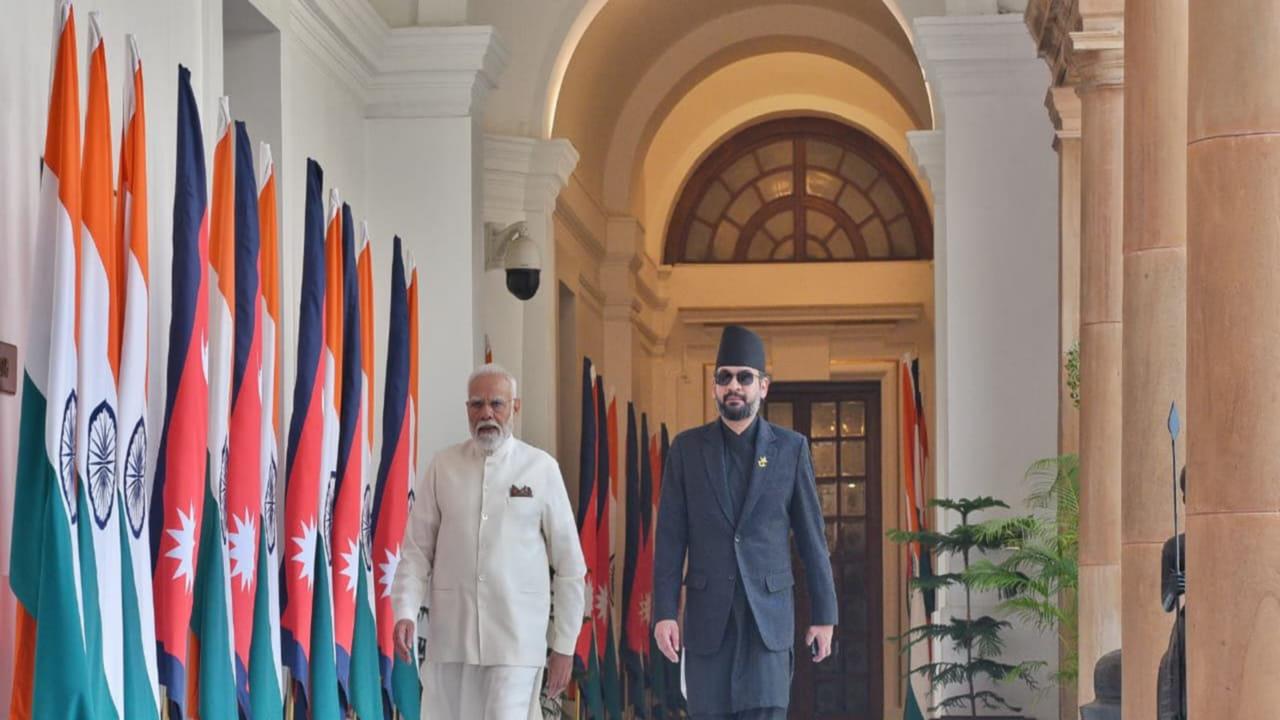
India And Nepal Adopt Joint Vision Document For Modern Partnership


India and Nepal Adopt Joint Vision Document for Modern Partnership
New Delhi [India], November 23 (ANI): India and Nepal on Monday adopted a comprehensive 10-pillar Joint Vision document titled 'Viksit Bharat and Samunnat Nepal: Re-imagining the Partnership', charting a roadmap for strengthening bilateral cooperation across trade, connectivity, energy, technology, education, healthcare, agriculture, sports and cultural exchanges during Nepal Prime Minister Balendra Shah's two-day state visit to India. The Joint Vision, adopted during Shah's November 22-23 visit at the invitation of Prime Minister Narendra Modi, seeks to transform the longstanding relationship between the two neighbouring countries into a modern, results-oriented partnership, taking into account contemporary political, economic and technological realities.
Strategic Roadmap and Economic Commitment
The two leaders held cordial, substantial and forward-looking discussions in New Delhi and undertook a comprehensive review of bilateral relations, reaffirming their commitment to strengthening cooperation based on mutual respect, shared interests and people-to-people ties. Under the comprehensive economic and development partnership pillar, India committed development assistance worth Rs 15,000 crore (NPR 24,000 crore) to Nepal, comprising Rs 3,500 crore in grants for post-disaster reconstruction and new infrastructure projects and Rs 11,500 crore in concessional lines of credit, primarily for energy sector projects.
Connectivity, Energy and Technological Innovation
Connectivity emerged as another major pillar, with the two leaders welcoming the launch of the direct express rail service between Ayodhya and Janakpur. On energy, the leaders agreed to accelerate cooperation in hydropower and electricity transmission. Furthermore, the two countries agreed to expand cooperation in artificial intelligence, satellite development, and digital infrastructure, including plans for a Nepali-language Large Language Model and a Startup Centre of Excellence in Kathmandu.
Future Oversight
To ensure the timely implementation of the initiatives, the two Prime Ministers decided to activate a High-Level Monitoring Group led by Nepal's Foreign Secretary and India's Ambassador to Nepal. This group will meet every six months to monitor progress, with findings submitted to the India-Nepal Joint Commission, whose next meeting is scheduled for 2027.

Legal Disclaimer:
MENAFN provides the
information “as is” without warranty of any kind. We do not accept any
responsibility or liability for the accuracy, content, images, videos,
licenses, completeness, legality, or reliability of the information
contained in this article. If you have any complaints or copyright issues
related to this article, kindly contact the provider above.


Comments
No comment