


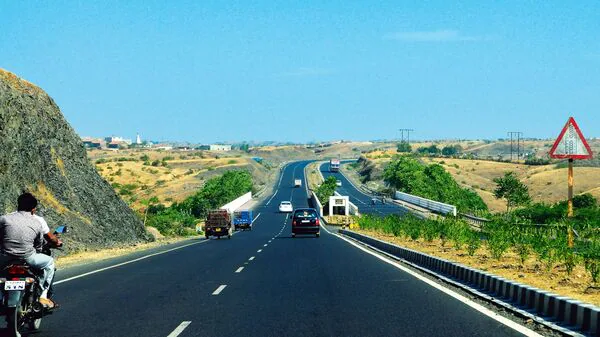
Barrier-Less Tolling Offers NHAI A Revenue Boost


The seven plazas operational between May and October collected a combined net toll revenue of ₹538.95 crore after switching to the Multi-Lane Free Flow (MLFF) system, against ₹449.72 crore during the corresponding pre-MLFF periods, the ministry of road transport and highways (MoRTH) said in a statement on Monday.
Also Read | Govt tightens arbitration fee rules as NHAI hits the road to zero debtThe MLFF system uses automatic number plate recognition (ANPR) cameras and FASTag-based electronic identification to collect tolls without requiring vehicles to stop at physical barriers. The system is expected to reduce congestion, fuel consumption and emissions while improving transparency in toll collection.
With the authority preparing to invite bids for hundreds of additional plazas, early revenue gains could boost its efforts to improve collections across the national highway network. The extent to which these gains can be replicated, however, will depend on accurate vehicle identification and the ability to enforce payments.
According to MoRTH data, the seven plazas recorded revenue increases ranging from 15.66% to 26.95% over their respective pre-MLFF periods. The first MLFF plaza became operational at Choryasi in Gujarat on 1 May 2026.
Also Read | NHAI faces ₹29k-cr hit as SC upholds extra compensation for highway landowners Enforcement challengesThe transition to barrier-less tolling has also brought enforcement challenges, with some motorists masking, concealing or tampering with vehicle registration plates to evade payment.
NHAI has started coordinating with state governments and enforcement agencies to tackle such violations. Police checkpoints have been established at certain locations where vehicles found tampering with registration plates are intercepted and challaned.
The authority is also deploying artificial intelligence-based vehicle fingerprinting technology and integrating its systems with the VAHAN vehicle registration database to identify defaulters.
Electronic notices are being issued to recover unpaid tolls, while certain VAHAN-related services are being restricted for persistent defaulters under the prescribed enforcement framework, the ministry's statement said.
The ministry said around 60% of the value of electronic notices issued across operational MLFF plazas has already been recovered, demonstrating the effectiveness of digital enforcement.
The revenue gains could strengthen the case for accelerating MLFF implementation across India's national highway network.
NHAI has invited bids for introducing the system at around 100 additional toll plazas, with another 300-400 expected to be taken up for bidding during the current financial year.
Also Read | The highway to growth: Outlook for India's EPC firmsThe government is targeting completion of the transition across approximately 1,150 national highway toll plazas by the end of FY28, replacing conventional toll barriers with technology-enabled collection and enforcement.
The latest results, however, reflect the initial experience at a limited number of locations, and sustaining similar gains across the wider network will depend on reliable vehicle identification, payment compliance and effective enforcement.

Legal Disclaimer:
MENAFN provides the
information “as is” without warranty of any kind. We do not accept any
responsibility or liability for the accuracy, content, images, videos,
licenses, completeness, legality, or reliability of the information
contained in this article. If you have any complaints or copyright issues
related to this article, kindly contact the provider above.


Comments
No comment