


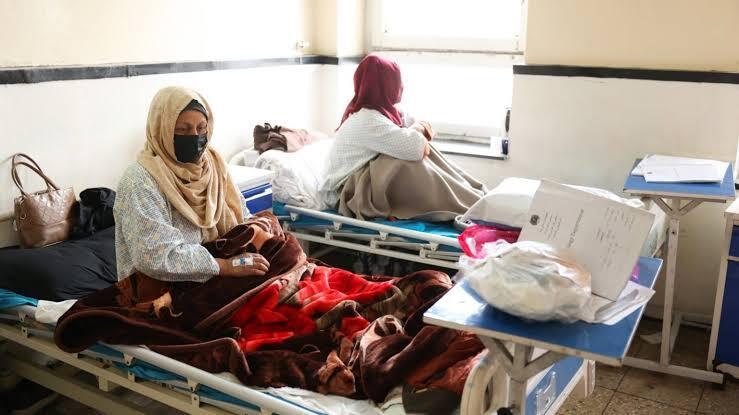
Cancer In Afghanistan: Women Face Isolation And Social Stigma


Sahar says some of her husband's relatives called her a“cancerous woman” because of her illness. Her mother-in-law also believed that her cancer was the result of bad prayers Sahar had supposedly made against her. According to Sahar, these attitudes added another layer of suffering to the physical pain and difficulties of treatment.
Sahar initially consulted doctors in Afghanistan to identify her illness. She says she received medication for nearly two months, but her condition did not improve because the medicines were not appropriate for her disease. She subsequently travelled to Pakistan for further examinations and treatment, where her illness was diagnosed and treatment began.
She says receiving a diagnosis and starting treatment increased her hopes of recovery. However, a mastectomy changed her life permanently. Sahar, who has two young children, says she has been unable to return to her pre-illness life since the operation and continues to experience physical pain and neurological problems.
According to Sahar, the attitudes of some relatives have also placed considerable psychological pressure on her, in addition to the physical challenges. While she expected greater emotional support during the difficult period of her illness, she instead faced judgments and hurtful remarks that deepened her sense of loneliness. Nevertheless, she considers the support of her husband, father, mother, sister and brother among the most important factors that helped her continue her treatment.
Sahar's experience is not unique. Khatera Anwari, 33, who now lives in a city in Turkey, also endured a period of fear, uncertainty and anxiety after being diagnosed with uterine cancer.
Khatera says she had not menstruated for four months before her diagnosis and gradually began experiencing fatigue, physical weakness and hair loss. After consulting a gynaecologist and undergoing medical examinations, she waited a month for her test results. She says that month was filled with tears, despair and anxiety.
She says that when the doctor informed her she had uterine cancer, she thought she might not survive. At the time, she had two sons and was particularly worried about their future. Being away from her mother and sisters, who were not with her during that period, further intensified her sense of loneliness.
Khatera recalls one of the most difficult moments of her treatment as the day of her surgery at a hospital in Ankara, when she saw two elderly women with shaved heads. She says seeing their condition made her think about her own situation and uncertain future, leaving her even more frightened.
Despite the experience, Khatera says her hope for life returned after completing treatment, and she now wants to live for her two sons. She urges women to take changes in their bodies seriously and not delay seeking medical attention if they notice unusual symptoms.
Rahima, a pseudonym for a 31-year-old woman, has also experienced cancer and the difficulties of treatment. She says her illness initially began with a severe sore throat and toothache. After some time, she noticed a small, pea-sized lump on the left side of her jaw. The lump did not disappear and gradually grew larger.
Rahima initially consulted internal medicine, ear, nose and throat, and dental specialists. Eventually, doctors in Mazar-e-Sharif suspected tuberculosis of the lymph nodes and prescribed tuberculosis medication. However, after she consulted a tuberculosis specialist, the diagnosis was ruled out, and she was advised to travel to Pakistan for further examinations.
She says that after travelling to Pakistan and undergoing a biopsy, she was diagnosed with lymphoma. Her treatment lasted approximately one year. Rahima underwent six cycles of chemotherapy, and her treatment cost around 500,000 Afghanis at the time. According to her, she covered the expenses by selling land she had inherited from her father.
During treatment, and following surgery and radiotherapy, she experienced severe weight loss, with her weight falling from 67 kilograms to 43 kilograms.
According to Rahima, her surgery lasted approximately 15 hours. Following the operation, physical complications left one side of her arm and leg paralysed. For a period, she also had difficulty speaking and walking. She says she was even worried about other people seeing her physical condition and judging her.
After receiving treatment in Pakistan, Rahima managed to regain her weight, reaching 61 kilograms through a healthy diet and exercise. However, the fear of the disease returning remains part of her life. She now needs an MRI examination every three months. She says difficulties obtaining Pakistani visas also add to the concerns of patients who need treatment abroad.
She calls on authorities to facilitate medical visas to Pakistan for cancer patients, saying the fear of being unable to obtain a visa if the disease returns places additional psychological pressure on patients.
Cancer is a major global health challenge, with millions of people diagnosed with different forms of the disease every year. According to the latest estimates from the global GLOBOCAN project, published by the International Agency for Research on Cancer, an agency of the World Health Organization, approximately 20.6 million new cancer cases were estimated worldwide in 2024, while nearly 9.8 million people died from the disease.
In Afghanistan, estimates for 2024 indicate that there were 26,268 new cancer cases. Of these, 14,217 involved women and 12,051 involved men. According to the same estimates, cancer-related deaths in the country reached 15,848.
Breast cancer, with 4,342 estimated cases, ranked as the most common cancer among women in Afghanistan. Colorectal cancer and cervical cancer were also among the other types reported among women in the country.
These figures are international estimates and do not represent the precise registration of all cancer cases in a national disease registry. The lack of accurate domestic data on the number of people affected remains a major challenge in understanding the scale of the disease and planning healthcare services in Afghanistan.
The experiences of these three women show that the effects of cancer do not necessarily disappear when treatment ends. Fear of recurrence, physical changes, concerns about the future and social attitudes can continue to affect patients' lives even after treatment.
Sabawoon Azizi, a psychologist, says a cancer diagnosis can bring a range of psychological challenges for patients. According to him, fear of death, anxiety about the future, changes in physical appearance, hair loss, weight loss and uncertainty about the treatment process are among the issues that occupy patients' minds.
“When a woman is told that she has cancer, several things come to her mind. First, fear: what will happen to her, what will her physical condition be like, and how will she go through the treatment process?” He says.
According to Azizi, negative attitudes and social judgments in Afghan society can also increase the psychological pressure on patients. Some patients conceal their illness for fear of being judged or avoid consulting psychologists because seeking help from a mental health specialist is considered embarrassing in society.
The psychologist adds that isolation by relatives, negative attitudes and insulting behaviour can increase patients' feelings of loneliness and hopelessness, preventing them from receiving the support they need. He stresses that emotional support from family members and those around patients is essential alongside medical treatment, and that cancer patients should have access to psychological services when needed.
Azizi also identifies establishing support funds for patients in need, referring them to charitable organisations, expanding healthcare facilities and providing early-detection services as measures that could help address some of these challenges. He says psychological support should not be limited to the early days following diagnosis, as some patients continue to experience anxiety, depression and fear of cancer recurrence even after completing treatment.
Alongside psychological and social pressures, access to cancer diagnosis and treatment services is another major challenge for patients in Afghanistan. Some patients are forced to travel to other countries for specialised tests, medical treatment and follow-up care. Such journeys involve not only medical expenses but also transportation and accommodation costs, as well as difficulties obtaining visas.
Dr Shakib Zaheer, an oncologist at Amiri Hospital, says the number of patients seeking treatment for different types of cancer at medical centres has increased in recent years. According to him, lung, breast, stomach, colorectal and prostate cancers, as well as blood cancers, are among the conditions for which patients seek treatment.
He identifies air pollution, the use of explosive materials and radiation as some possible factors associated with cancer. However, he adds that the increased number of patients visiting healthcare facilities in Afghanistan may also be one reason why more cases are being observed. In the past, some patients travelled abroad for diagnosis and treatment, meaning their information was not included in domestic statistics.
Dr Zaheer says one of the major problems is that many patients seek medical attention when the disease has already reached an advanced stage. According to him, the absence of regular screening programmes and limited public awareness of cancer symptoms and when to consult a specialist contribute to late diagnosis.
The oncologist says diagnostic and treatment facilities at public and private medical centres in Afghanistan have expanded to some extent in recent years, allowing a considerable number of patients to receive care inside the country. However, the lack of fully equipped radiotherapy centres and bone marrow transplant facilities remains among the major shortcomings of Afghanistan's healthcare system.
He adds that some specialised examinations, including PET scans and bone scans, are also unavailable inside the country. In some cases, laboratory samples are sent abroad for further examination. Although progress has been made in areas such as biopsies, pathology and medical imaging, he says Afghanistan still lacks all the facilities required to diagnose and treat different types of cancer.
Dr Zaheer says the cost of cancer diagnosis and treatment depends on the type of cancer, its stage, the patient's physical condition and the treatment method, making it impossible to determine a uniform cost for all patients. He adds that economic difficulties have prevented some families from completing treatment, which in certain cases has led to the disease returning after some time.
According to the specialist, medicines used in cancer treatment are imported from abroad. Dependence on imported medicines and equipment, alongside transportation and supply challenges, increases treatment costs. He stresses that greater public awareness, early diagnosis and timely visits to healthcare facilities can play an important role in improving treatment outcomes.
Meanwhile, Sharafat Zaman Amarkhail, spokesperson for the Ministry of Public Health, says there are currently no accurate figures on the number of cancer patients in Afghanistan. He adds that the ministry is working to conduct a survey to determine the number of patients so that the necessary equipment and facilities for their treatment can be considered.
For many women, cancer is more than a medical diagnosis. The disease can also affect family relationships, financial circumstances, mental health and future plans. The experiences of Sahar, Khatera and Rahima show that, alongside physical pain and the difficulties of treatment, concerns about children, ongoing expenses, travel abroad and negative social attitudes are also part of the difficult journey of living with cancer.
While international estimates point to thousands of new cancer cases in Afghanistan, the absence of accurate national statistics and limited access to some specialised facilities highlight the need for greater attention to timely diagnosis, expanded treatment services, and psychological and financial support for patients.

Legal Disclaimer:
MENAFN provides the
information “as is” without warranty of any kind. We do not accept any
responsibility or liability for the accuracy, content, images, videos,
licenses, completeness, legality, or reliability of the information
contained in this article. If you have any complaints or copyright issues
related to this article, kindly contact the provider above.


Comments
No comment