


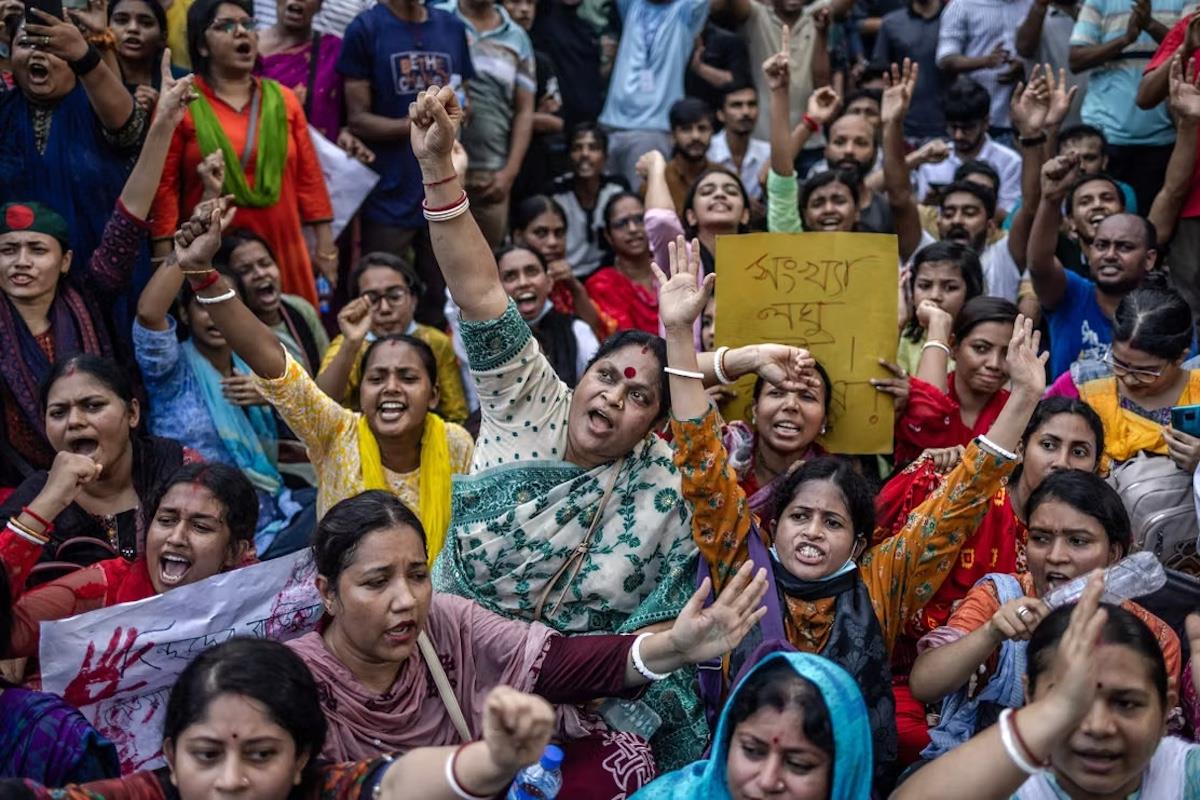
Why India Keeps Fabricating Hindu Persecution In Bangladesh


Zee 24 Ghanta claimed that 300 Hindu homes had been torched. News18 Bangla reported 200. Republic World described hundreds of Hindu properties being destroyed. Other outlets carried similar accounts, some suggesting a coordinated campaign of religious persecution.
There was one problem. According to police, no Hindu families lived in Bendar Char, the Narail village at the center of the reports.
What happened there was serious enough without embellishment. Two activists associated with the Bangladesh Nationalist Party had been killed on November 18, allegedly by Awami League supporters. Two days later, houses linked to Awami League figures were attacked, looted and set on fire in apparent retaliation.
Local police initially reported four to six houses burnt and 15 to 20 vandalized. Subsequent reporting by Daily Waadaa, whose correspondent visited the area, documented at least 40 damaged houses. Fire service officials reported more extensive damage than the initial police estimate.
But none of those findings substantiated the claim that hundreds of Hindu homes had been deliberately targeted. One Hindu Awami League leader's house was attacked in a nearby neighborhood. Local Hindu residents said other Hindu households there had not been targeted.
Yet the political violence had already acquired a different identity across the border: another Hindu persecution crisis in Bangladesh. The question is not simply why misinformation travels.
It is why a particular kind of misinformation about Bangladesh finds such a receptive audience in sections of the Indian media, and why the Awami League has invested so heavily in presenting itself as the indispensable guardian of Bangladesh's Hindus.
The answers lie in two overlapping political narratives. One belongs to India's Hindu nationalist politics. The other belongs to the Awami League's longstanding claim that Bangladesh's minorities cannot be safe without it.
Both narratives benefit from treating the fate of Bangladeshi Hindus as inseparable from the fate of a particular political party. And both risk reducing a diverse religious community to an instrument of political contestation.
The story India expects to hearThe Narail episode was not an isolated failure of verification. It followed a pattern visible since Sheikh Hasina's government collapsed in August 2024. Within hours of her removal, sections of the Indian media began reporting widespread attacks on Hindus by Islamist groups.

Legal Disclaimer:
MENAFN provides the
information “as is” without warranty of any kind. We do not accept any
responsibility or liability for the accuracy, content, images, videos,
licenses, completeness, legality, or reliability of the information
contained in this article. If you have any complaints or copyright issues
related to this article, kindly contact the provider above.


Comments
No comment