


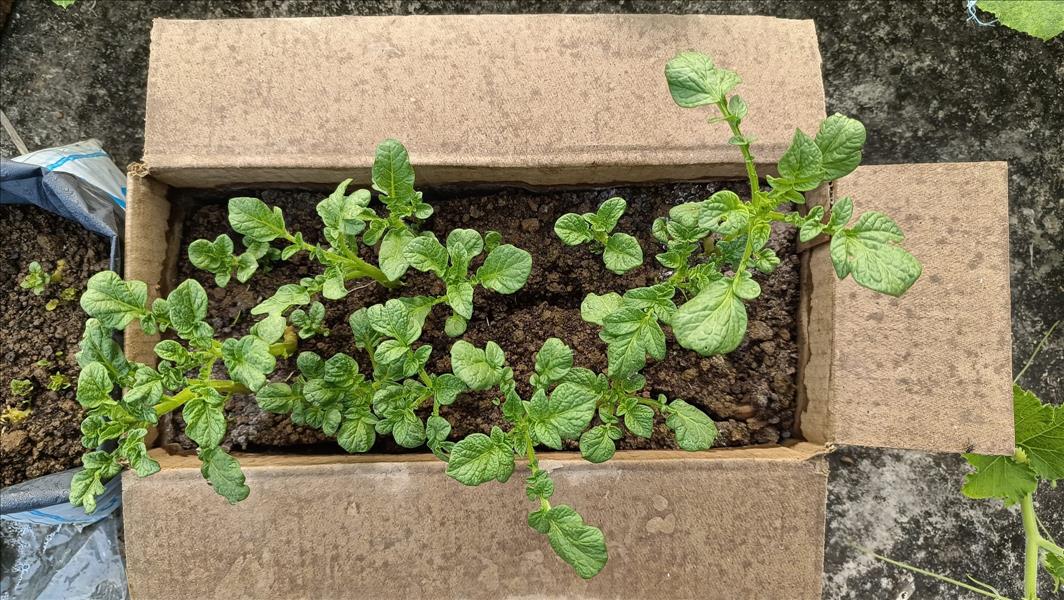
Can You Really Grow Potatoes In A Cardboard Box? Here's What To Know


Potatoes are one of those crops that make gardeners wonder how little equipment they actually need. You've probably seen people growing them in buckets, bags, raised beds, and even stacks of tires. But what about a plain cardboard box left over from an online delivery? The idea sounds appealing because cardboard is inexpensive, biodegradable, and easy to find. Growing potatoes in a cardboard box is possible under certain conditions, but the material's tendency to weaken when wet creates problems that gardeners shouldn't overlook.
Potatoes Don't Require a Traditional Garden BedPotatoes can grow in containers when their roots have sufficient room, moisture, nutrients, and drainage. The Oregon State University Extension provides instructions for growing potatoes in containers rather than ordinary garden soil. The important factors include container size, growing medium, sunlight, and proper watering. A cardboard box can temporarily hold potting mix, but it doesn't offer the durability of a purpose-built container. Whether it works depends partly on how long the box remains structurally sound.
Cardboard Breaks Down When It Gets WetThe biggest weakness of cardboard is also one of its environmental advantages. Moisture and soil organisms gradually break down the fibers, allowing the material to decompose. Unfortunately, potatoes require consistent moisture over a growing season that can last several months. A box repeatedly exposed to rain and irrigation may soften, sag, or collapse before harvest. That's why cardboard works more reliably as a temporary liner or component of a growing system than as an unsupported long-term container.
Potato plants need moisture, but their roots and developing tubers shouldn't remain in waterlogged soil. A cardboard box without adequate drainage can create saturated conditions that encourage disease and poor growth. Oregon State University's container gardening guidance emphasizes the importance of drainage and suitable potting media. If using cardboard, avoid designs that trap water at the bottom. Placing the box on a surface that allows drainage is also important, although the material may still deteriorate.
Choose the Right Size for the ExperimentA shallow shipping box may not provide enough room for a productive potato crop. Generous container dimensions are recommended for potatoes, noting that smaller containers generally produce fewer tubers. The growing space should accommodate developing roots and allow additional growing medium to be added as plants grow. A large, sturdy box may offer more potential than a small parcel container, but it will also hold more weight when filled with moist soil. Consider using a reusable container or supported raised-bed frame if the box cannot safely contain that weight.
Start With Certified Seed PotatoesIt can be tempting to plant sprouting potatoes from the grocery store. However, potatoes sold for eating may carry diseases or be poorly suited to local growing conditions. You should use seed potatoes intended for planting. Choose varieties appropriate for your region and follow local planting schedules rather than relying on a universal calendar date. Starting with healthy planting material gives a low-cost experiment a better chance of producing a worthwhile harvest.
Don't Use Just Any CardboardNot every cardboard box is equally suitable for contact with garden soil. Avoid boxes contaminated with oils, chemicals, unknown residues, or other potentially harmful substances. Remove plastic tape, staples, labels, and non-paper packaging components where practical. Plain corrugated cardboard is generally a more sensible choice than heavily coated or laminated packaging. However, cardboard quality doesn't eliminate the structural problems caused by repeated watering.
Soil Quality Matters More Than the BoxPotatoes need a growing medium that supports root development without becoming compacted or excessively wet. Ordinary heavy garden soil may perform poorly in containers because it can restrict drainage. Oregon State University's container guidance recommends lightweight, well-draining potting mixes rather than dense topsoil. Compost can contribute nutrients, but excessive or poorly decomposed organic material may create problems. Spending a little on appropriate growing medium may be more valuable than trying to make every part of the project free.
Hilling Helps Protect Developing TubersAs potato plants grow, gardeners commonly add soil or another suitable material around the stems. This practice helps keep developing tubers covered and protected from sunlight. Exposed potatoes can develop green areas associated with increased glycoalkaloid concentrations, making proper coverage important. The University of Minnesota Extension provides guidance on potato cultivation and hilling. In a cardboard growing setup, ensure the walls remain strong enough to contain additional material as the plants develop.
A Supported Box May Work BetterIf you want to experiment with cardboard, consider using it inside a sturdier structure. A wooden frame, reusable crate, or appropriately designed container can provide support while the cardboard acts as a temporary liner. This approach reduces the risk of soil spilling out when the cardboard becomes saturated. However, any surrounding container still needs adequate drainage and sufficient space for tuber development. The goal is to reuse inexpensive materials without sacrificing the conditions potatoes need to grow.
Will the Harvest Justify the Effort?Suppose you spend $12 on seed potatoes and $18 on growing medium for a small experiment. Your total investment would be $30 before accounting for water, fertilizer, and other supplies. If the harvest is modest, purchasing potatoes at the grocery store might have been cheaper. However, gardening also offers enjoyment, learning, and the opportunity to grow varieties that may be difficult to find locally. Evaluate the project as both a food-growing experiment and a financial decision.
A cardboard box can support a potato-growing experiment when the setup provides adequate soil, drainage, and structural support. The biggest challenge is keeping the container intact through months of watering and changing weather. Certified seed potatoes and suitable growing media are more important than the novelty of the container itself. For dependable production, a reusable grow bag or sturdy container may offer better long-term value.
Would you try growing potatoes in a cardboard box, or do you prefer a more traditional container?
Legal Disclaimer:
MENAFN provides the
information “as is” without warranty of any kind. We do not accept any
responsibility or liability for the accuracy, content, images, videos,
licenses, completeness, legality, or reliability of the information
contained in this article. If you have any complaints or copyright issues
related to this article, kindly contact the provider above.


Comments
No comment