


Baby On Board: Announcing A Birth Swiss-Style


-
Deutsch
de
Kennen Sie die Geburtstafeln, mit denen Geburten öffentlich gefeiert werden?
Read more: Kennen Sie die Geburtstafeln, mit denen Geburten öffentlich gefeiert we
Français
fr
Connaissez-vous les Geburtstafeln, ces grands panneaux en bois qui célèbrent les naissances?
Original
Read more: Connaissez-vous les Geburtstafeln, ces grands panneaux en bois qui célèbrent les naissa
Italiano
it
Conoscete le“Geburtstafeln”, quei grandi pannelli di legno che celebrano le nascite?
Read more: Conoscete le“Geburtstafeln”, quei grandi pannelli di legno che celebrano le nas
العربية
ar
لوحات الميلاد... تقليد سويسري عريق للاحتفاء بالمواليد الجدد
Read more: لوحات الميلاد... تقليد سويسري عريق للاحتفاء بالمواليد
中文
zh
瑞士习俗:宝宝出生了,庆生牌挂上!
Read more: 瑞士习俗:宝宝出生了,庆
Русский
ru
Как в Швейцарии украшают дома в честь рождения детей?
Read more: Как в Швейцарии украшают дома в честь рождения де
Outside Andreas Schütz's old farmhouse in the Bernese countryside, a mischievous-looking fox adorns the façade.“When Lenny decided to make an appearance, we rushed to hospital and came across a fox on the way. My sister-in-law then gave us this sign,” the father tells Swissinfo.
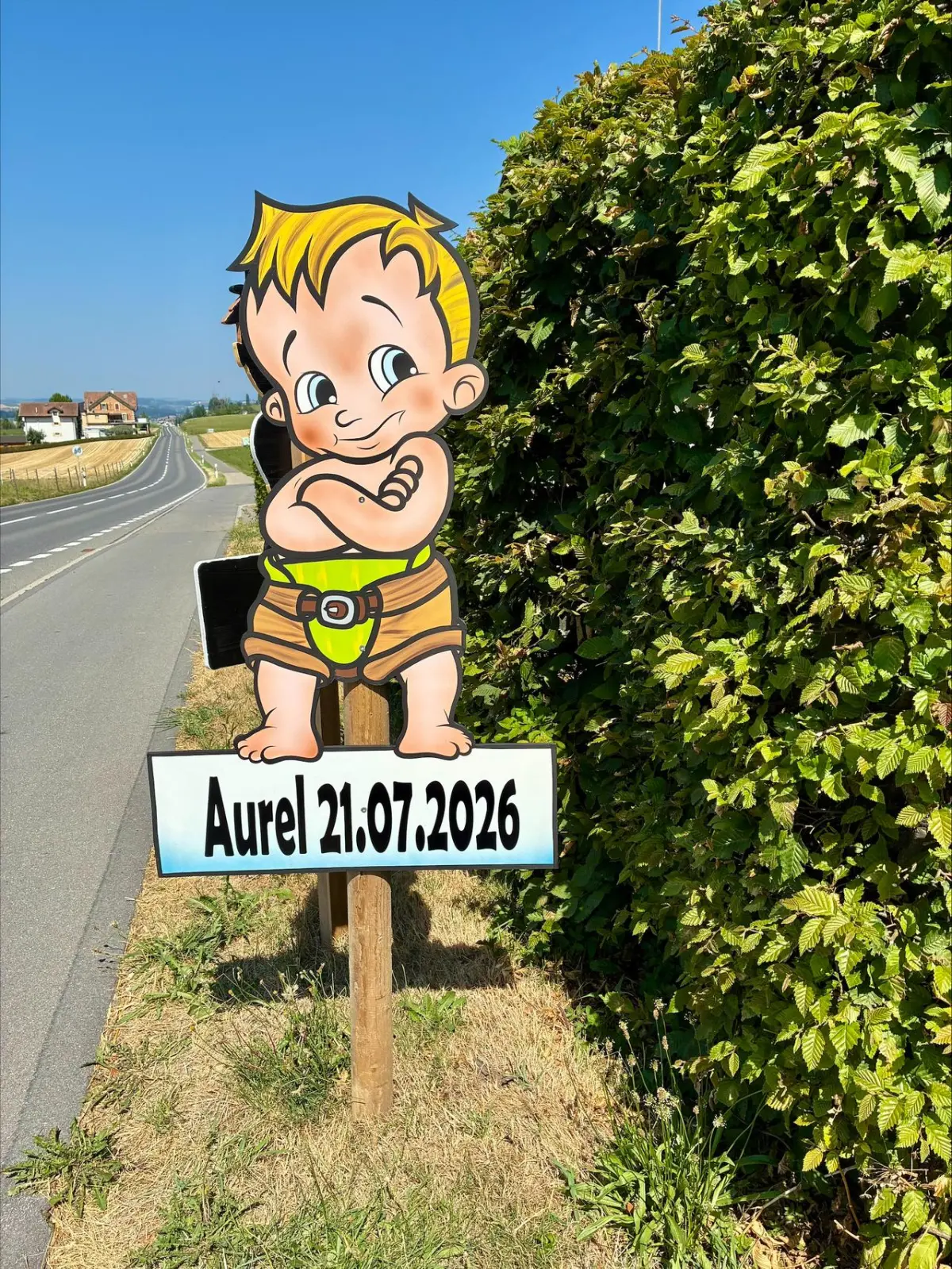
These large signs, often made of wood, display the newborn's first name, date of birth and sometimes their weight. Whether handmade or bought from a shop, they are not only hung on the façades of houses: some are also attached to large tree trunks decorated for the occasion.
In Ruswil, canton Lucerne, a family welcomed their third child on July 21. Just a few hours after the birth, the first signs were already in place outside the house.“There are five at the moment, but more may still arrive. They're friends, family members and work colleagues who are sharing in our joy at the birth and have come to put up a Geburtstafel outside our house,” the mother told Swiss public broadcaster RTS.
The signs usually remain in place for between six months and a year. When they are taken down, some families then organise a 'Bäumlifest', a small celebration to which everyone who helped put up a sign is invited.
Evolving traditionThe exact origins of the custom remain unclear. Several organisations, museums and historians contacted by Swissinfo were unable to specify when and how this tradition began.
It is, however, firmly rooted in the voluntary sector, where it has long been customary to put up these signs to announce the birth of a child among the members of a club or association
In Rothenburg, also in canton Lucerne, the company Wicki has been keeping this custom alive for over 20 years. Over the years, demand has grown. Manufactured in a workshop in Lucerne, the signs are then personalised by hand according to the families' wishes: the child's first name, date of birth, designs or colours.
“The signs as we know them today mainly developed in the German-speaking Alpine region – so here in German-speaking Switzerland, but also in Austria,” explains Aleksandra Babic, an employee at the company Geburtsfiguren Wicki.
The company now offers more than 50 different designs. Some feature traditional motifs, such as those typically found on farms, while others are more modern and original.
A custom that is gaining groundLong associated with the villages and farms of Central Switzerland, Geburtstafeln are now also proving popular with families in urban areas. The tradition is thus being passed down through the generations. For months, sometimes even years, these signs give new arrivals a special place in the local community, particularly in German-speaking Switzerland.
Beyond the different forms and traditions, the aim remains the same: to announce a birth to the whole neighbourhood.“I think it's lovely that the whole village knows a little boy now lives here and that the other children realise they have a new playmate,” explains Andreas Schütz.
Based on an RTS article, supplemented with additional information from Swissinfo. Edited by Samuel Jaberg. Translated from French, sub-edited by ts
Popular Stories Most Discussed Prefer Swissinfo on GoogleSee more Swissinfo articles in your Google results. Learn
In compliance with the JTI standards
More: SWI swissinfo certified by the Journalism Trust Initiati
You can find an overview of ongoing debates with our journalists here. Please join us!
If you want to start a conversation about a topic raised in this article or want to report factual errors, email us at ....
Read more
Legal Disclaimer:
MENAFN provides the
information “as is” without warranty of any kind. We do not accept any
responsibility or liability for the accuracy, content, images, videos,
licenses, completeness, legality, or reliability of the information
contained in this article. If you have any complaints or copyright issues
related to this article, kindly contact the provider above.


Comments
No comment