


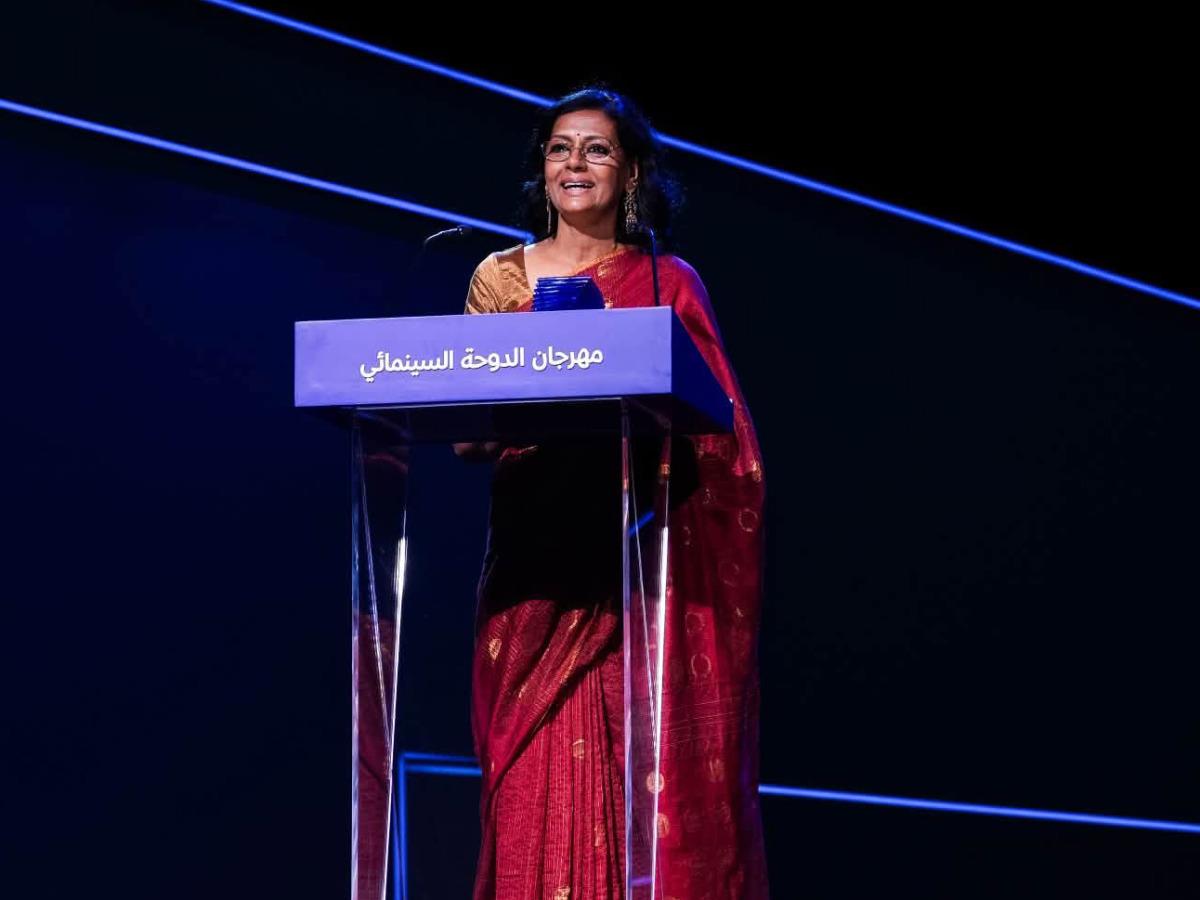
Filmmakers Must Humanise, Not Divide, Nandita Das Tells DFF Audience


Doha: Indian actress and filmmaker Nandita Das, honoured with the Creative Excellence Award at the Doha Film Festival (DFF), described the recognition as both an appreciation of her body of work and a continuing responsibility to tell stories that heal rather than divide.
Speaking at a press conference yesterday, Das, making her first visit to Doha, said she hoped to return more often to watch films from the region. She characterised her choices as an actor and director as“cinema with a conscience.”
“I don't think I can do a film that would further divide people, or that is regressive, or that in any way is creating a greater fracture in the world,” she said.“This is a recognition not just for me, but for everybody who is making this decision and taking the responsibility.” Das argued that in a world marked by strife, violence and prejudice, the role of cinema has grown more important. She stressed that art is not a luxury but a primal human need, and that filmmakers have a duty to reflect realities rather than ignore them.
On the question of whether cinema is political, Das was unequivocal.“Everything is political. Personal is political and political is personal,” she said. Choosing not to tell certain stories, she added, is itself a political act. She noted that cinema can sometimes reveal more about reality than media that is not fully independent, while acknowledging that film can also be used as propaganda.
She distinguished her approach from overt messaging.“I don't believe in that kind of overt, preachy, high-handed politics, even if it may resonate with me politically. I feel it's more important to humanise, to bring out the nuances... to use it as a bridge more than walls.” Addressing the rise of mainstream Indian cinema focused on violence, conflict and drugs, Das observed that India produces roughly a thousand films a year and that content often reflects the“flavour” of the times. She described the relationship between producers and audiences as a“chicken and egg situation” that someone must break.
While the space for independent work has narrowed, even on OTT platforms, she remained optimistic.
Read Also-
Qatar strengthens global film ambitions as Doha Industry Days 2026 opens
Doha Film Festival 2026 marks a powerful showcase of global cinema and emerging talent
“The true test of art or cinema is time,” she said, pointing to Guru Dutt's 'Kaagaz Ke Phool', which failed commercially but is now regarded as a classic, and the films of Ritwik Ghatak, later championed by Martin Scorsese. She emphasised the need for producers, patrons, grants and supportive audiences to sustain such work.
On India-Pakistan collaboration, Das acknowledged that official cooperation remains difficult given the political climate, but said people-to-people contact continues. Referring to a recent visit to a festival, she said,“We will always find spaces to tell our stories... Cynicism is for the lazy, so we cannot be cynical about situations. We have to do the best with what we have.”
Turning to artificial intelligence, Das said she was neither overly fearful nor uncritically embracing. True creativity, she argued, rests on particularity and lived experience that cannot be easily duplicated.“More generic stuff is actually maybe out of fashion,” she suggested, adding that handmade craft may gain greater value as machine-made content proliferates.
Das holds a master's degree in social work and worked with NGOs before entering films accidentally.

Legal Disclaimer:
MENAFN provides the
information “as is” without warranty of any kind. We do not accept any
responsibility or liability for the accuracy, content, images, videos,
licenses, completeness, legality, or reliability of the information
contained in this article. If you have any complaints or copyright issues
related to this article, kindly contact the provider above.


Comments
No comment