


Rubaiya Qatar Debuts With Over 120 Artists, Exhibitions To Foster Dialogue


Doha, Qatar: Rubaiya Qatar 2026, the country's first international multidisciplinary contemporary art quadrennial, will bring together more than 120 regional and international artists representing over 45 countries through a series of exhibitions and public art installations across multiple venues in Doha.
Centred on the theme of water, the inaugural edition's headline exhibition 'Unruly Waters' explores its connections to people, places and cultures through diverse artistic perspectives.
Running from November 21, 2026 to April 30, 2027, the exhibition's inauguration also coincides with the anniversary of the FIFA World Cup Qatar 2022. Building on the tournament's legacy of global exchange, Rubaiya Qatar aims to add on to this as a new platform for cultural dialogue and artistic discourse.
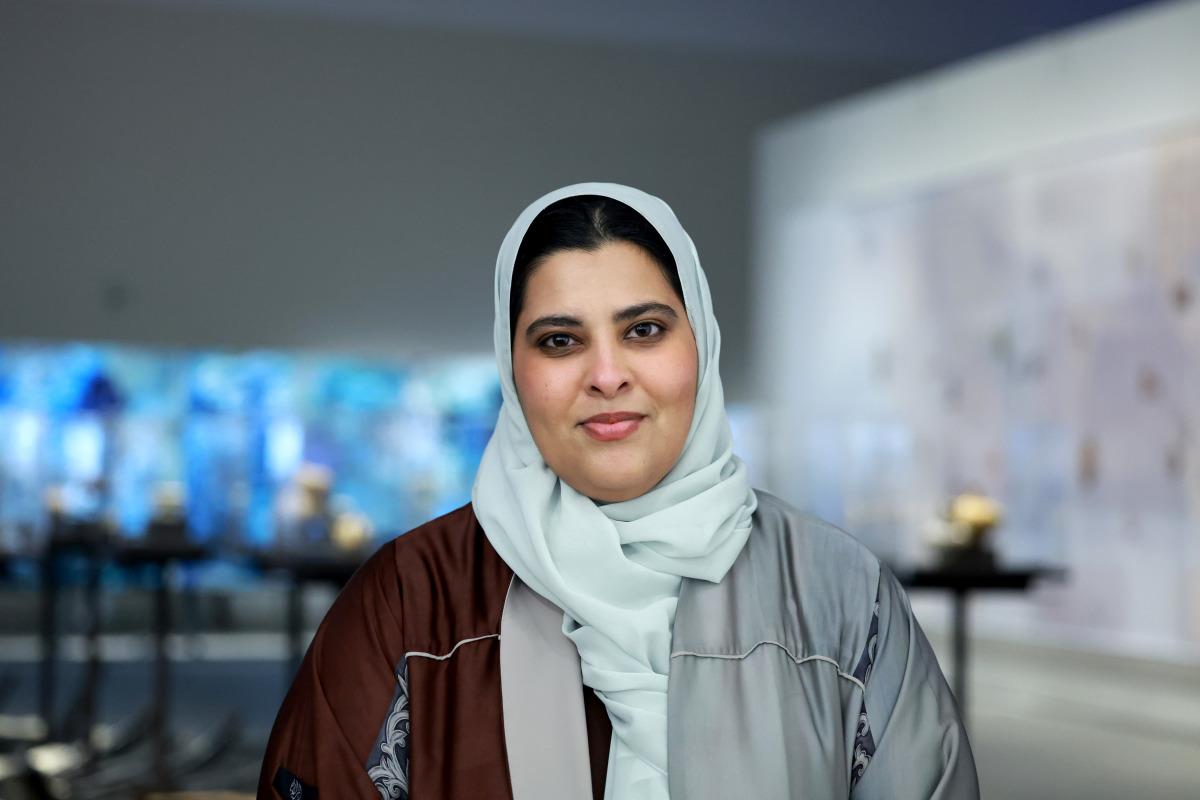
Speaking to The Peninsula, Sheikha Alanood Al-Thani, Director of Rubaiya Qatar, said:“What I really like about Rubaiya Qatar and what we really are trying to do is to create a platform for dialogue and for discourse.”
She added:“Our inaugural edition is at the same time as the four-year anniversary of the World Cup, and that reason is that the World Cup was a place of global discourse, and it was a place in which we had a sense of pride nationally as well as regionally, and that is something that I think we want to emulate in Rubaiya Qatar.”
The quadrennial's main venue, ALRIWAQ Arts + Architecture, will host Unruly Waters, with additional exhibitions at the Museum of Islamic Art, Katara QM Gallery, Mathaf: Arab Museum of Modern Art, and public spaces across Qatar. Major new public art installations will also debut across Qatar throughout the quadrennial.
Curated by Tom Eccles, Ruba Katrib, Shabbir Hussain Mustafa, and Mark Rappolt, Unruly Waters will feature more than 30 new artist commissions.
Speaking about the curatorial approach, Eccles said the exhibition was designed to reflect the region, its cultural landscape and the people who live in it.
“And so the geography of the exhibition is really reflective of the region, and the artists all spent time here, and a number of works are directly made in Doha, and others also relate very closely to what we're surrounded by, which is both the waters of the Gulf and deep south to the Indian Ocean,” he told The Peninsula.
“One of the things we wanted was to create an exhibition that was also very welcoming, like has works that are very visitor-friendly, but also works that are very critical, like have a real deep meaning in them, they come from great research, and they're very, very visually impactful,” he said.
On the other hand, Sheikha Alanood explained that the theme of water reflects Qatar's maritime heritage and its evolving connections to the world.
“The reason why we chose water, actually, for our inaugural edition is because water is something that connects Qatar to the world, historically, through the Maritime Silk Route, being a peninsula,” she said.
She noted that this connection continues today through undersea internet cables and offshore gas resources, while historically looking back to pearling and fishing as central to the country's livelihood.
“So it has always been this kind of connection, a point of connection, that's something that we're really wanting to show,” she added.
Sheikha Alanood also highlighted Rubaiya Qatar's distinct position among local and international art initiatives.
“Something that's really interesting about Rubaiya is that it is the first quadrennial to be born after the digital age, and it is a very global exhibition, but it is also very much still situated and rooted within Qatar, it is anchored in this global community,” she said.
She further noted that the quadrennial's four-year cycle allows more time for artistic research and production compared to biennials, drawing a parallel with the exhibition's water theme.
“And that's the beauty of the quadrennial, and it almost mirrors our theme, which is water. There is an ebb and flow in that research, there is an ebb and flow in that production, and we are able to be part of that journey,” she told The Peninsula.
As Rubaiya Qatar establishes itself within the country's cultural landscape, Sheikha Alanood expressed confidence that Qatar's diverse population will find connections to its exhibitions through artistic representation and public programming.
“I definitely think Qatar's large and diverse population will feel connected to this exhibition, and our different exhibitions due to having some sort of representation, but also through our public programming,” she said.

Legal Disclaimer:
MENAFN provides the
information “as is” without warranty of any kind. We do not accept any
responsibility or liability for the accuracy, content, images, videos,
licenses, completeness, legality, or reliability of the information
contained in this article. If you have any complaints or copyright issues
related to this article, kindly contact the provider above.


Comments
No comment